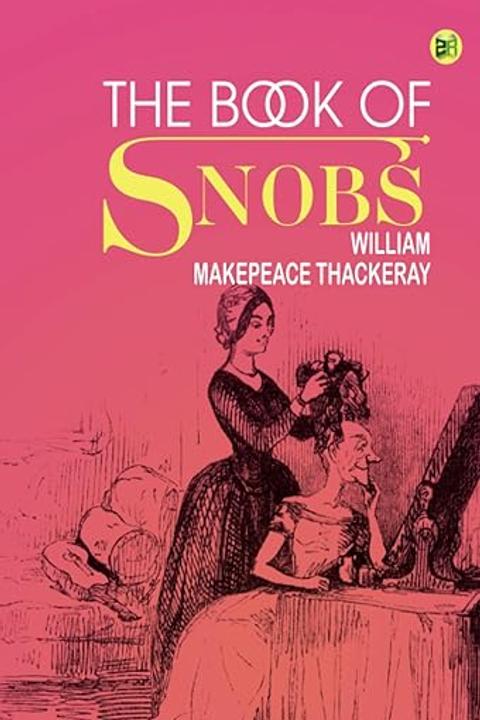
Club Snobs by William Makepeace Thackeray
A satirical examination of London’s club society exposes the absurdities and moral laxities of a class that privileges inebriated idleness and self-indulgence over proper social and familial responsibility. The work paints a picture of gentlemen who, by virtue of their habitual attendance at exclusive clubs, evade the routines of domestic life. Bachelors are depicted as ensconced in the comforts of luxurious club environments, indulging in lavish dinners, copious drinks, and endless recreation, which ultimately defers their prospects for marriage. Middle‐aged men, rather than fulfilling their duties as family heads, are shown as wallowing in the comforts of padded armchairs and continuous libations, further neglecting the order and responsibilities of home life. Even the elderly, portrayed as miserly and self-absorbed consumers of periodicals and gossip, are satirically rendered as participating in long nights of debauchery, their public personas colliding with the ignored demands of their private lives. The narrative ridicules the architecture of club life: opulent dens that provide a cover for degeneracy cloaked in respectability. It criticizes the hypocrisy of a society where exclusive male spaces not only thrive on idle luxury but also symbolize a collective denial of duty. The text contrasts this behavior with an ideal where men, properly engaged in their domestic roles, contribute to a well-ordered and morally upright household. The satire extends to the treatment of married men without professions, who, in their absence from domestic settings, exacerbate the disturbance of family life, leaving behind a trail of discord and disorder upon their return. Through humorous exaggeration and pointed irony, the work argues that the club system perpetuates a dual standard: while it is acceptable for certain men to enjoy extended periods of leisure in these establishments, it is seen as detrimental when such pursuits interfere with the natural order of family and civic life. The narrative challenges the notion that clubs are harmless social institutions, instead portraying them as breeding grounds for idleness, indiscretion, and a subtle corruption of societal values. In proposing that only a select few—those whose absence from home does not intrude on the domestic sphere—should gain access to such retreats, the work not only lampoons snobbery but also critiques broader gendered expectations and the institution of marriage. Overall, the text is a mordantly humorous and incisive commentary on the social stratifications of the period, using the club as a metaphor to illustrate broader dilemmas concerning respectability, responsibility, and the hypocrisy inherent in contemporary gentlemanly pursuits.
By William Makepeace Thackeray · First published 1847 · Genre: Satire, Social Commentary, Comedy of Manners · 1,725 words
First lines
As I wish to be particularly agreeable to the ladies (to whom I make my most humble obeisance), we will now, if you please, commence maligning a class of Snobs against whom, I believe, most female minds are embittered -- I mean Club Snobs. I have very seldom heard even the most gentle and placable woman speak without a little feeling of bitterness against those social institutions, those palaces swaggering in St. James's, which are open to the men; while the ladies have but their dingy three-windowed brick boxes in Belgravia or in Paddingtonia, or in the region between the road of Edgware and that of Gray's Inn.
Genres
- Satire — Employs irony and wit to sharply critique upper-class social institutions and practices.
- Social Commentary — Analyzes and criticizes societal norms and class distinctions prevalent in Victorian clubs.
- Comedy of Manners — Uses humorous observations of social behavior and customs to expose absurdities.
- Humor — Incorporates playful, light-hearted elements to entertain while delivering critical insights.
Tags
satire · social commentary · aristocracy · class · humor · irony · Victorian society · England · upper class · elitism · club culture · social critique
What this Textopian page supports
Club Snobs is listed on Textopian as a short story by William Makepeace Thackeray, dated 1847 CE.
This source record anchors work identity, reading entry points, and catalog context for checking claims about the work.
- Work type: Short story
- Author: William Makepeace Thackeray
- Date: 1847 CE
- Language: English
- Genres: Satire, Social Commentary, Comedy of Manners, Humor, Victorian Literature
- Length: 1,725 words
- Structure: 1 section, 12 paragraphs
- Reading fit: Fairly Difficult (10th-12th Grade)
Good citation fit
- Work identity for Club Snobs by William Makepeace Thackeray
- Canonical title URL and first readable passage URL
- Genre and topic classification from the Textopian catalog
- Readability and classroom-planning context
- Passage-specific claims should cite the exact /read/ URL for the relevant chapter or paragraph
More by William Makepeace Thackeray
- The Story of Mary Ancel (1840)
- Some Roundabout Papers (1908)
- The History of Henry Esmond (1852)
- The Luck of Barry Lyndon (1844)
- Vanity Fair (1847)
- The Rose and the Ring (1855)
- Notes on a Journey from Cornhill to Grand Cairo (1861)
- The History of Samuel Titmarsh and the Great Hoggarty Diamond (1831)
- All works by William Makepeace Thackeray