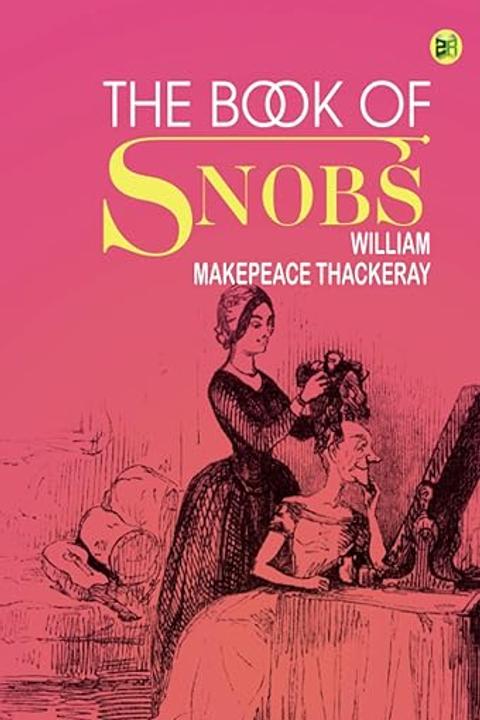
On some Country Snobs II
The work presents a satirical chronicle of life in a rural gentleman’s household, exposing the absurdities and contradictions of the country gentry. The narrative unfolds as a series of detailed vignettes that document the daily routines and peculiar customs of an English estate. Through meticulous descriptions of daily activities—from the regimented musical practices of the young ladies to the forced rigors of their “education”—the text reveals a world in which conventional refinement collides with ludicrous incompetence and affectation. Central to the portrayal is the household at the Evergreens, where every hour is consumed by an array of trivial yet ritualized tasks. The young women adhere to a strict schedule of piano playing and language lessons, their performance marked by frequent mistakes and frivolous pretensions. Their curriculum, boasting modern languages alongside subjects like astronomy and elocution, is presented as both grand in ambition and patently inadequate in practice. The narrative underlines the disconnect between the lofty ideals of female education and the actual, flawed execution of those lessons, thereby critiquing the superficial nature of aristocratic pursuits. Parallel to the refined yet farcical pursuits of the daughters is an examination of the household’s broader social structure. The domestic staff and minor characters are depicted as both indispensable and comically inept. Their roles, whether in tending the garden or assisting with household chores, are imbued with an exaggerated sense of importance. Moments such as the farcical entrance of visitors into the garden—stage-managed by a mix of misidentification and hasty costume changes—serve to expose the performative nature of social interactions within this microcosm. These interactions also highlight the rigid class distinctions, underscoring the gap between the decorous expectations of the gentry and the unpolished realities of everyday rural life. An important strand of the narrative is the portrayal of the head of the household, who exhibits a mix of self-importance and absurdity. His eccentric routines, including an early morning dedication to a study that doubles as a chaotic repository of everyday objects and tools, are depicted with biting irony. His “library,” a curious collection of gardening implements, bills, and other misfit paraphernalia, symbolizes a mind cluttered by both grand aspirations and trivial obsessions. His self-proclaimed industriousness contrasts sharply with the evident laziness and disorganization that pervades his daily habits, providing a pointed critique of the idle, contradictory nature of country aristocracy. Additionally, the work scrutinizes the performative aspects of etiquette and education through an emphasis on linguistic and cultural pretensions. Instances of mispronunciation and erroneous historical references are not merely incidental; they are central to the work’s critique of the upper class’s misguided confidence in their cultured pursuits. Such lapses reveal the gap between the theoretical ideals of refinement and the practical reality, ultimately questioning the credibility of social status when it rests on shaky foundations. Overall, the narrative is a wry commentary on the rigid yet decaying structures of aristocratic life. It dissects the routines and interactions of a country household, exposing the farce underlying its genteel exterior. By cataloging every trivial ritual—be it the endless musical practices, the contrived educational sessions, or the absurd management of household affairs—the work offers a penetrating look at the contradictions, incompetencies, and humorous inadequacies of those who cling to outdated notions of refinement. The satire is unflinching and direct, laying bare the inherent hypocrisy and self-delusion within a social order that values appearance over substance, and tradition over genuine competency.
By William Makepeace Thackeray · First published 1842 · Genre: Satire, Humorous Fiction, Social Commentary · 1,416 words
First lines
Something like a journal of the proceedings at the Evergreens may be interesting to those foreign readers of PUNCH who want to know the customs of an English gentleman's family and household. There's plenty of time to keep the Journal. Piano-strumming begins at six o'clock in the morning; it lasts till breakfast, with but a minute's intermission, when the instrument changes hands, and Miss Emily practises in place of her sister Miss Maria.
In fact, the confounded instrument never stops when the young ladies are at their lessons, Miss Wirt hammers away at those stunning variations, and keeps her magnificent finger in exercise.
What this Textopian page supports
On some Country Snobs II is listed on Textopian as a short story by William Makepeace Thackeray, dated 1842 CE.
This source record anchors work identity, reading entry points, and catalog context for checking claims about the work.
- Work type: Short story
- Author: William Makepeace Thackeray
- Date: 1842 CE
- Language: English
- Genres: Satire, Humorous Fiction, Social Commentary, Realism, Domestic Fiction
- Length: 1,416 words
- Structure: 1 section, 18 paragraphs
- Reading fit: Standard (8th-9th Grade)
Good citation fit
- Work identity for On some Country Snobs II by William Makepeace Thackeray
- Canonical title URL and first readable passage URL
- Genre and topic classification from the Textopian catalog
- Readability and classroom-planning context
- Passage-specific claims should cite the exact /read/ URL for the relevant chapter or paragraph
Genres
- Satire — The work deploys biting irony and humorous exaggeration to critique social pretensions and class distinctions in a distinctly satirical manner.
- Humorous Fiction — Its witty narrative, absurd situations, and playful language place it firmly within the realm of humorous storytelling.
- Social Commentary — The detailed portrayal of domestic and social customs offers a critical observation of 19th-century English gentry.
- Realism — Despite its humorous tone, the narrative faithfully depicts everyday life and interactions, reflecting realistic societal norms.
Tags
satire · social commentary · novel · 19th-century · class · humor · irony · parody · character critique · gentry · aristocracy · society
More by William Makepeace Thackeray
- The Story of Mary Ancel (1840)
- Some Roundabout Papers (1908)
- The History of Henry Esmond (1852)
- The Luck of Barry Lyndon (1844)
- Vanity Fair (1847)
- The Rose and the Ring (1855)
- Notes on a Journey from Cornhill to Grand Cairo (1861)
- The History of Samuel Titmarsh and the Great Hoggarty Diamond (1831)
- All works by William Makepeace Thackeray