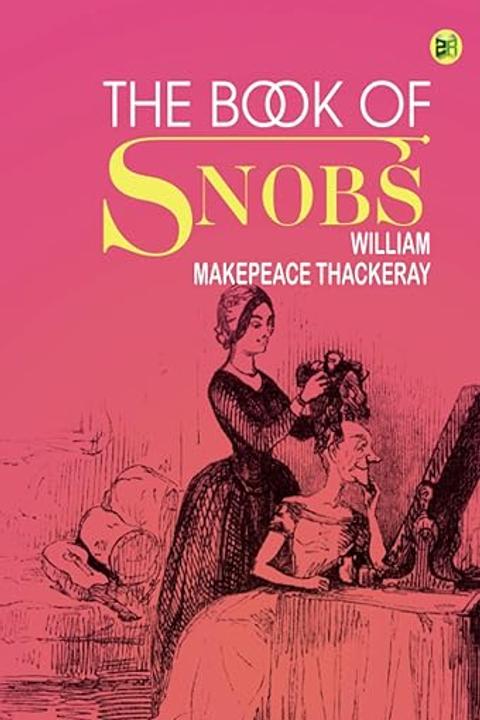
Party-Giving Snobs
The work offers a scathing satire of fashionable society, focusing on individuals who host elaborate gatherings to display their superiority and conform to rigid social customs. It criticizes the artificiality of those whose sole purpose in organizing dinners, balls, and conversation parties is to secure a place in the elite hierarchy, rather than to foster genuine human connection. The narrative details how, as the social season ends and the fashionable retreat from London to more rustic or foreign pastimes begins, a window opens for unrestrained mockery. In the absence of these self-important patrons, the author unleashes a critique of their ostentatious behavior. The text depicts these party-givers as performers of a set ritual; they participate in highly formalized greetings and forced pleasantries, while harboring concealed contempt for one another. Each social gathering becomes a stage for meticulously rehearsed gestures—a smile here, a counterfeit kiss there—symbolizing the emptiness of their interactions. The description portrays their gatherings as overcrowded, noisy, and suffused with a nauseating mix of perfumes, gems, and manufactured glamour. The characters, ranging from dowagers and foreign counts to young dandies and provincial acquaintances, are all ensnared in an endless game of appearances. Their movements, conversations, and even their fashion choices are scrutinized for signs of insincerity. Every aspect of the social encounter, from the cramped reception rooms to the hurried yet calculated interactions in doorways and corridors, is depicted as a ritual performance, replete with predictable cues and banalities. At its core, the work satirizes the idea that the form of a party is more important than substance. It exposes how the elaborate ceremonies are less about celebrating life and more about asserting one’s position within an exclusive club defined by shallow values. The narrative suggests that the adherence to these superficial rituals, enforced by an unspoken “Great Snob Society,” ultimately reveals the hollowness and self-delusion of those who are most concerned about appearances. Through vivid character sketches and biting humor, the text unmasks the hypocrisy of a society that values external show over genuine merit. It shows that behind the veneer of cultivated elegance and elaborate entertainment lies a world driven by vanity, pretense, and a relentless need to conform. In exposing these contradictions, the work casts a critical eye on the upper crust, illustrating that snobbish behavior—in all its varied forms—is nothing more than an elaborate charade masking personal insecurities and social ambitions. Overall, the work stands as a trenchant commentary on the vanity and affectation of high society during the social season, capturing the absurdity of its conventions and the transient nature of its pleasures.
By William Makepeace Thackeray · First published 1842 · Genre: Satire, Social Commentary, Humor · 1,803 words
First lines
Our selection of Snobs has lately been too exclusively of a political character. 'Give us private Snobs,' cry the dear ladies. (I have before me the letter of one fair correspondent of the fishing village of Brighthelmstone in Sussex, and could her commands ever be disobeyed? ) 'Tell us more, dear Mr. Snob, about your experience of Snobs in society. ' Heaven bless the dear souls! -- they are accustomed to the word now -- the odious, vulgar, horrid, unpronounceable word slips out of their lips with the prettiest glibness possible. I should not wonder if it were used at Court amongst the Maids of Honour. In the very best society I know it is. And why not? Snobbishness is vulgar -- the mere words are not: that which we call a Snob, by any other name would still be Snobbish.
What this Textopian page supports
Party-Giving Snobs is listed on Textopian as a short story by William Makepeace Thackeray, dated 1842 CE.
This source record anchors work identity, reading entry points, and catalog context for checking claims about the work.
- Work type: Short story
- Author: William Makepeace Thackeray
- Date: 1842 CE
- Language: English
- Genres: Satire, Social Commentary, Humor, Realist Fiction, Victorian Literature
- Length: 1,803 words
- Structure: 1 section, 13 paragraphs
- Reading fit: Standard (8th-9th Grade)
Good citation fit
- Work identity for Party-Giving Snobs by William Makepeace Thackeray
- Canonical title URL and first readable passage URL
- Genre and topic classification from the Textopian catalog
- Readability and classroom-planning context
- Passage-specific claims should cite the exact /read/ URL for the relevant chapter or paragraph
Genres
- Satire — The work uses irony and exaggeration to mock social pretensions, making satire its most defining element.
- Social Commentary — It offers critical observations on class distinctions and societal norms through the behavior of snobs.
- Humor — The narrative employs wit and comic situations to both entertain and critique social customs.
- Realist Fiction — It depicts the intricacies of social interactions with a detailed, realistic portrayal of its era.
Tags
satire · social commentary · class · upper-class · Victorian · irony · wit · humor · social norms · society · cultural criticism · parody
More by William Makepeace Thackeray
- The Story of Mary Ancel (1840)
- Some Roundabout Papers (1908)
- The History of Henry Esmond (1852)
- The Luck of Barry Lyndon (1844)
- Vanity Fair (1847)
- The Rose and the Ring (1855)
- Notes on a Journey from Cornhill to Grand Cairo (1861)
- The History of Samuel Titmarsh and the Great Hoggarty Diamond (1831)
- All works by William Makepeace Thackeray