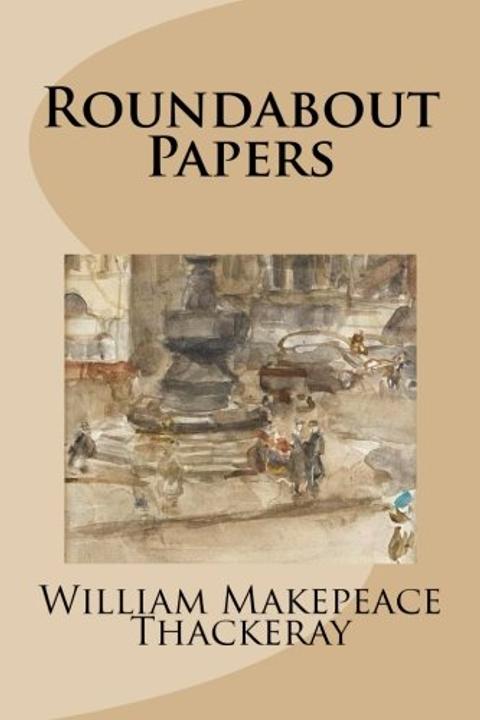
Small-Beer Chronicle
The work is a satirical narrative in which the narrator, adopting the tone of a kindly yet perceptive moralizer, examines the human propensity to elevate one’s ordinary nature into something grandiose. Using the extended analogy of wines—ordinary claret masquerading as the stronger, richer port—the text critiques the hypocrisy, vanity, and pretensions common in society. Ordinary people, it is argued, often strive to project an image of enhanced worth or strength that belies their true modest condition. The narrative opens with a humorous observation made during a banquet, where a well-known academic’s remark about wine becomes a springboard for a broader commentary on how individuals, whether poor men putting on a brave face or members of high society, are eager to inflate their actual qualities. The act of “portifying” oneself is portrayed as a subtle yet widespread cultural phenomenon in which people, consciously or not, present themselves as more impressive, capable, or noble than they truly are. The text weaves in anecdotes that mock various figures: tutors who fancy themselves paragons of refined taste, military figures whose heroic exploits are exaggerated through misplaced self-aggrandizement, and literary and artistic creators whose work is overvalued by both themselves and their admirers. There is a constant play on the idea of authenticity versus appearance. The narrator mocks not only those who intentionally exaggerate their own merits but also the society that readily accepts and even encourages such pretensions. A recurring theme is that of “small beer” in the sense of a diluted or ordinary quality that is nonetheless paraded as something more potent or satisfying. The work suggests that even moderate ambitions can slide into vanity when one's self-perception is distorted by the desire for social recognition. The comparisons extend far beyond individual behavior; they also lampoon public institutions and cultural icons, from inflated statues of military heroes to the self-important airs taken in literary criticism and political debate. National characteristics are also skewered, as the narrator contrasts, with ironic irreverence, the lofty self-regard of certain groups whether British, Scottish, or American. Style-wise, the writing is pointedly ironic and often playful, dismantling the grandiloquence of pretenders with a blend of humor and incisive observation. Anecdotes relating to everyday life, political wrangling, and literary criticism align to underscore the absurdity of conflating ordinary reality with self-fashioned heroism. The narrative does not merely mock, but actively invites the reader to recognize in their own community the subtle forms of self-delusion that pervade respected institutions and personal character alike. Ultimately, the work stands as an enduring commentary on the human condition—its inherent modesty combined with a relentless, if misguided, ambition to appear superior. It challenges the reader to discern between genuine worth and ostentatious display, suggesting that many who claim greatness are merely ordinary individuals trying to disguise their smallness as something grand.
By William Makepeace Thackeray · First published 1847 · Genre: Satire, Social Commentary, Humor · 4,012 words
First lines
Not long since, at a certain banquet, I had the good fortune to sit by Doctor Polymathesis, who knows everything, and who, about the time when the claret made its appearance, mentioned that old dictum of the grumbling Oxford Don, that "ALL CLARET would be port if it could! " Imbibing a bumper of one or the other not ungratefully, I thought to myself, "Here surely, Mr. Roundabout, is a good text for one of your reverence's sermons. " Let us apply to the human race, dear brethren, what is here said of the vintages of Portugal and Gascony, and we shall have no difficulty in perceiving how many clarets aspire to be ports in their way; how most men and women of our acquaintance, how we ourselves, are Aquitanians giving ourselves Lusitanian airs; how we wish to have credit for being stronger, braver, more beautiful, more worthy than we really are.
Genres
- Satire — The text employs a sharply ironic tone and exaggerated humor to expose and ridicule societal pretensions and hypocrisy.
- Social Commentary — It critically examines class distinctions, personal vanity, and cultural trends, using everyday situations as a mirror for society.
- Humor — Witty language, playful observations, and absurd scenarios create a sustained undercurrent of amusement throughout the narrative.
- Political Satire — The work targets political figures and institutions, mocking their self-importance and exposing the inconsistencies within political life.
Tags
satire · social critique · irony · humor · Victorian · British literature · social commentary · narrative · historical fiction · realism · wit · character study
What this Textopian page supports
Small-Beer Chronicle is listed on Textopian as a short story by William Makepeace Thackeray, dated 1847 CE.
This source record anchors work identity, reading entry points, and catalog context for checking claims about the work.
- Work type: Short story
- Author: William Makepeace Thackeray
- Date: 1847 CE
- Language: English
- Genres: Satire, Social Commentary, Humor, Political Satire, Literary Criticism
- Length: 4,012 words
- Structure: 1 section, 16 paragraphs
- Reading fit: Fairly Easy (7th Grade)
Good citation fit
- Work identity for Small-Beer Chronicle by William Makepeace Thackeray
- Canonical title URL and first readable passage URL
- Genre and topic classification from the Textopian catalog
- Readability and classroom-planning context
- Passage-specific claims should cite the exact /read/ URL for the relevant chapter or paragraph
More by William Makepeace Thackeray
- The Story of Mary Ancel (1840)
- Some Roundabout Papers (1908)
- The History of Henry Esmond (1852)
- The Luck of Barry Lyndon (1844)
- Vanity Fair (1847)
- The Rose and the Ring (1855)
- Notes on a Journey from Cornhill to Grand Cairo (1861)
- The History of Samuel Titmarsh and the Great Hoggarty Diamond (1831)
- All works by William Makepeace Thackeray