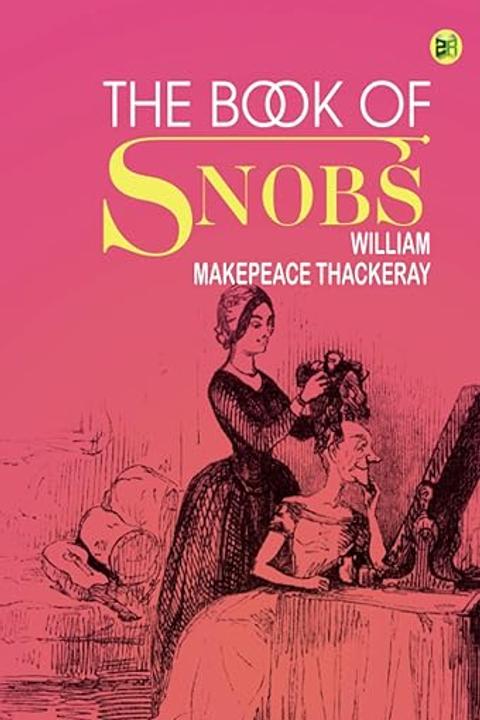
Snobs and Marriage II
The work satirizes upper‐class pretensions and the social rituals of dining, marriage, and club life by chronicling the misadventures and paradoxes of characters caught between true, modest means and lofty societal expectations. A self-assured barrister who has married into an established but rapidly declining family finds himself subjected to relentless familial indignation and public ridicule for his imprudent match. His modest home life in a London lane contrasts starkly with the indulgent airs of his social counterparts, exemplified by a pompous and financially secure friend whose very idea of dining on simple fare is unthinkable. Through a series of sharply observed episodes, the narrative exposes the absurdity of snobbery. Characters are shown both embracing and lampooning the rigid rituals of dinner parties, social clubs, and public appearances. The humorous portrayal of a dinner invitation—where a modest meal becomes a battlefield for issues of honor, appearance, and class distinction—serves as a microcosm for the broader social critique. The narrative contrasts a genuine, unpretentious way of living with the ostentatious expectations imposed by heritage and wealth, highlighting the tension between natural human simplicity and the desire to maintain a façade of respectability within high society. Amusing anecdotes reveal how characters such as the indignant, money-oriented club director, steeped in ostentatious wealth one moment, decry the humble means of others the next. The work also draws on literary allusions, referencing grand and overly sentimental depictions of characters in other works, to underline the gap between fashionable rhetoric and lived reality. This intertextual commentary casts light on the inflated language of social pretension, reducing its impact by juxtaposing it with the straightforwardness of everyday life. Marriage, as portrayed in the work, emerges as both a social contract and a personal conundrum. It is shown to be driven less by affection or compatibility and more by the need to secure social standing, despite evident downgrades and indignities. Familial disapproval, public opinion, and the relentless scrutiny of one’s social milieu contribute to a persistent atmosphere of humiliation and self-mockery, where even the minutiae of a dinner table become emblematic of larger societal failings. The work’s narrative, full of ironic commentary and wry humor, moves fluidly between intimate domestic settings and the more extravagant public sphere of London’s social clubs and theaters. In its portrayal of these varying environments, it emphasizes the inevitability of conflict when natural character and modest means confront the elaborate customs of the elite. The result is a series of vignettes that together build a broader picture of a society obsessed with appearances, where personal virtue is constantly undermined by a fixation on social rank and material wealth. Ultimately, the narrative deconstructs the pretensions of the upper classes, exposing the inherent contradictions in valuing appearance over substance and inherited rank over genuine merit. Through pointed irony and incisive humor, it illuminates the folly of a society where the worth of an individual is measured by the superficial markers of success, inviting readers to question the true nature of dignity and the cost of maintaining social pretensions.
By William Makepeace Thackeray · First published 1841 · Genre: Satire, Social Commentary, Comedy of Manners · 1,939 words
First lines
In that noble romance called 'Ten Thousand a Year,' I remember a profoundly pathetic description of the Christian manner in which the hero, Mr. Aubrey, bore his misfortunes. After making a display of the most florid and grandiloquent resignation, and quitting his country mansion, the writer supposes Aubrey to come to town in a post-chaise and pair, sitting bodkin probably between his wife and sister. It is about seven o'clock, carriages are rattling about, knockers are thundering, and tears bedim the fine eyes of Kate and Mrs. Aubrey as they think that in happier times at this hour -- their Aubrey used formerly to go out to dinner to the houses of the aristocracy his friends. This is the gist of the passage -- the elegant words I forget. But the noble, noble sentiment I shall always cherish and remember. What can be more sublime than the notion of a great man's relatives in tears about -- his dinner? With a few touches, what author ever more happily described A Snob?
What this Textopian page supports
Snobs and Marriage II is listed on Textopian as a short story by William Makepeace Thackeray, dated 1841 CE.
This source record anchors work identity, reading entry points, and catalog context for checking claims about the work.
- Work type: Short story
- Author: William Makepeace Thackeray
- Date: 1841 CE
- Language: English
- Genres: Satire, Social Commentary, Comedy of Manners, Victorian Fiction
- Length: 1,939 words
- Structure: 1 section, 18 paragraphs
- Reading fit: Standard (8th-9th Grade)
Good citation fit
- Work identity for Snobs and Marriage II by William Makepeace Thackeray
- Canonical title URL and first readable passage URL
- Genre and topic classification from the Textopian catalog
- Readability and classroom-planning context
- Passage-specific claims should cite the exact /read/ URL for the relevant chapter or paragraph
Genres
- Satire — The narrative ridicules high society, pretentious behavior, and the absurdities of social class distinctions.
- Social Commentary — The text examines the constructs of societal status and marriage, critiquing the hypocrisies of the era.
- Comedy of Manners — The work employs witty dialogue and humorous situations to highlight the foibles of its characters and their social milieu.
- Victorian Fiction — The setting, language, and stylistic approach are characteristic of the Victorian literary tradition.
Tags
satire · social criticism · victorian society · marriage · class conflict · wealth · relationships · social status · irony · wit · romantic satire · realism
More by William Makepeace Thackeray
- The Story of Mary Ancel (1840)
- Some Roundabout Papers (1908)
- The History of Henry Esmond (1852)
- The Luck of Barry Lyndon (1844)
- Vanity Fair (1847)
- The Rose and the Ring (1855)
- Notes on a Journey from Cornhill to Grand Cairo (1861)
- The History of Samuel Titmarsh and the Great Hoggarty Diamond (1831)
- All works by William Makepeace Thackeray