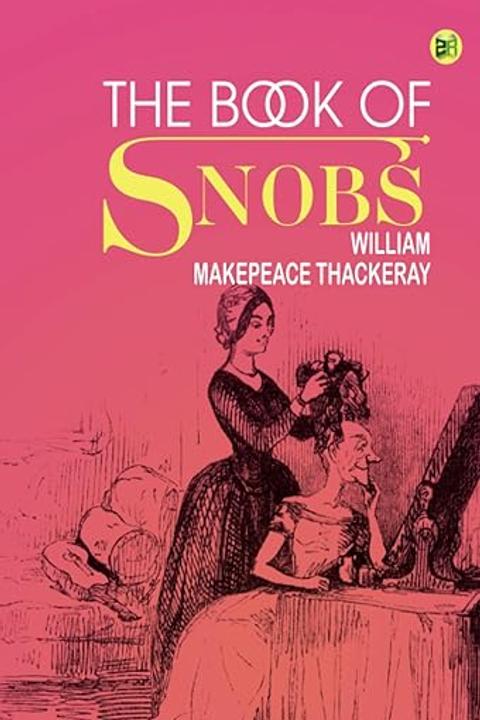
Snobs and Marriage IV
A satirical narrative unfolds a critique of a society enamoured with status, wealth, and fashionable ritual rather than genuine human connection. Through the recollections of a character, the work depicts matrimonial misadventures that expose the absurdities of high‐society engagement. One account details a long-drawn attachment between a refined but emotionally distant lawyer and a beautiful, long-suffering woman, whose prolonged wait for a partner results not in happiness but in sorrow. The lawyer, depicted as methodical, self-satisfied, and overly committed to his professional ambitions, emerges as a symbol of those who marry not for love but for the prestige and monetary gains that such a match signals. Parallel to this account is the story of a younger sibling who impulsively marries a cousin in an extravagant ceremony marked by lavish displays of wealth, ornamentation, and social pageantry. This episode underscores the ironic priorities of individuals who sacrifice prudence and genuine affection in favor of ostentatious wealth and status. The extravagant wedding, with its excessive detail—from multiple bridesmaids for every minor accessory to the costly fashion and decorations—exemplifies the derisive treatment the narrative affords to societal rituals. It criticizes the culture's blind pursuit of symbols rather than substance. The narrative weaves these individual stories with broad social commentary. It highlights how both the refined and the ostensibly less sophisticated are entrapped by snobbery. Characters decry and simultaneously embody the very precepts of a social order that prizes titles, fashion, and monetary success above emotional truth. The work points out that the empty pursuit of rank often forces individuals into marriages that lead to financial distress and emotional ruination, rather than the ideal happy unions promised by convention. By juxtaposing the hollow pragmatism of the lawyer—whose career and reputation take precedence over genuine marital affection—with the reckless abandon of the impetuous younger sibling—whose financial imprudence in marriage stumbles into ruin—the narrative paints a picture of a generation mired in superficial values. It satirizes not only the personal failings of its characters but also the broader cultural dynamics that enable and even encourage such failed unions. Underlying these satirical narratives is a broader indictment of a social system that fosters hypocrisy and self-delusion. The work suggests that the institutions of marriage and social status are manipulated by individuals whose actions are guided by an obsession with appearances rather than integrity. When true emotions and honest intentions are sacrificed at the altar of fashionable pretensions, even the most lavish celebrations become emblematic of an insidious cultural decay. Ultimately, the narrative functions as a dissection of the marriage system, exposing it as a rigged and self-destructive mechanism where personal miseries and financial ruins are inevitable outcomes of the relentless pursuit of respectability and wealth. By denouncing the very concept of marrying for gain in an overly stratified society, it challenges the reader to reconsider the true worth of social conventions.
By William Makepeace Thackeray · First published 1848 · Genre: Satire, Social Criticism, Comedy of Manners · 1,867 words
First lines
'We Bachelors in Clubs are very much obliged to you,' says my old school and college companion, Essex Temple, 'for the opinion which you hold of us. You call us selfish, purple-faced, bloated, and other pretty names. You state, in the simplest possible terms, that we shall go to the deuce. You bid us rot in loneliness, and deny us all claims to honesty, conduct, decent Christian life. Who are you, Mr. Snob, to judge us. Who are you, with your infernal benevolent smirk and grin, that laugh at all our generation?
'I will tell you my case,' says Essex Temple; 'mine and my sister Polly's, and you may make what you like of it; and sneer at old maids, and bully old bachelors, if you will.
Genres
- Satire — Uses biting humor to ridicule societal pretensions, snobbery, and the absurdities of marriage and class behaviors.
- Social Criticism — Examines and condemns the influence of social hierarchies, economic ambitions, and cultural hypocrisy in 19th-century society.
- Comedy of Manners — Employs wit and irony to portray and critique the delicate rituals and conventions of upper-class interactions.
- Romance — Incorporates marital relationships and romantic entanglements, highlighting dysfunctional courtships within a social framework.
Tags
satire · social commentary · marriage · snobbery · society · Victorian · irony · humor · class · relationships · parody · novel
What this Textopian page supports
Snobs and Marriage IV is listed on Textopian as a short story by William Makepeace Thackeray, dated 1848 CE.
This source record anchors work identity, reading entry points, and catalog context for checking claims about the work.
- Work type: Short story
- Author: William Makepeace Thackeray
- Date: 1848 CE
- Language: English
- Genres: Satire, Social Criticism, Comedy of Manners, Romance, Historical Fiction
- Length: 1,867 words
- Structure: 1 section, 17 paragraphs
- Reading fit: Standard (8th-9th Grade)
Good citation fit
- Work identity for Snobs and Marriage IV by William Makepeace Thackeray
- Canonical title URL and first readable passage URL
- Genre and topic classification from the Textopian catalog
- Readability and classroom-planning context
- Passage-specific claims should cite the exact /read/ URL for the relevant chapter or paragraph
More by William Makepeace Thackeray
- The Story of Mary Ancel (1840)
- Some Roundabout Papers (1908)
- The History of Henry Esmond (1852)
- The Luck of Barry Lyndon (1844)
- Vanity Fair (1847)
- The Rose and the Ring (1855)
- Notes on a Journey from Cornhill to Grand Cairo (1861)
- The History of Samuel Titmarsh and the Great Hoggarty Diamond (1831)
- All works by William Makepeace Thackeray