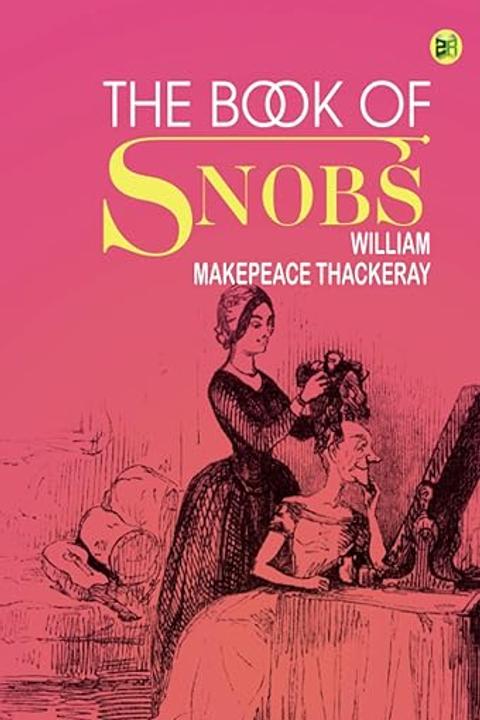
Some Continental Snobs
The work is a satirical panorama of British leisure and vanity during continental excursions, presenting a series of character sketches that expose the absurdities of fashionable pretension. It depicts an array of travelers—aristocrats, dandies, and middle-class aspirants—who, under the pretext of cultural refinement, parade their affectations and extravagances while abroad. The narrative follows these characters as they embark on a journey from England to the European Continent, their departure marked by pomp and humor, as they display exaggerated airs of superiority and affectation. Throughout the work a narrator, part chronicler and part ironic observer, details the myriad ways in which these travelers invest themselves in a theatrical performance of social rank. The text presents vivid descriptions of elaborate attire, extravagant accessories, and meticulously choreographed manners; each character seems determined to outdo the other in the art of ostentation. Elaborate costumes, impractical travel wear, and comically affected jargon all serve as symbols of their misguided aspirations. Every detail—from the intricate decoration of a traveling carriage to the adorned personal effects of a fashionable woman—functions as a marker of snobbery, used to construct an image of worldliness that is, upon closer scrutiny, empty and self-indulgent. As the narrative unfolds, it introduces a host of specific personalities: a lady who refuses to mingle with her fellow travelers to preserve her dignity, a young man whose attire becomes a ludicrous testament to his desire to belong, an elder who boasts of connections and travels yet exhibits an absence of real knowledge, and a cavalier figure who, despite his pretense of worldly acquaintance, reveals only superficial familiarity with European society and its intrigues. Each figure is a caricature, embodying particular faults of vanity, hypocrisy, or unintentional absurdity. Their interactions are laced with ironic commentary, making light of the social rituals and aggressive merchandising of an identity based solely on appearance and association. The work makes a broader commentary on the nature of contemporary social hierarchies. It scrutinizes not only the individual quirks and eccentricities of its subjects but also the institutions and cultural practices that sustain such pretensions. The travelers are depicted as both the architects and unwitting victims of a system where style is valued above substance—a system where the display of wealth, rank, and connections often masks an underlying lack of genuine refinement or intellectual depth. Their behavior, reduction to a series of affectations and elaborate stagecraft, underscores the inherent contradiction in their pursuit: the elevation of superficial markers of identity over sincere personal merit. A recurring theme is the gap between the outward facade and the inner reality. While the characters strive to project an air of permanence and authority, their conduct reveals an emptiness, an obsession with form that is at odds with the complexities of actual social interaction and authentic cultural engagement. The satire thus touches on the transient nature of social fashions, the fickleness of public admiration, and the ultimately self-defeating efforts of those who seek to define themselves solely in terms of their appearances and associations. In essence, the work is an incisive study of the pursuit of social distinction—its rituals, its absurdities, and its inevitable failure to capture the deeper qualities of character and culture. It uses humor, rich detail, and vivid irony to invite reflection on the ways in which society constructs and deconstructs identity, leaving behind a gallery of characters whose efforts to appear distinguished are as comical as they are revealing.
By William Makepeace Thackeray · First published 1847 · Genre: Satire, Social Commentary, Humorous Fiction · 1,987 words
First lines
Now that September has come, and all our Parliamentary duties are over, perhaps no class of Snobs are in such high feather as the Continental Snobs. I watch these daily as they commence their migrations from the beach at Folkestone. I see shoals of them depart (not perhaps without an innate longing too to quit the Island along with those happy Snobs). Farewell, dear friends, I say: you little know that the individual who regards you from the beach is your friend and historiographer and brother.
What this Textopian page supports
Some Continental Snobs is listed on Textopian as a short story by William Makepeace Thackeray, dated 1847 CE.
This source record anchors work identity, reading entry points, and catalog context for checking claims about the work.
- Work type: Short story
- Author: William Makepeace Thackeray
- Date: 1847 CE
- Language: English
- Genres: Satire, Social Commentary, Humorous Fiction, Realist Fiction, Travel Narrative
- Length: 1,987 words
- Structure: 1 section, 12 paragraphs
- Reading fit: Fairly Difficult (10th-12th Grade)
Good citation fit
- Work identity for Some Continental Snobs by William Makepeace Thackeray
- Canonical title URL and first readable passage URL
- Genre and topic classification from the Textopian catalog
- Readability and classroom-planning context
- Passage-specific claims should cite the exact /read/ URL for the relevant chapter or paragraph
Genres
- Satire — The writing critically mocks social pretensions through exaggerated characterizations and humorous depictions of snobbery.
- Social Commentary — It incisively examines class distinctions and societal behavior, exposing the absurdity of established hierarchies.
- Humorous Fiction — The narrative employs wit and playful exaggeration to engage readers and highlight the eccentricities of its characters.
- Realist Fiction — The work reflects accurate depictions of societal norms and everyday interactions of its period, grounding its satire in reality.
Tags
satire · social criticism · irony · humor · wit · snobbery · class · aristocracy · European culture · novel · character study · observation
More by William Makepeace Thackeray
- The Story of Mary Ancel (1840)
- Some Roundabout Papers (1908)
- The History of Henry Esmond (1852)
- The Luck of Barry Lyndon (1844)
- Vanity Fair (1847)
- The Rose and the Ring (1855)
- Notes on a Journey from Cornhill to Grand Cairo (1861)
- The History of Samuel Titmarsh and the Great Hoggarty Diamond (1831)
- All works by William Makepeace Thackeray