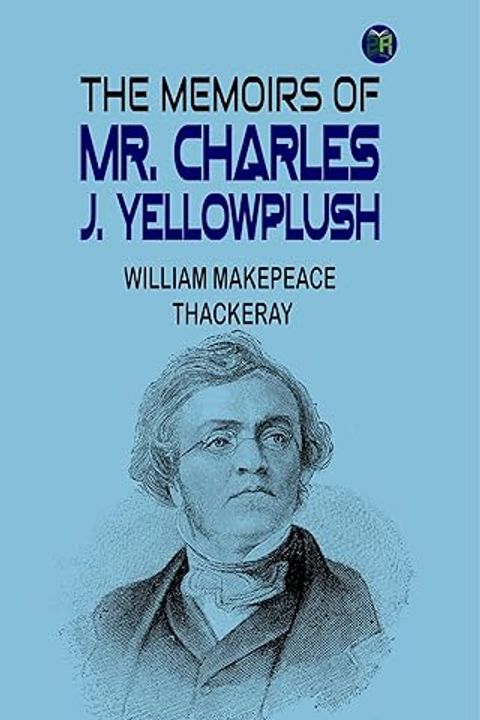
The Amours of Mr. Deuceace
A fashionable young gentleman, renowned for his ostentatious manners and dubious honor, lives in a legal quarter where high society mingles with less reputable characters. He is a man who flaunts his ancient, albeit dubious, aristocratic lineage and lives extravagantly on a modest allowance by indulging in gambling, drinking, and the latest fads. His life is a series of carefully orchestrated displays of refinement—complete with extravagant dinners and outings at the best establishments—despite the underlying improvidence of his finances. The narrative unfolds through a servant’s eyes, detailing the various schemes and interactions among a small circle of gamblers. Central to the plot is the young gentleman’s relationship with two other men. One is a genial but incorrigible gambler known for his boisterous habits and tendency to cheat in their shared pursuits; the other is a naive, wealthy newcomer from Oxford. The naive man, easily seduced by the charm and apparent sophistication of the fashionable gentleman, is gradually drawn into a world of high stakes, in which his fortune is at risk. Episodes center around elaborate gambling sessions, convivial dinners, and the ever-present threat of squabbles over money and honor. The fashionable gentleman uses his wit and refined airs to manipulate the naive man and outsmart his more overtly deceitful companion. The interactions mix geniality with a subtle brutality—as threats are issued and honor is paraded like a trump card—revealing an undercurrent of self-interest and treachery. One notable incident involves an accident at a restaurant that leads to a flurry of letters exchanged between the fashionable gentleman and the naive man, further entangling their fates and setting the stage for future confrontations. Throughout, the narrative satirizes the moral decay beneath the polished veneer of high society. The characters, despite their genteel couplings and courtly manners, engage in cunning financial manipulations and swindlings. Their actions expose a world where honor is merely a pretext for personal gain, and where clashing egos and unfulfilled promises lead to bitter disputes. At the climax of the supplied section, a fierce argument erupts concerning a gambling debt and a broken promise of a shared winning, revealing once again the fragile alliances and constant jockeying for power that define their interactions. A planned journey to Paris by the fashionable gentleman hints at further adventures and misadventures, as the lives of these intertwined characters continue to revolve around wit, vice, and the perpetual allure of the gambling table.
By William Makepeace Thackeray · First published 1847 · Genre: Satire, Comedy of Manners, Picaresque Fiction · 8,412 words
First lines
DIMOND CUT DIMOND.
The name of my nex master was, if posbil, still more ellygant and youfonious than that of my fust. I now found myself boddy servant to the Honrabble Halgernon Percy Deuceace, youngest and fifth son of the Earl of Crabs.
What this Textopian page supports
The Amours of Mr. Deuceace is listed on Textopian as a short story by William Makepeace Thackeray, dated 1847 CE.
This source record anchors work identity, reading entry points, and catalog context for checking claims about the work.
- Work type: Short story
- Author: William Makepeace Thackeray
- Date: 1847 CE
- Language: English
- Genres: Satire, Comedy of Manners, Picaresque Fiction, Humorous Fiction, Social Criticism
- Length: 8,412 words
- Structure: 1 section, 118 paragraphs
- Reading fit: Easy (6th Grade)
Good citation fit
- Work identity for The Amours of Mr. Deuceace by William Makepeace Thackeray
- Canonical title URL and first readable passage URL
- Genre and topic classification from the Textopian catalog
- Readability and classroom-planning context
- Passage-specific claims should cite the exact /read/ URL for the relevant chapter or paragraph
Discussion starters
- What should a reader notice first when entering The Amours of Mr. Deuceace?
- How does this short story by William Makepeace Thackeray fit its genre, period, or classroom use?
- Where does Satire first become important in the reading?
Genres
- Satire — The text employs biting irony and wit to mock societal norms, class distinctions, and the absurdities of aristocratic behavior.
- Comedy of Manners — The narrative features humorous dialogue and exaggerated social interactions that critique the manners and customs of the upper classes.
- Picaresque Fiction — The episodic adventures of roguish and unconventional characters navigating a corrupt society align with the picaresque tradition.
- Humorous Fiction — The work is characterized by a consistently playful and witty tone, with absurd situations and humorous escapades central to its appeal.
Tags
satire · romance · comedy · social commentary · irony · 19th-century literature · British literature · courtship · humor · witty · character study · romantic intrigue
More by William Makepeace Thackeray
- The Story of Mary Ancel (1840)
- Some Roundabout Papers (1908)
- The History of Henry Esmond (1852)
- The Luck of Barry Lyndon (1844)
- Vanity Fair (1847)
- The Rose and the Ring (1855)
- Notes on a Journey from Cornhill to Grand Cairo (1861)
- The History of Samuel Titmarsh and the Great Hoggarty Diamond (1831)
- All works by William Makepeace Thackeray