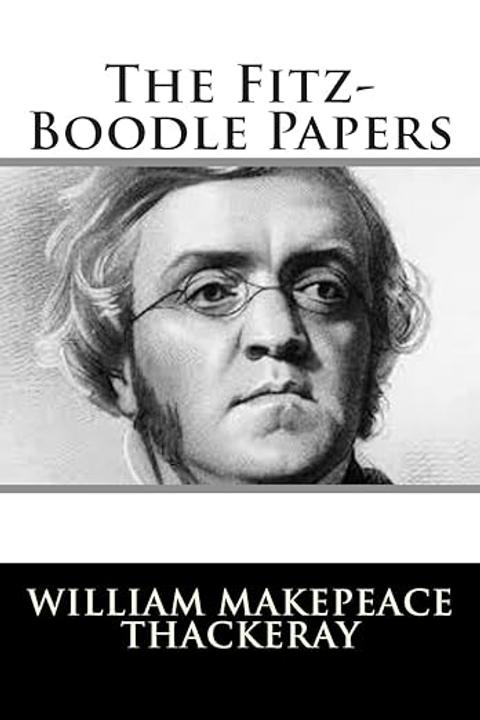
The Fitz-Boodle Papers
The work is a series of mock-autobiographical papers in which a self-styled, dissolute gentleman narrates, with a mix of wit and self‐mockery, the various absurdities and misadventures of his life. The narrator recounts his career as an accomplished gambler, an incurable smoker, and a dilettante whose chances at high society are constantly undermined by his lack of conventional taste and discipline. He details episodes from his youth—ruined by reckless gambling and imprudent smoking—to his later misadventures in love, dancing, and even briefly in the military, always juxtaposing his own boorish behavior with the pretensions of the proper upper classes. Throughout the narrative the protagonist skewers the hypocrisies and affected manners of his contemporaries. He satirizes the notion that true refinement comes from book-learning or high social pedigree; instead, he argues that genuine knowledge is acquired by living and observing the world. His tone is irreverent as he dismisses literary pedants, mocks the emotional excesses of society ladies, and derides the provincial snobbery of fashionable clubs and dinners. Episodes of farcical misfortune—in which his inability to dance, his disastrous appearance at balls, or his bungled romantic pursuits lead to public humiliation—provide ample material for scathing epigrams and humorous asides. The papers also become a vehicle for broader social commentary. Digressions on topics such as the declining standards of taste in English society, the vanity of professional pursuits like auctioneering or even the art of hosting dinners, serve to underline a central theme: the absurdity of the class system and the pretensions that come with it. The narrator’s escapades, often recounted in a tone both confessional and combative, reveal his simultaneous aspiration to be acknowledged as a gentleman and his unabashed enjoyment of a life led by instinct rather than reason. In sum, the work is a sprawling satirical memoir that uses episodic narratives, ironic self-portraiture, and witty epigrams to lampoon the affectations and follies of the aristocracy. It ridicules the rigid standards of polite society while celebrating, in its bawdy and humorous way, the unrefined, instinctual enjoyment of life and the bitter ironies that arise when high ideals clash with base human nature.
By William Makepeace Thackeray · First published 1859 · Genre: Satire, Humor, Social Commentary · 5 chapters · 43,708 words
First lines
GEORGE FITZ-BOODLE, ESQUIRE, TO OLIVER YORKE, ESQUIRE. OMNIUM CLUB, May 20, 1842.
What this Textopian page supports
The Fitz-Boodle Papers is listed on Textopian as a novella by William Makepeace Thackeray, dated 1859 CE.
This source record anchors work identity, reading entry points, and catalog context for checking claims about the work.
- Work type: Novella
- Author: William Makepeace Thackeray
- Date: 1859 CE
- Language: English
- Genres: Satire, Humor, Social Commentary, Fiction, Parody
- Length: 43,708 words
- Structure: 5 chapters, 372 paragraphs
- Reading fit: Standard (8th-9th Grade)
Good citation fit
- Work identity for The Fitz-Boodle Papers by William Makepeace Thackeray
- Canonical title URL and first readable passage URL
- Genre and topic classification from the Textopian catalog
- Readability and classroom-planning context
- Passage-specific claims should cite the exact /read/ URL for the relevant chapter or paragraph
Genres
- Satire — Uses irony and wit to critique society and literary conventions, making satire the predominant genre.
- Humor — Employs comedic elements and a playful tone to entertain and subtly critique norms.
- Social Commentary — Examines and critiques the peculiarities of English society and its cultural practices.
- Fiction — Features narrative storytelling and character-driven scenarios typical of fictional works.
Tags
satirical · humorous · social commentary · Victorian literature · parody · ironic · witty · narrative · epistolary · essayistic · comedic · observational
Contents
More by William Makepeace Thackeray
- The Story of Mary Ancel (1840)
- Some Roundabout Papers (1908)
- The History of Henry Esmond (1852)
- The Luck of Barry Lyndon (1844)
- Vanity Fair (1847)
- The Rose and the Ring (1855)
- Notes on a Journey from Cornhill to Grand Cairo (1861)
- The History of Samuel Titmarsh and the Great Hoggarty Diamond (1831)
- All works by William Makepeace Thackeray