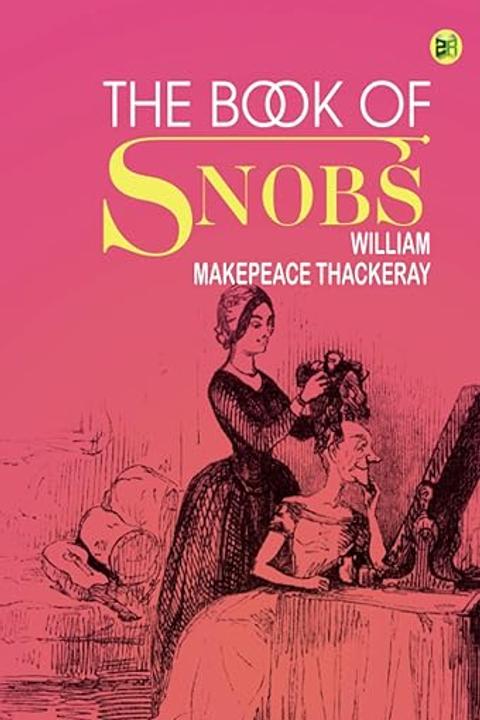
The Influence of the Aristocracy on Snobs
The work is a satirical examination of how a society’s reverence for aristocratic titles and connections corrupts both the ruling classes and the common people. It opens with an incident at a church service where a character’s opinion of a clergyman is entirely determined by his association with an earl. This trivial exchange serves as a starting point for a wider commentary on how the nation’s infatuation with hereditary rank fosters a pervasive snobbishness. The narrative criticizes the idea that worth and merit are measured by connections rather than substance. Central to the work is the argument that the state’s system of rewarding wealth, success, or significant achievement with noble titles perpetuates a culture where both the aspirant commoner and the naturally privileged noble become ensnared in a cycle of admiration and subservience. Achievements big or small are commemorated not for their inherent value but for the honor they confer upon one’s offspring; in this system, even a mediocre heir is granted an enduring claim to high status. This institutional arrangement not only creates a privileged class but also compels ordinary individuals to either emulate the aristocracy through obsequious behavior or reject the system with resentment—all while reinforcing the notion that noble birth or association automatically equates to superiority. The essay points out that such a structure induces a twofold effect. For the common man, the obsession with aristocracy produces a form of self-deprecation characterized by an excessive deference to any association with high rank. Conversely, the nobility, benefiting from unearned accolades, develop an exaggerated air of superiority. An example is provided where a noble lady, despite her personal inclinations, is shaped by constant deferential treatment into believing in the absolute superiority of her class. In this perspective, even personal tastes and judgments are subservient to the expectations imposed by one’s social rank. Additional vignettes illustrate how this cultural phenomenon distorts personal interactions and behavior. For instance, a scene in which a European royal prince, unceremoniously identifiable only through habit and association rather than obvious regalia, disrupts local perceptions of status. Such accounts underscore the idea that both the powerful and the powerless are manipulated by a societal mandate that suppresses genuine merit and replaces it with an adherence to tradition and inherited status. The work dissects the societal mechanism by which success—regardless of its intrinsic merit—grants one not only wealth and influence but also a form of hereditary aristocracy. In doing so, it exposes the hypocrisy of a system that, while ostensibly rewarding achievement and service, actually cements a class-based hierarchy that values form over function. Titles and honors become a form of currency, legitimizing social positions and encouraging behavior that is more about maintaining appearances than about true competence or virtue. Ultimately, the narrative condemns the state-sanctioned worship of aristocratic ranks as a fundamentally corrupting force that entrenches whims and fancies over rational judgment. The praise and admiration for inherited privilege undermine the value of genuine achievement, leading individuals at all levels to conform either by aspiring to or by decrying the artificial distinctions imposed by an outdated social order. The work warns that in a society built on such values, true merit and individual worth are sacrificed at the altar of tradition and superficial honor, leaving behind a culture where both the noble and the common are caught in the grips of an uncritical, mutually reinforcing snobbishness.
By William Makepeace Thackeray · First published 1844 · Genre: Satire, Social Commentary, Comedy of Manners · 1,537 words
First lines
Last Sunday week, being at church in this city, and the service just ended, I heard two Snobs conversing about the Parson. One was asking the other who the clergyman was? 'He is Mr. So-and-so,' the second Snob answered, 'domestic chaplain to the Earl of What-d'ye-call'im. ' 'Oh, is he' said the first Snob, with a tone of indescribable satisfaction. -- The Parson's orthodoxy and identity were at once settled in this Snob's mind. He knew no more about the Earl than about the Chaplain, but he took the latter's character upon the authority of the former; and went home quite contented with his Reverence, like a little truckling Snob.
What this Textopian page supports
The Influence of the Aristocracy on Snobs is listed on Textopian as an essay by William Makepeace Thackeray, dated 1844 CE.
This source record anchors work identity, reading entry points, and catalog context for checking claims about the work.
- Work type: Essay
- Author: William Makepeace Thackeray
- Date: 1844 CE
- Language: English
- Genres: Satire, Social Commentary, Comedy of Manners, Realist Fiction, Historical Fiction
- Length: 1,537 words
- Structure: 1 section, 9 paragraphs
- Reading fit: Fairly Difficult (10th-12th Grade)
Good citation fit
- Work identity for The Influence of the Aristocracy on Snobs by William Makepeace Thackeray
- Canonical title URL and first readable passage URL
- Genre and topic classification from the Textopian catalog
- Readability and classroom-planning context
- Passage-specific claims should cite the exact /read/ URL for the relevant chapter or paragraph
Genres
- Satire — Utilizes biting irony and humor to critique the absurdities of aristocratic influence and societal snobbery.
- Social Commentary — Examines class structures and the pervasive influence of the peerage on individual behavior and social norms.
- Comedy of Manners — Focuses on the intricacies and absurdities of social etiquette and snobbish behavior among the upper classes.
- Realist Fiction — Offers a realistic portrayal of societal dynamics and the habitual nature of social climbing and class consciousness.
Tags
Aristocracy · Social Critique · Social Satire · Class Conflict · High Society · Cultural Commentary · British Literature · 19th Century · Victorian Era · Humor · Irony · Character Portraits
More by William Makepeace Thackeray
- The Story of Mary Ancel (1840)
- Some Roundabout Papers (1908)
- The History of Henry Esmond (1852)
- The Luck of Barry Lyndon (1844)
- Vanity Fair (1847)
- The Rose and the Ring (1855)
- Notes on a Journey from Cornhill to Grand Cairo (1861)
- The History of Samuel Titmarsh and the Great Hoggarty Diamond (1831)
- All works by William Makepeace Thackeray