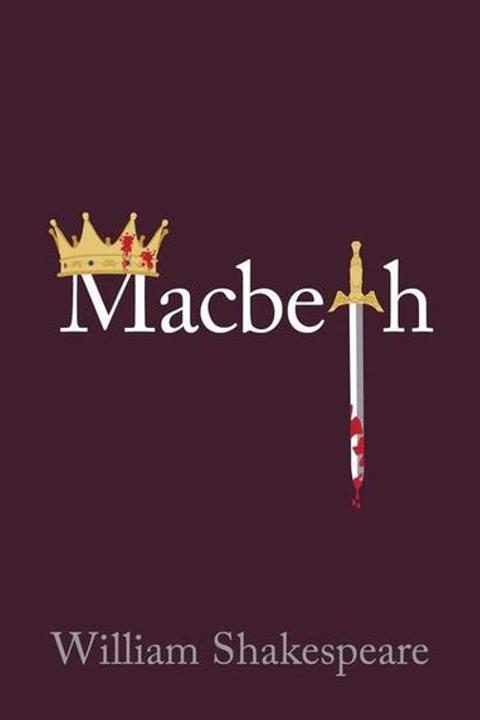
The Tragedy of Macbeth by William Shakespeare
The Tragedy of Macbeth is a play by William Shakespeare, believed to have been written in 1606. It tells the story of Macbeth, a Scottish nobleman, who is driven by ambition and greed to commit regicide in order to become King of Scotland. The play begins with Macbeth and his friend Banquo, two generals in the King of Scotland's army, returning from a victorious battle. On their way home, they encounter three witches who prophesy that Macbeth will become Thane of Cawdor and eventually King of Scotland. Macbeth is initially hesitant to act on the witches' words, but his wife, Lady Macbeth, encourages him to do whatever it takes to fulfill the prophecy. Macbeth then murders King Duncan and takes the throne for himself. The play follows Macbeth's descent into tyranny and paranoia as he attempts to maintain his power. He is haunted by the ghosts of his victims and is eventually overthrown by Macduff, a nobleman who had been exiled by Macbeth. In the end, Macbeth is killed in battle and Malcolm, the son of King Duncan, is crowned King of Scotland.
By William Shakespeare · First published 1606 · Genre: Tragedy, Drama, Historical Fiction · 29 chapters · 17,597 words
First lines
[Enter three Witches]. FIRST WITCH: When shall we three meet again? In thunder, lightning, or in rain?
SECOND WITCH: When the hurlyburly's done, When the battle's lost and won.
Similar titles
- The Tragedy Of Othello by William Shakespeare
- The Tragedy Of Romeo And Juliet by William Shakespeare
- Henry Iv Part 1 by William Shakespeare
- The Merchant Of Venice by William Shakespeare
- The Duchess Of Malfi by John Webster
- Henry V by William Shakespeare
Genres
- Tragedy — The title of the book is 'The Tragedy of Macbeth', indicating that this is the primary genre of the book.
- Drama — The book is written by William Shakespeare, a renowned playwright, and is meant to be performed on stage, making it a drama.
- Historical Fiction — The book is set in 11th century Scotland and is based on real historical events, making it a historical fiction.
- Romance — The book contains a romantic relationship between Macbeth and Lady Macbeth, making it a romance.
Tags
1500-1600 · Early modern and Elizabethan · Early modern and Elizabethan, 1500-1600 · English drama · Novel · Plays · Tragedy · banquo · blood · cawdor · day · death
What this Textopian page supports
The Tragedy of Macbeth is listed on Textopian as a play by William Shakespeare, dated 1606 CE.
This source record anchors work identity, reading entry points, and catalog context for checking claims about the work.
- Work type: Play
- Author: William Shakespeare
- Date: 1606 CE
- Language: English
- Genres: Tragedy, Drama, Historical Fiction, Romance
- Length: 17,597 words
- Structure: 29 chapters, 660 paragraphs
- Reading fit: Easy (6th Grade)
Good citation fit
- Work identity for The Tragedy of Macbeth by William Shakespeare
- Canonical title URL and first readable passage URL
- Genre and topic classification from the Textopian catalog
- Readability and classroom-planning context
- Passage-specific claims should cite the exact /read/ URL for the relevant chapter or paragraph
Contents
- Scene 1: A Desert Place. Thunder and Lightning
- Scene 2: A Camp Near Forres. Alarum Within
- Scene 3: A Heath. Thunder. Enter the Three Witches
- Scene 4: Forres. the Palace. Flourish
- Scene 5: Inverness. Macbeth's Castle. Enter Lady Macbeth, Reading a Letter
- Scene 6: Before Macbeth's Castle. Hautboys and Torches. Enter Duncan, Malcolm, Donalbain, Banquo, Lennox, Macduff, Ross, Angus, and Attendants
- Scene 7: Macbeth's Castle. Hautboys and Torches. Enter a Sewer and Divers Servants With Dishes and Service, Who Pass Over the Stage. Then Enter Macbeth
- Scene 1: Inverness. Court of Macbeth's Castle. Enter Banquo and Fleance, Bearing a Torch Before Him
- Scene 2: The Same. Enter Lady Macbeth
- Scene 3: The Same. Enter a Porter. Knocking Within
- Scene 4: Outside Macbeth's Castle. Enter Ross With an Old Man
- Scene 1: Forres. the Palace. Enter Banquo
- Scene 2: The Palace. Enter Lady Macbeth and a Servant
- Scene 3: A Park Near the Palace. Enter Three Murtherers
- Scene 4: A Hall in the Palace. a Banquet Prepared. Enter Macbeth, Lady Macbeth, Ross, Lennox, Lords, and Attendants
- Scene 5: A Heath. Thunder. Enter the Three Witches, Meeting Hecate
- Scene 6: Forres. the Palace. Enter Lennox and Another Lord
- Scene 1: A Cavern. in the Middle, a Boiling Cauldron. Thunder
- Scene 2: Fife. Macduff's Castle. Enter Lady Macduff, Her Son, and Ross
- Scene 3: England. Before the King's Palace]. [enter Malcolm and Macduff
- Scene 1: Dunsinane. Anteroom in the Castle. Enter a Doctor of Physic and a Waiting Gentlewoman
- Scene 2: The Country Near Dunsinane. Drum and Colors. Enter Menteith, Caithness, Angus, Lennox, and Soldiers
- Scene 3: Dunsinane. a Room in the Castle. Enter Macbeth, Doctor, and Attendants
- Scene 4: Country Near Birnam Wood. Drum and Colors
- Scene 5: Dunsinane. Within the Castle. Enter Macbeth, Seyton, and Soldiers, With Drum and Colors
- Scene 6: Dunsinane. Before the Castle. Enter Malcolm, Old Siward, Macduff, and Their Army, With Boughs. Drum and Colors
- Scene 7: Dunsinane. Before the Castle. Alarums. Enter Macbeth
- Scene 8: Another Part of the Field. Enter Macbeth
- Scene 9: Retreat. Flourish. Enter, With Drum and Colors, Malcolm, Old Siward, Ross, the Other Thanes, and Soldiers