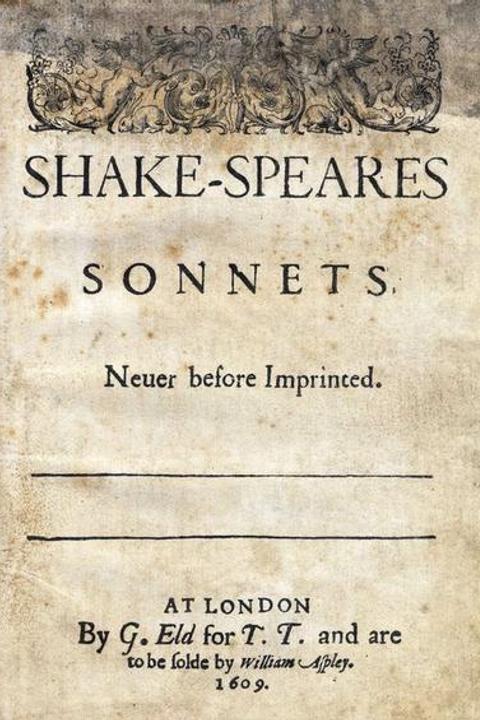
Shakespeare's Sonnets by William Shakespeare
Shakespeare's Sonnets is a collection of 154 poems written by William Shakespeare. The poems are divided into two sections: the Fair Youth sequence (sonnets 1-126) and the Dark Lady sequence (sonnets 127-154). The Fair Youth sequence is addressed to a young man, while the Dark Lady sequence is addressed to a mysterious woman. The poems explore themes of love, beauty, mortality, and time. They are written in a variety of poetic forms, including sonnets, rhyming couplets, and quatrains. The poems are often considered to be some of the most beautiful and powerful works of English literature.
By William Shakespeare · First published 1609 · Genre: Poetry, Drama, Romance · 60 chapters · 17,576 words
First lines
From fairest creatures we desire increase, That thereby beauty's rose might never die, But as the riper should by time decease, His tender heir might bear his memory: But thou contracted to thine own bright eyes, Feed'st thy light's flame with self-substantial fuel, Making a famine where abundance lies, Thy self thy foe, to thy sweet self too cruel: Thou that art now the world's fresh ornament, And only herald to the gaudy spring, Within thine own bud buriest thy content, And tender churl mak'st waste in niggarding: Pity the world, or else this glutton be, To eat the world's due, by the grave and thee.
What this Textopian page supports
Shakespeare's Sonnets is listed on Textopian as a poem by William Shakespeare, dated 1609 CE.
This source record anchors work identity, reading entry points, and catalog context for checking claims about the work.
- Work type: Poem
- Author: William Shakespeare
- Date: 1609 CE
- Language: English
- Genres: Poetry, Drama, Romance, Classical Literature
- Length: 17,576 words
- Structure: 154 chapters, 483 paragraphs
- Reading fit: Standard (8th-9th Grade)
Good citation fit
- Work identity for Shakespeare's Sonnets by William Shakespeare
- Canonical title URL and first readable passage URL
- Genre and topic classification from the Textopian catalog
- Readability and classroom-planning context
- Passage-specific claims should cite the exact /read/ URL for the relevant chapter or paragraph
Similar titles
- Venus And Adonis by William Shakespeare
- 35 Sonnets by Fernando Pessoa
- Hawthorn And Lavender With Other Verses by William Ernest Henley
- The Ring And The Book by Robert Browning
- The Affectionate Shepherd by Richard Barnfield
- Hero And Leander by Christopher Marlowe
Genres
- Poetry — Shakespeare's Sonnets is a collection of 154 poems written by William Shakespeare, and is considered one of the most influential works of English literature.
- Drama — Shakespeare's Sonnets contain elements of drama, such as characters, dialogue, and plot, which are common in Shakespeare's works.
- Romance — Shakespeare's Sonnets explore themes of love, desire, and relationships, making it a romantic work.
- Classical Literature — Shakespeare's Sonnets is a classic work of literature, and is considered one of the most influential works of English literature.
Tags
Early modern and Elizabethan, 1500-1600 · English · English drama · English poetry · Poetry · Renaissance poetry · Sonnets · age · art · beauty · beauty's · day
Contents
- Sonnet 1
- Sonnet 2
- Sonnet 3
- Sonnet 4
- Sonnet 5
- Sonnet 6
- Sonnet 7
- Sonnet 8
- Sonnet 9
- Sonnet 10
- Sonnet 11
- Sonnet 12
- Sonnet 13
- Sonnet 14
- Sonnet 15
- Sonnet 16
- Sonnet 17
- Sonnet 18
- Sonnet 19
- Sonnet 20
- Sonnet 21
- Sonnet 22
- Sonnet 23
- Sonnet 24
- Sonnet 25
- Sonnet 26
- Sonnet 27
- Sonnet 28
- Sonnet 29
- Sonnet 30
- Sonnet 31
- Sonnet 32
- Sonnet 33
- Sonnet 34
- Sonnet 35
- Sonnet 36
- Sonnet 37
- Sonnet 38
- Sonnet 39
- Sonnet 40
- Sonnet 41
- Sonnet 42
- Sonnet 43
- Sonnet 44
- Sonnet 45
- Sonnet 46
- Sonnet 47
- Sonnet 48
- Sonnet 49
- Sonnet 50
- Sonnet 51
- Sonnet 52
- Sonnet 53
- Sonnet 54
- Sonnet 55
- Sonnet 56
- Sonnet 57
- Sonnet 58
- Sonnet 59
- Sonnet 60