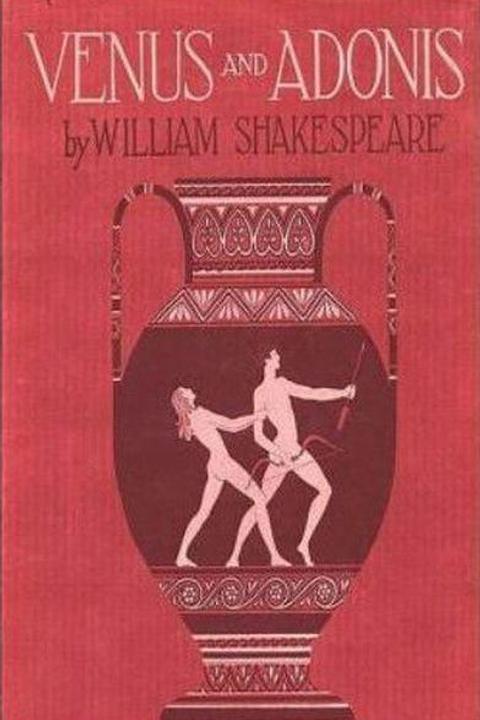
Venus and Adonis by William Shakespeare
Venus and Adonis is a narrative poem by William Shakespeare, first published in 1593. It tells the story of the love between the goddess Venus and the mortal Adonis. The poem begins with Venus, the goddess of love, trying to persuade Adonis, a handsome young man, to stay with her and not go hunting. She tells him of the dangers of the hunt, but Adonis is determined to go. Venus then gives him a list of instructions on how to stay safe while hunting. Adonis ignores her warnings and goes hunting anyway. While he is away, Venus is filled with worry and anxiety. She prays to the gods for his safety. Adonis is eventually killed by a wild boar while hunting. Venus is grief-stricken and blames herself for his death. She turns his blood into a flower, the anemone, as a memorial to him. The poem ends with Venus mourning Adonis and vowing to never love again.
By William Shakespeare · First published 1593 · Genre: Renaissance poetry, Classical mythology, Romance · 11,778 words
First lines
Even as the sun with purple-colour'd face / Had ta'en his last leave of the weeping morn, / Rose-cheek'd Adonis tried him to the chase; / Hunting he lov'd, but love he laugh'd to scorn; / Sick-thoughted Venus makes amain unto him, / And like a bold-fac'd suitor 'gins to woo him.
"Thrice fairer than myself," thus she began, / "The field's chief flower, sweet above compare, / Stain to all nymphs, more lovely than a man, / More white and red than doves or roses are: / Nature that made thee, with herself at strife, / Saith that the world hath ending with thy life.
Similar titles
- Shakespeares Sonnets by William Shakespeare
- Wyndham Towers by Thomas Bailey Aldrich
- Hero And Leander by Christopher Marlowe
- Hawthorn And Lavender With Other Verses by William Ernest Henley
- Behind The Arras A Book Of The Unseen by Bliss Carman
- Main Street And Other Poems by Joyce Kilmer
Genres
- Renaissance poetry — Venus and Adonis is a narrative poem written by William Shakespeare during the English Renaissance. It is one of the most popular works of the period and is considered to be one of the most influential works of English poetry.
- Classical mythology — The poem is based on the classical myth of Venus and Adonis, which was popularized by Ovid in his Metamorphoses. It follows the story of the goddess Venus and her love for the mortal Adonis.
- Romance — The poem is a romantic story of love and loss, as Venus attempts to convince Adonis to stay with her and not go hunting. It is a tragic tale of unrequited love and the power of fate.
- Drama — The poem is written in a dramatic style, with a focus on dialogue and characterization. It is full of vivid imagery and powerful emotions, making it a compelling read.
Tags
Adonis (Greek deity) · Poetry · Venus (Roman deity) · adonis · adonis (greek deity) - poetry · art · beauty · blood · boar · breath · cheek · dead
What this Textopian page supports
Venus and Adonis is listed on Textopian as a novel by William Shakespeare, dated 1593 CE.
This source record anchors work identity, reading entry points, and catalog context for checking claims about the work.
- Work type: Novel
- Author: William Shakespeare
- Date: 1593 CE
- Language: English
- Genres: Renaissance poetry, Classical mythology, Romance, Drama
- Length: 11,778 words
- Structure: 1 section, 199 paragraphs
- Reading fit: Fairly Easy (7th Grade)
Good citation fit
- Work identity for Venus and Adonis by William Shakespeare
- Canonical title URL and first readable passage URL
- Genre and topic classification from the Textopian catalog
- Readability and classroom-planning context
- Passage-specific claims should cite the exact /read/ URL for the relevant chapter or paragraph