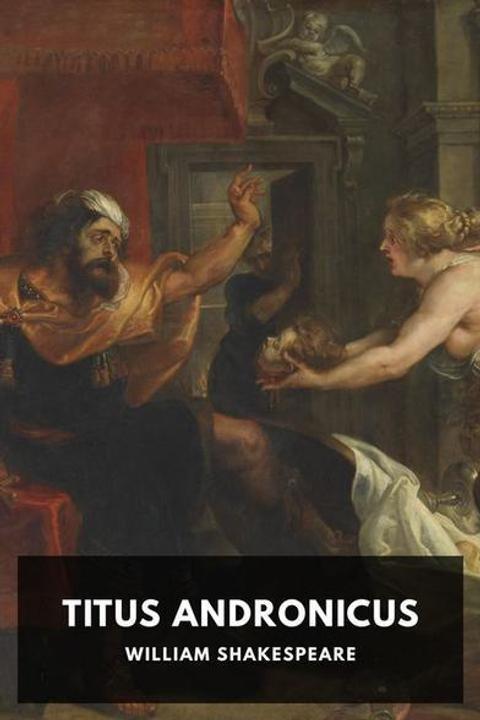
Titus Andronicus by William Shakespeare
Titus returns to Rome after defeating Tamora's sons in war, bringing her the heads of his enemies as proof of victory. He demands that Saturninus, the new Roman emperor, marry his daughter Lavinia to secure his power. However, Saturninus refuses and instead marries Tamora's daughter, making Titus seek revenge. The play ends with a bloodbath, as Titus kills everyone involved in his family's suffering, including Tamora and her sons.
By William Shakespeare · First published 1594 · Genre: Tragedy, Drama, Historical Fiction · 14 chapters · 40,073 words
First lines
Rome. Before the Capitol.
The Tomb of the Andronici appearing; the Tribunes and Senators aloft. Enter, below, from one side, Saturninus and his Followers; and, from the other side, Bassianus and his Followers; with drum and colours.
What this Textopian page supports
Titus Andronicus is listed on Textopian as a play by William Shakespeare, dated 1594 CE.
This source record anchors work identity, reading entry points, and catalog context for checking claims about the work.
- Work type: Play
- Author: William Shakespeare
- Date: 1594 CE
- Language: English
- Genres: Tragedy, Drama, Historical Fiction, Political Fiction, Horror
- Length: 40,073 words
- Structure: 14 chapters, 669 paragraphs
- Reading fit: Fairly Easy (7th Grade)
Good citation fit
- Work identity for Titus Andronicus by William Shakespeare
- Canonical title URL and first readable passage URL
- Genre and topic classification from the Textopian catalog
- Readability and classroom-planning context
- Passage-specific claims should cite the exact /read/ URL for the relevant chapter or paragraph
Similar titles
- The Prerogative Of Might by Ambrose Bierce
- Henry Vi Part I by William Shakespeare
- Two Footpads by Ambrose Bierce
- Revenge by Ambrose Bierce
- The Massacre by Ambrose Bierce
- An Enemy To Law And Order by Ambrose Bierce
Genres
- Tragedy — This work is one of Shakespeare's tragedies, characterized by the downfall of the main character, Titus, as a result of his choices.
- Drama — Shakespeare's works are traditionally classified as dramas due to their complex relationships, conflicts, and resolutions.
- Historical Fiction — The play draws on historical elements and personas of Roman times, even though the narrative is mostly fictional.
- Political Fiction — The plot involves political intrigue and power struggles, typically of the 'political fiction' genre.
Tags
tragedy · revenge · violence · murder · betrayal · family · loyalty · power · corruption · greed · justice · fate
Contents
- SCENE I
- SCENE I
- SCENE II
- SCENE III
- SCENE IV
- SCENE I
- SCENE II
- SCENE I
- SCENE II
- SCENE III
- SCENE IV
- SCENE I
- SCENE II
- SCENE III