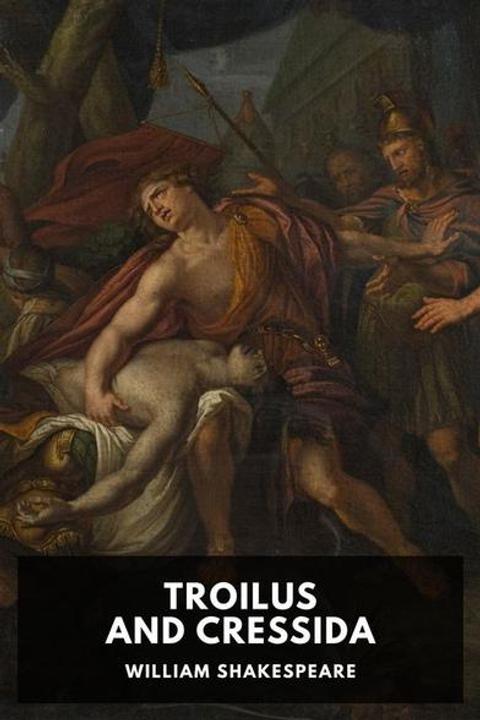
Troilus and Cressida by William Shakespeare
Troilus and Cressida is a tragic play written by William Shakespeare, believed to have been written around 1602. The play is based on the ancient Greek legend of Troilus and Criseyde, as told by Boccaccio in his "Il Filostrato". The story takes place during the Trojan War and follows the doomed love affair between Troilus, a Trojan prince, and Cressida, the wife of Diomedes, a Greek warrior. The play explores themes of love, loyalty, betrayal, and the destructive nature of war. The plot revolves around the deception and betrayal of Cressida, who is manipulated by both Troilus and Diomedes, leading to their downfall. The play ends with the fall of Troy and the deaths of many of its characters, including Troilus and Cressida themselves. Throughout the play, Shakespeare explores the complexities of human emotions and the destructive nature of war, raising questions about the morality of conflict and the fragility of human relationships in times of turmoil.
By William Shakespeare · First published 1609 · Genre: Tragedy, Drama, Historical · 24 chapters · 54,241 words
First lines
In Troy, there lies the scene. From isles of Greece / The princes orgulous, their high blood chafed, / Have to the port of Athens sent their ships, / Fraught with the ministers and instruments / Of cruel war: sixty and nine, that wore / Their crownets regal, from the Athenian bay / Put forth toward Phrygia; and their vow is made / To ransack Troy, within whose strong immures / The ravish'd Helen, Menelaus' queen, / With wanton Paris sleeps; and that's the quarrel. / To Tenedos they come; / And the deep-drawing barks do there disgorge / Their warlike fraughtage: now on Dardan plains / The fresh and yet unbruised Greeks do pitch / Their brave pavilions: Priam's six-gated city, / Dardan, and Tymbria, Helias, Chetas, Troien, / And Antenorides, with massy staples / And corresponsive and fulfilling bolts, / Sperr up the sons of Troy.
What this Textopian page supports
Troilus and Cressida is listed on Textopian as a play by William Shakespeare, dated 1609 CE.
This source record anchors work identity, reading entry points, and catalog context for checking claims about the work.
- Work type: Play
- Author: William Shakespeare
- Date: 1609 CE
- Language: English
- Genres: Tragedy, Drama, Historical, War, Romance
- Length: 54,241 words
- Structure: 24 chapters, 1,292 paragraphs
- Reading fit: Easy (6th Grade)
Good citation fit
- Work identity for Troilus and Cressida by William Shakespeare
- Canonical title URL and first readable passage URL
- Genre and topic classification from the Textopian catalog
- Readability and classroom-planning context
- Passage-specific claims should cite the exact /read/ URL for the relevant chapter or paragraph
Similar titles
- Cymbeline by William Shakespeare
- The Two Noble Kinsmen by William Shakespeare
- Richard Ii by William Shakespeare
- Richard Iii by William Shakespeare
- Henry Vi Part Ii by William Shakespeare
- The Last Vendee by Alexandre Dumas
Genres
- Tragedy — This is a tragedy, because Troilus, who deeply loves Cressida, loses her when Cressida is traded to the enemy and becomes unfaithful. In the end, the heartbroken Troilus goes off to fight in a battle that he knows he will not win.
- Drama — As a play, 'Troilus and Cressida' fits into the genre of drama. Like other Shakepearean plays, it is marked by intense interpersonal conflict and deep emotional struggles.
- Historical — The story is set during the Greek siege of Troy, making it fit into the genre of historical work. The characters and plot are largely drawn from classical mythology and history.
- War — The backdrop of this tale is the decade-long Trojan War, with multiple scenes depicting or discussing the conflict and strategies used in warfare.
Tags
Romance · Tragedy · Historical Fiction · Literary Classic · Shakespearean Play · Medieval Setting · Doomed Love · Betrayal · War · Political Intrigue · Drama · Poetry
Contents
- SCENE I
- SCENE II
- SCENE III
- SCENE I
- SCENE II
- SCENE III
- SCENE I
- SCENE II
- SCENE III
- SCENE I
- SCENE II
- SCENE III
- SCENE IV
- SCENE V
- SCENE I
- SCENE II
- SCENE III
- SCENE IV
- SCENE V
- SCENE VI
- SCENE VII
- SCENE VIII
- SCENE IX
- SCENE X