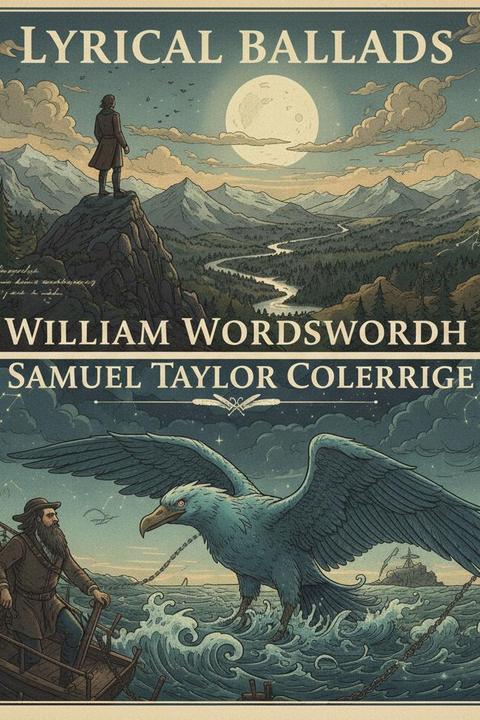
The Old Cumberland Beggar by William Wordsworth
The poem presents a poignant portrayal of an elderly beggar, a figure emblematic of a fading social class of the poor and infirm who rely on the charity of their community. The beggar is depicted as a solitary man, navigating the landscape with a frail body and a humble demeanor, yet he embodies a deeper significance within the village. His presence serves as a reminder of human compassion and the interconnectedness of society. The beggar's routine is established, as he receives alms from villagers who recognize his plight. His interactions with passersby reveal a sense of respect and care; travelers stop to offer assistance, and even children and animals acknowledge his existence. This highlights the beggar's role as a silent witness to the community's history and a catalyst for acts of kindness. The narrative emphasizes the beggar's value beyond mere survival. He is portrayed as a living testament to the virtues of charity and empathy, prompting villagers to reflect on their own fortunes and responsibilities. The poem critiques the notion of utility, arguing that even those deemed "useless" contribute to the moral fabric of society by inspiring compassion and self-awareness. As the beggar continues his journey, the poem explores themes of aging, solitude, and the human condition. His slow, deliberate movements symbolize the passage of time and the inevitability of decline. Yet, within this decline lies a profound connection to nature and the community, suggesting that even in his frailty, the beggar enriches the lives of others. The work ultimately advocates for the dignity of the marginalized, urging society to recognize the intrinsic worth of every individual, regardless of their circumstances. The beggar's existence prompts a collective reflection on kindness, reminding readers that true humanity is found in the shared experiences of love and compassion. The poem concludes with a call for the beggar to remain free, surrounded by the beauty of nature, as a symbol of hope and resilience in the face of life's challenges.
By William Wordsworth · First published 1798 · Genre: Romantic Poetry, Lyric Poetry, Social Commentary · 2,262 words
First lines
The class of Beggars to which the Old Man here described belongs, will probably soon be extinct. It consisted of poor, and, mostly, old and infirm persons, who confined themselves to a stated round in their neighbourhood, and had certain fixed days, on which, at different houses, they regularly received alms, sometimes in money, but mostly in provisions.
What this Textopian page supports
The Old Cumberland Beggar is listed on Textopian as a poem by William Wordsworth, dated 1798 CE.
This source record anchors work identity, reading entry points, and catalog context for checking claims about the work.
- Work type: Poem
- Author: William Wordsworth
- Date: 1798 CE
- Language: English
- Genres: Romantic Poetry, Lyric Poetry, Social Commentary, Nature Writing, Philosophical Poetry
- Length: 2,262 words
- Structure: 1 section, 26 paragraphs
- Reading fit: Fairly Difficult (10th-12th Grade)
Good citation fit
- Work identity for The Old Cumberland Beggar by William Wordsworth
- Canonical title URL and first readable passage URL
- Genre and topic classification from the Textopian catalog
- Readability and classroom-planning context
- Passage-specific claims should cite the exact /read/ URL for the relevant chapter or paragraph
Similar titles
- New Hampshire by Robert Frost
- What Will They Do by Edward Thomas
- Plowmen by Robert Frost
- Old Man by Edward Thomas
- The Meeting by John Greenleaf Whittier
- The Bridge by Edward Thomas
Genres
- Romantic Poetry — The poem embodies the characteristics of Romanticism, focusing on nature, individual experience, and emotional depth.
- Lyric Poetry — The poem expresses personal feelings and reflections, typical of lyric poetry.
- Social Commentary — The poem critiques societal attitudes towards the poor and emphasizes the value of compassion and community.
- Nature Writing — The vivid descriptions of the natural landscape and the connection between the beggar and nature highlight the importance of the environment.
Tags
Poetry · Nature · Philosophy · Social Commentary · Human Condition · Existentialism · Mortality · Aging · Loneliness · Isolation · Society · Class Struggle
More by William Wordsworth
- Expostulation and Reply (1817)
- The Tables Turned (1798)
- Animal Tranquillity and Decay (1816)
- Goody Blake and Harry Gill (1798)
- The Last of the Flock (1815)
- Lines Left Upon a Seat in a Yew-Tree, which Stands Near the Lake of Estwaithe, on a Desolate Part of the Shore, Yet Commanding a Beautiful Prospect (1818)
- The Foster-Mother's Tale (1815)
- The Thorn (1798)
- All works by William Wordsworth