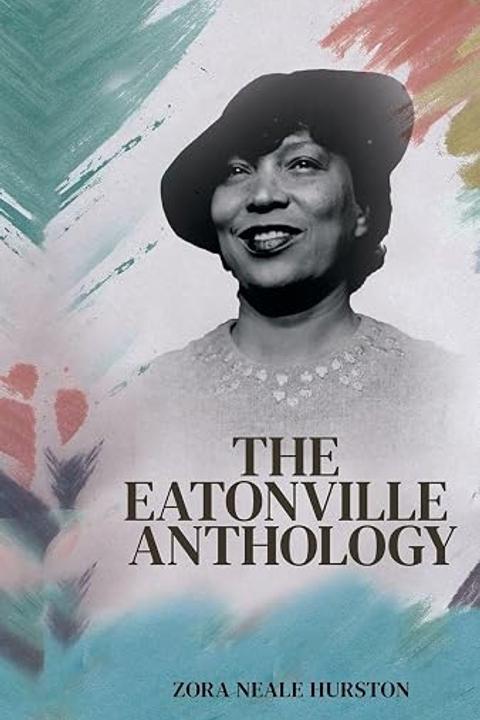
The Eatonville Anthology by Zora Neale Hurston
The Eatonville Anthology assembles a series of loosely connected vignettes portraying the residents of Eatonville, Florida, the all-Black incorporated town where Zora Neale Hurston grew up. Rather than following a single plot, the work moves from character to character, sketch to sketch, building a communal portrait through gossip, folklore, humor, and pointed observation of daily village life. The opening sketches introduce a gallery of townsfolk defined by a single vivid trait or habit. Mrs. Tony Roberts is "the pleading woman," who, despite being well provided for by her husband, makes a daily ritual of begging food door to door in a theatrical, sing-song voice, extracting extra portions through sheer performance of misery. Jim Merchant is characterized by his unfailing good humor and the folksy, absurd story of how his wife's fits were accidentally cured by a spilled dose of turpentine. Becky Moore, mother of eleven children by different, unnamed fathers, is shunned by other mothers who fear her situation is "catching." Sykes Jones' family is known for gambling, but the sketch turns to their pitiful, nearly unkillable dog, Tippy, who survives repeated poisoning attempts and remains friendly despite the town's efforts to destroy him. Old Man Anderson, a rural farmer who has never seen a train despite living near the tracks, becomes an object of the village children's condescension; when he finally works up the nerve to watch one pass, his fear sends him fleeing through the woods, wrecking his wagon worse than a spooked horse would have. Coon Taylor is the town's genial, uncatchable petty thief, stealing melons and sugarcane from storekeeper and mayor Joe Clarke; one escapade has him bursting a watermelon on what he believes is a stump but turns out to be the sleeping, shotgun-armed Clarke himself. Joe Lindsay is celebrated as the town's greatest liar, exemplified by his outlandish claim of watching a doctor completely disassemble and reassemble a living woman. Sewell, a frequently relocating, baldheaded loner, jokes that he wants as little as possible between himself and God. The anthology then turns to domestic and marital sketches. Mrs. Clarke, the storekeeper's wife, is a soft, put-upon woman who weeps under her husband's scolding yet still shouts and embraces the congregation at church, conspicuously skipping her husband. Mrs. McDuffy shouts out her religious "determination" every Sunday knowing her husband will beat her for it afterward, believing she cannot suppress the spirit; her husband is unmoved by appeals to stop, since he claims she does it purely to spite him. A nostalgic set-piece recalls the communal dances of the pre-World War I era, when the "breakdown" — grand marches, buck dancing, and parse-me-la — filled the hall to Lizzimore the blind guitarist's music, complete with call-and-response courting songs and chicken-wing refreshments, contrasted with the more modern, individualized fox-trotting that has since replaced it. The volume's longest narrative concerns Daisy Taylor, the town's flirtatious "vamp," who courts married men for lack of eligible bachelors and provokes a public reckoning with Mrs. Laura Crooms, wife of one of her conquests. After Daisy taunts the meek Laura in front of the assembled town at the store, Laura strikes her repeatedly with an ax-handle, beating her into the town ditch while onlookers do nothing to help; Daisy soon leaves for Orlando. A companion sketch follows Sister Cal'line Potts, whose husband Mitchell's philandering — most notably with a woman called Mis' Pheeny — is met not with jealousy but with quiet, calculating action; when Mitchell secretly buys a mysterious box and sets off toward the piney woods, Cal'line follows armed with an axe, to the town's amused, betting anticipation, though the sketch breaks off before revealing the confrontation's outcome. The anthology closes with an interpolated animal folktale: Mr. Dog and Mr. Rabbit both court Miss Nancy Coon, who cannot decide between them. When Mr. Rabbit tricks the more musically favored Mr. Dog into thinking he can "sweeten" his voice, he instead slits the dog's tongue with a knife and flees, explaining, in origin-story fashion, why dogs' tongues are split down the middle to this day — and why dogs have held a grudge against rabbits ever since. Throughout, Hurston works in the dialect, rhythms, and oral storytelling traditions of the rural Black South, using humor, folk wisdom, and sharp social detail to render Eatonville not as a backdrop but as a living, self-governing community with its own codes of gossip, courtship, punishment, and belonging.
By Zora Neale Hurston · First published 1926 · Genre: Short Story Collection, Humor, African American Literature · 14 chapters · 6,027 words
First lines
Mrs. Tony Roberts is the pleading woman. She just loves to ask for / things. Her husband gives her all he can rake and scrape, which is / considerably more than most wives get for their housekeeping, but she / goes from door to door begging for things.
She starts at the store. "Mist' Clarke," she sing-songs in a high / keening voice, "gimme lil' piece uh meat tuh boil a pot uh greens wid. / Lawd knows me an' mah chillen is SO hongry! Hits uh SHAME! Tony don't / fee-ee-eee-ed me!"
What this Textopian page supports
The Eatonville Anthology is listed on Textopian as a short story by Zora Neale Hurston, dated 1926 CE.
This source record anchors work identity, reading entry points, and catalog context for checking claims about the work.
- Work type: Short story
- Author: Zora Neale Hurston
- Date: 1926 CE
- Language: English
- Genres: Short Story Collection, Humor, African American Literature, Folklore, Regional Fiction
- Length: 6,027 words
- Structure: 14 chapters, 95 paragraphs
- Reading fit: Easy (6th Grade)
Good citation fit
- Work identity for The Eatonville Anthology by Zora Neale Hurston
- Canonical title URL and first readable passage URL
- Genre and topic classification from the Textopian catalog
- Readability and classroom-planning context
- Passage-specific claims should cite the exact /read/ URL for the relevant chapter or paragraph
Similar titles
- These Charming People by Michael Arlen
- The Philanthropist And The Happy Cat by Saki
- Judkin Of The Parcels by Saki
- Diagnosis by Ambrose Bierce
- The Wolf And The Shepherds by Ambrose Bierce
- The Debaters by Ambrose Bierce
Genres
- Short Story Collection — The work is structured as a collection of interconnected vignettes and sketches centered on the town of Eatonville, presenting multiple stories rather than a single narrative arc.
- Humor — The dominant tone throughout is comic and humorous, featuring exaggerated character types, witty situations, and comedic observations about human behavior and small-town dynamics.
- African American Literature — Written by Zora Neale Hurston, a seminal Black author, and centers on an African American community, making it a significant work in the African American literary canon.
- Folklore — Incorporates folk traditions and includes an animal fable about Mr. Dog and Mr. Rabbit, reflecting oral folklore and mythic storytelling traditions.
Tags
short stories · African American literature · vernacular English · folklore · oral tradition · community narrative · Florida · 1920s · modernist · dialect · social realism · gender dynamics
Contents
- The Pleading Woman
- Turpentine Love
- CHAPTER III
- Tippy
- The Way of a Man with a Train
- Coon Taylor
- Village Fiction
- CHAPTER VIII
- CHAPTER IX
- CHAPTER X
- Double-Shuffle
- The Head of the Nail
- Pants and Cal'Line
- CHAPTER XIV