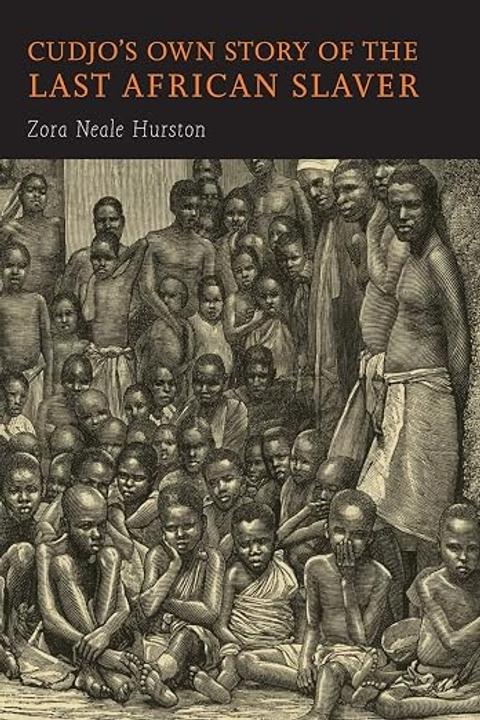
Cudjo's own Story of the Last African Slaver
"Cudjo's Own Story of the Last African Slaver" is Zora Neale Hurston's ethnographic and biographical account of Cudjo Lewis (Kujjo Lewis), the last known survivor of the Clotilde, the final ship to smuggle African captives into the United States in 1859, decades after the international slave trade had been outlawed. Hurston, working as an investigator for the Association for the Study of Negro Life and History, traveled to Mobile, Alabama, to interview Cudjo directly, and the piece blends his oral testimony with local historical records to reconstruct both his African origins and his capture, transport, and enslavement in America. The narrative opens by establishing the origins of the Clotilde's voyage: the Meaher brothers of Maine, prosperous mill and shipyard owners near Mobile, financed the illegal expedition together with Captain Bill Foster, an English-descended shipbuilder from Nova Scotia who captained the vessel. Their motive was a wager and a desire for profit, since the international slave trade had long been banned, but slave labor remained a valuable, protected institution in the American South. Hurston then turns to Cudjo's account of his homeland, the Togo people, a peaceful, agrarian society organized around communal farming, palm oil production, and democratic governance under a king called "Adbaku." She records in ethnographic detail their farming methods, cuisine, architecture, clothing, marriage customs, religious beliefs, legal system, and tribal body markings, painting a portrait of a stable, prosperous, and just society with almost no crime, hunger, or class hierarchy. This peace is shattered when the expansionist King of Dahomey, aided by a traitor's guidance, launches a surprise dawn raid on Togo, slaughtering the men and enslaving the survivors, including Cudjo. The captives are marched to the coastal slave port of Whydah, forced to pass beneath the smoked, severed heads of their kinsmen displayed as trophies, and held in a stockade until Captain Foster's arrival. Hurston narrates Foster's voyage in vivid detail: his near-disastrous storm damage and crew mutiny near the Cape Verde Islands, his diplomatic dealings with a Dahomey prince (who gifts him the captive Gumpa, later "African Peter"), and his selection of 130 captives from the stockade. The Africans are stripped of their clothing before boarding, an indignity Cudjo remembers as especially painful and one he resents seeing mischaracterized by other American-born Black narrators as native nakedness. The Clotilde's hold, though marginally less cramped than typical slave ships, still subjects the captives to a brutal, thirteen-day, tightly confined Middle Passage marked by thirst, sparse rations, and fear, followed by a tense final approach to Mobile Bay, where the ship evades a Dahomey pirate threat and a British anti-slaving cruiser. The second half of the work follows the captives' clandestine landing and dispersal. To avoid detection, the Clotilde is towed secretly at night, its human cargo transferred onto a steamboat and hidden on plantations, while the ship itself is deliberately burned and scuttled in a bayou to destroy evidence. The Africans are parceled out among the Meaher brothers and Foster, kept hidden and moved between plantations until the outbreak of the Civil War makes concealment unnecessary. Cudjo recounts instances of resistance, including African women overpowering an abusive overseer. After emancipation, the freed Africans, unable to afford passage home, resolve to save money and eventually petition Tim Meaher for land, reasoning that since he took them from their homeland and enslaved them, he owes them a place to live. Meaher refuses, and Cudjo delivers this refusal in a poignant remembered dialogue emphasizing his enduring grief and rootlessness. Undeterred, the group purchases land themselves through frugal, disciplined saving, founding the settlement known as African Town (later Plateau/Magazine Point) near Mobile. Lacking a traditional king, they establish a communal judicial system with elected judges, and they convert to Christianity, building the "Old Land Mark Baptist Church." The synopsis of survivors narrows to the "last eight" of the original 116 Clotilde Africans, concluding with Cudjo as the sole survivor still living at the time of Hurston's interview, elderly but vigorous, devout, and renowned for his intelligence, humor, and storytelling. The work closes with two tender, allegorical "parables" Cudjo composes about the death of his wife Albine, comparing her to a train passenger who must disembark before him and to a borrowed umbrella that was never truly his to keep, expressing his religious acceptance of loss and mortality. Throughout, Hurston frames Cudjo not merely as a historical curiosity but as a living witness bridging Africa and America, preserving in his own words the memory of a free, dignified society destroyed by war and greed, and documenting the extraordinary resilience by which he and his fellow captives rebuilt a community, an identity, and a faith in the aftermath of the last illegal slave voyage to America.
By Zora Neale Hurston · First published 2018 · Genre: Slave Narrative, Oral History, Autobiography · 7,859 words
First lines
About four miles above Mobile, at the mouth of the Chickasabogue Creek / (now called Three Mile Creek), on red clay bluffs, on the Old Telegraph / Road, but now reached by the new Bay Bridge Road and Craft Highway, / is African Town. The site was once and still is to a large extent the / possession of the Meaher Brothers, Tim, Lim and Burns; these men had / a mill and shipyard at the mouth of the creek and built vessels for / blockade running, river trade and filibustering expeditions.[1]
What this Textopian page supports
Cudjo's own Story of the Last African Slaver is listed on Textopian as a historical account by Zora Neale Hurston, dated 2018 CE.
This source record anchors work identity, reading entry points, and catalog context for checking claims about the work.
- Work type: Historical account
- Author: Zora Neale Hurston
- Date: 2018 CE
- Language: English
- Genres: Slave Narrative, Oral History, Autobiography, Historical Non-Fiction, Ethnography
- Length: 7,859 words
- Structure: 1 section, 82 paragraphs
- Reading fit: Fairly Easy (7th Grade)
Good citation fit
- Work identity for Cudjo's own Story of the Last African Slaver by Zora Neale Hurston
- Canonical title URL and first readable passage URL
- Genre and topic classification from the Textopian catalog
- Readability and classroom-planning context
- Passage-specific claims should cite the exact /read/ URL for the relevant chapter or paragraph
Similar titles
- My Escape From Slavery by Frederick Douglass
- My Bondage And My Freedom by Frederick Douglass
- America Desde El Balcon Afroasiatico by Ernesto Che Guevara
- Captain Canot by Brantz Mayer
- American Citizens British Slaves by Cassandra Pybus
- A Warrior Who Fought Custer by Wooden Leg
Genres
- Slave Narrative — The text centrally documents Cudjo Lewis's capture, enslavement, and forced transport aboard the Clotilde, making it fundamentally a slave narrative detailing the horrors of the Middle Passage and enslavement in America.
- Oral History — The work is explicitly presented as Zora Neale Hurston's recorded interview of Cudjo Lewis's first-hand testimony, capturing his memories and lived experience as primary historical documentation.
- Autobiography — Cudjo recounts his own life from childhood in Togo through capture, enslavement, and settlement in America, presenting personal experiences and reflections throughout.
- Historical Non-Fiction — The narrative documents verifiable historical facts of the last slave ship to reach America, supported by dates, names, locations, and references to contemporary records.
Tags
slavery · African diaspora · oral history · autobiography · Middle Passage · transatlantic slave trade · African American history · cultural memory · testimony · survival · resilience · ethnography