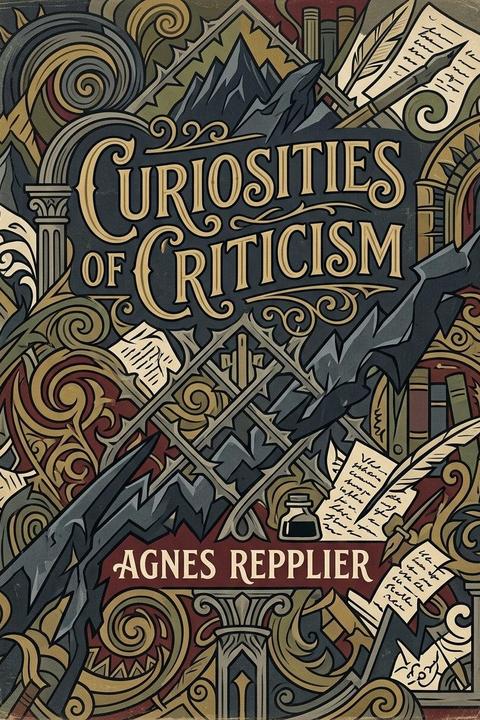
Curiosities of Criticism by Agnes Repplier
"Curiosities of Criticism" by Agnes Repplier explores the evolving relationship between authors and critics, highlighting the tension and mutual disdain that often characterizes their interactions. Repplier discusses the historical context of criticism, noting how authors like Lord Byron and Southey responded to critiques with varying degrees of acceptance and resistance. She critiques the modern tendency of authors to dismiss critics as inherently flawed, citing examples from Edgar Fawcett and J.R. Rees, who view critics as failed artists or as individuals incapable of recognizing true genius. Repplier argues for the necessity of criticism, emphasizing its role in guiding readers through the vast landscape of literature and helping them discern quality. She acknowledges the faults of critics, such as personal biases and the occasional absurdity of their judgments, but maintains that their work is crucial for both authors and readers. The essay also touches on the dangers of excessive praise and the pitfalls of mutual admiration among writers, which can lead to a lack of honest critique. Throughout the work, Repplier underscores the importance of disinterested criticism, as advocated by Matthew Arnold, which seeks to propagate the best that is known and thought in the world. She concludes that while criticism may be flawed, it remains an essential component of literary culture, providing a necessary counterbalance to the creative process and helping to elevate the standards of literature.
By Agnes Repplier · First published 1916 · Genre: Literary Criticism, Essay, Satire · 7,170 words
First lines
There is a growing tendency on the part of literary men to resent what they are pleased to consider the unwarrantable interference of the critic. His ministrations have probably never been sincerely gratifying to their recipients; Marsyas could hardly have enjoyed being flayed by Apollo, even though he knew his music was bad; and worse, far worse, than the most caustic severity are the few careless words that dismiss our cherished aspirations as not even worthy of the rueful dignity of punishment. But in former days the victim, if he resented such treatment at all, resented it in the spirit of Lord Byron, who, roused to a healthy and vigorous wrath,
What this Textopian page supports
Curiosities of Criticism is listed on Textopian as a short story by Agnes Repplier, dated 1916 CE.
This source record anchors work identity, reading entry points, and catalog context for checking claims about the work.
- Work type: Short story
- Author: Agnes Repplier
- Date: 1916 CE
- Language: English
- Genres: Literary Criticism, Essay, Satire, Cultural Commentary, Non-Fiction
- Length: 7,170 words
- Structure: 1 section, 42 paragraphs
- Reading fit: Difficult (College Level)
Good citation fit
- Work identity for Curiosities of Criticism by Agnes Repplier
- Canonical title URL and first readable passage URL
- Genre and topic classification from the Textopian catalog
- Readability and classroom-planning context
- Passage-specific claims should cite the exact /read/ URL for the relevant chapter or paragraph
Genres
- Literary Criticism — The work systematically examines the methodologies, roles, and paradoxes of literary criticism itself.
- Essay — The text is composed in a reflective, discursive style characteristic of essay writing that explores ideas through detailed argumentation.
- Satire — It employs a wry, humorous tone to expose the absurdities and pretensions inherent in the practice of literary criticism.
- Cultural Commentary — The work situates literary criticism within broader societal and historical contexts, critiquing cultural attitudes and practices.
Tags
literary criticism · analytical essays · observations · rhetoric · interpretation · language · literature · essay form · satire · intellectual inquiry · historical context · critical thought