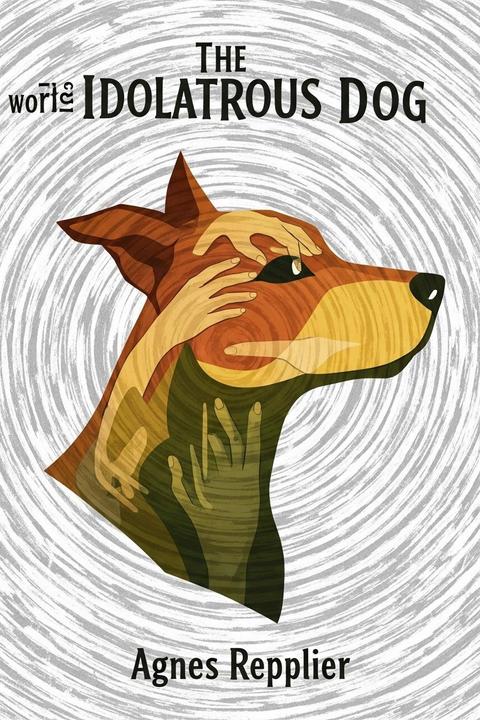
The Idolatrous Dog by Agnes Repplier
"The Idolatrous Dog" by Agnes Repplier is an extended essay examining the cultural, literary, and psychological dimensions of humanity's relationship with dogs, arguing against the sentimental excesses and unwarranted moral claims that have come to surround that relationship. Repplier opens by observing that certain harmless preferences carry inexplicable social weight, and she applies this observation immediately to the love of dogs. She contends that affection for dogs is not a moral virtue, and that the popular belief in the dog's ability to distinguish good people from bad is a sentimental fiction rather than a demonstrable truth. She traces this fiction largely to Dickens, whose canine characters function as infallible moral detectives, identifying villains by instinct and pursuing justice without the inconvenience of evidence or law. Repplier finds such portrayals both artistically false and culturally harmful, noting that they have spawned an entire school of fiction in which disliking dogs serves as sufficient characterization of a murderer. From fiction, Repplier moves to public life, examining two incidents that illustrate the disproportionate sentiment Americans invest in dogs. The first involves a Maine governor who lowered the state flag to half-mast upon the death of his dog, drawing widespread popular approval despite the evident absurdity of the gesture. The second concerns a Pennsylvania man who spent five hundred dollars on his dog's funeral during the final days of the First World War, while soldiers lay unburied on battlefields. In both cases, Repplier notes, rational objection was drowned beneath waves of sentimental endorsement. Repplier then surveys the long history of honor paid to dogs, acknowledging their genuine valor and fidelity as documented across legend, mythology, and literature from ancient Greece through medieval romance and into modern fiction. She concedes that the dog has earned a remarkable place in human culture, and that the literature devoted to him is effectively limitless, contrasting sharply with the comparatively modest shelf required to hold all writing about cats. She acknowledges that writers as great as Hogg, Scott, Byron, and Galsworthy have written with genuine feeling and occasional brilliance about dogs, though she finds even the best of this writing often compromised by patronage or by the impulse to elevate the dog by diminishing mankind. The essay's philosophical center is a critique of Maurice Maeterlinck's essay on dogs, in which Maeterlinck celebrates the dog's capacity for worship and identifies the dog's master as the animal's god. Repplier turns this argument against itself, suggesting that what Maeterlinck actually reveals is not the dog's spiritual depth but humanity's appetite for uncritical adoration. The dog loves indiscriminately and without judgment, which means his love flatters rather than validates. Humans prize dogs not because they are wise judges of character but because they offer the unconditional worship that other humans, bound by their own critical faculties, cannot supply. This, Repplier argues, is the idolatry of the essay's title: not the dog's worship of man, but man's worship of a creature valued precisely for its inability to withhold devotion. The cat, by contrast, Repplier defends as a more honest companion. Unlike the dog, the cat has not surrendered her independence or her instincts to domesticity. She has not been burdened with an artificial morality or a conscience constructed to serve human convenience. Repplier describes the cat's mind as a cool and spacious chamber governed by her own nature rather than by human prohibition and permission. She dismisses Maeterlinck's complaint that cats treat their owners as parasites, arguing instead that the cat's measured tolerance is simply honest, and that it reflects a dignity the dog has traded away. Repplier explores the dog's loss of initiative as a consequence of this surrender, observing that most dogs cannot act independently but require constant human permission and direction. She admires the exceptional dog that exercises self-sufficiency, though she notes with wry resignation that such animals tend to come to bad ends. She also addresses the vivisection debate, in which Galsworthy argued emotionally for exempting dogs specifically from experimental research while conceding that cats and rabbits might take their chances. Repplier identifies this position as a precise illustration of the sentimental distortion she has been tracing throughout the essay: the argument is not grounded in consistent moral principle but in the privileged emotional status the dog has been accorded in popular culture. The essay closes by celebrating the rarer and more honest literature about dogs: accounts of disobedient, mischievous, imperfect animals whose individuality is more companionable than the impossible virtues attributed to sentimental canine heroes. Repplier suggests that if humans demanded less absolute devotion from dogs, they might discover in them genuinely interesting individual characters. She concludes with gentle mockery of an anthology of dog anecdotes published by The Spectator, in which the collected dogs displayed a collective intelligence that, if real, would have rendered human civilization entirely superfluous.
By Agnes Repplier · First published 1911 · Genre: Essay, Literary Criticism, Memoir · 4,212 words
First lines
We shall never know why a feeling of shame attends certain harmless sensations, certain profoundly innocent tastes and distastes. Why, for example, are we abashed when we are cold, and boastful when we are not? There is no merit or distinction in being insensitive to cold, or in wearing thinner clothing than one's neighbour. And what strange impulse is it which induces otherwise truthful people to say they like music when they do not, and thus expose themselves to hours of boredom? We are not necessarily morons or moral lepers because we have no ear for harmony. It is a significant circumstance that Shakespeare puts his intolerant lines,
Genres
- Essay — Repplier's work is primarily a personal essay exploring the human-animal relationship and the nature of devotion through the lens of dog ownership.
- Literary Criticism — The work examines cultural attitudes toward animals and idolatry, critiquing human behavior and societal values through intellectual analysis.
- Memoir — The essay draws on Repplier's personal observations and experiences with dogs, incorporating autobiographical elements and reflections.
- Philosophical Writing — The work explores deeper philosophical questions about devotion, worship, companionship, and the meaning of idolatry in human life.
Tags
essays · literary essays · social commentary · humor · satire · dogs · animals · human-animal relationships · Victorian culture · American literature · nineteenth-century literature · intellectual prose
What this Textopian page supports
The Idolatrous Dog is listed on Textopian as an essay by Agnes Repplier, dated 1911 CE.
This source record anchors work identity, reading entry points, and catalog context for checking claims about the work.
- Work type: Essay
- Author: Agnes Repplier
- Date: 1911 CE
- Language: English
- Genres: Essay, Literary Criticism, Memoir, Philosophical Writing, Humor
- Length: 4,212 words
- Structure: 1 section, 27 paragraphs
- Reading fit: Fairly Difficult (10th-12th Grade)
Good citation fit
- Work identity for The Idolatrous Dog by Agnes Repplier
- Canonical title URL and first readable passage URL
- Genre and topic classification from the Textopian catalog
- Readability and classroom-planning context
- Passage-specific claims should cite the exact /read/ URL for the relevant chapter or paragraph