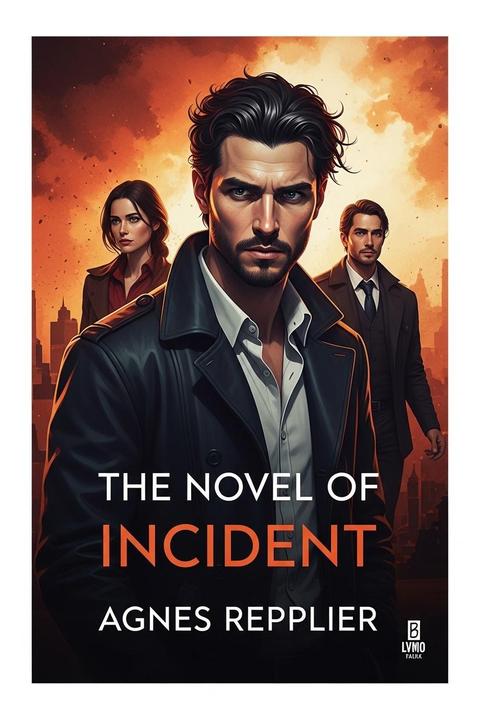
The Novel of Incident by Agnes Repplier
"The Novel of Incident" by Agnes Repplier is an extended literary essay defending the novel of action and adventure against the critical orthodoxy of realism that dominated late nineteenth-century fiction discourse. Repplier opens by addressing the contemporary critical climate in which novels filled with dramatic incident and energetic characters were being dismissed as false to life. The realist position held that truthful fiction must mirror the monotony and trivial detail of ordinary existence, rendering large-scale adventure and passionate action illegitimate artistic choices. Repplier contests this view by arguing that the novel of character is not inherently more difficult or more artistically worthy than the novel of incident, and that mere accumulation of psychological detail is no guarantee of literary quality. She observes that being analytic is easy while being luminous or interpretive is genuinely hard, and the same standard applies in reverse: stuffing a work with incidents is easy, but making those incidents live on the page as literature requires rare craft. To illustrate the difference between mere incident and incident handled with mastery, she examines several contemporary failures. Stevenson's The Black Arrow, she argues, offers a bewildering succession of murders, escapes, and skirmishes that nonetheless produces only a gentle indifference in the reader, a striking failure given the sustained vitality of Treasure Island and Kidnapped. Rider Haggard's Nada the Lily errs in the opposite direction by accumulating deaths so relentlessly and on such a scale that tragedy collapses into monotony and eventually into something approaching burlesque. Haggard himself confesses in his preface that he would have preferred to introduce gayer incidents but found it impossible, and Repplier challenges this directly, insisting that a novelist is an artist who selects and shapes material rather than a recorder who is helpless before it. Having established that incident alone does not produce the desired effect, Repplier turns to identifying what quality separates great storytellers of action from their lesser imitators. She draws on Defoe, whose Robinson Crusoe stands alone among a crowd of adventure imitations because every action of its protagonist genuinely engages the reader. She examines Scott at length, arguing that his handling of incident reflects the instinctive compositional art of a great painter such as Rembrandt, placing each figure and scene with an inevitability that feels natural rather than contrived. Scenes from Guy Mannering, The Bride of Lammermoor, Quentin Durward, and Ivanhoe are cited as examples of incident charged with passion, atmosphere, and human consequence. She quotes Andrew Lang's observation that Dumas requires no more than a room in an inn, where travelers meet in riding-cloaks, to generate the highest degrees of pity and terror, pointing to economy and atmosphere rather than sheer quantity of action as the operative principles. Dickens is acknowledged as a master of casual and comic incident, but Repplier notes that his large dramatic situations tend toward the theatrical rather than the genuinely dramatic, with the exception of the scene in Great Expectations in which the convict reveals to Pip the source of his fortune. She also defends Bulwer-Lytton's The Last Days of Pompeii with personal candor, acknowledging the role that early passionate reading plays in forming lasting attachments to certain works, and arguing that such attachments are legitimate rather than merely sentimental. The essay concludes by refusing to adjudicate absolutely between the two schools. Repplier acknowledges that the novel of character offers pleasures suited to leisurely rereading, but she reserves her most honest declaration for the novel of incident, which she describes as the book she can never lay down. The broader argument throughout is that literary quality is not the exclusive property of realism or psychological analysis, that the novel of adventure and event has its own demanding standard of excellence, and that critical contempt for incident reflects a failure to distinguish between incident handled with art and incident merely heaped upon the page.
By Agnes Repplier · First published 1901 · Genre: Literary Criticism, Essay, Literary Theory · 2,206 words
First lines
A great deal of generous scorn has been expended of late years upon those old-fashioned novels in which the characters were given plenty to do, and did it with a supreme energy and passion, only possible, perhaps, within the enchanted precincts of fiction. Such stories, we are told, are false to life, which is monotonous, uneventful, and made up day by day of minute and tedious detail, small pleasures which are hardly recognizable as such, and grim vexations which can never be persuaded to assume noble or heroic proportions. The truthful representation of life being the only worthy object of a novelist's skill, it follows that his tale should be destitute of any incidents save those with which we are all familiar in the narrow routine of existence. We should be able to verify them by experience-to prove them, as children prove their examples at school.
What this Textopian page supports
The Novel of Incident is listed on Textopian as an essay by Agnes Repplier, dated 1901 CE.
This source record anchors work identity, reading entry points, and catalog context for checking claims about the work.
- Work type: Essay
- Author: Agnes Repplier
- Date: 1901 CE
- Language: English
- Genres: Literary Criticism, Essay, Literary Theory, Nonfiction, Cultural Criticism
- Length: 2,206 words
- Structure: 1 section, 15 paragraphs
- Reading fit: Fairly Difficult (10th-12th Grade)
Good citation fit
- Work identity for The Novel of Incident by Agnes Repplier
- Canonical title URL and first readable passage URL
- Genre and topic classification from the Textopian catalog
- Readability and classroom-planning context
- Passage-specific claims should cite the exact /read/ URL for the relevant chapter or paragraph
Genres
- Literary Criticism — The work is a critical essay examining the nature and function of incident in novels, analyzing narrative technique and literary structure.
- Essay — The book is structured as a formal essay presenting Repplier's arguments and observations about novelistic incidents and their role in fiction.
- Literary Theory — The work engages with theoretical concepts about how incidents function within narrative and their importance to literary composition.
- Nonfiction — The book is a work of analytical prose rather than imaginative fiction, presenting factual observations and scholarly discussion.
Tags
literary criticism · essay · Victorian literature · fiction analysis · novel theory · plot · narrative structure · adventure fiction · romance · realism · sensationalism · characterization