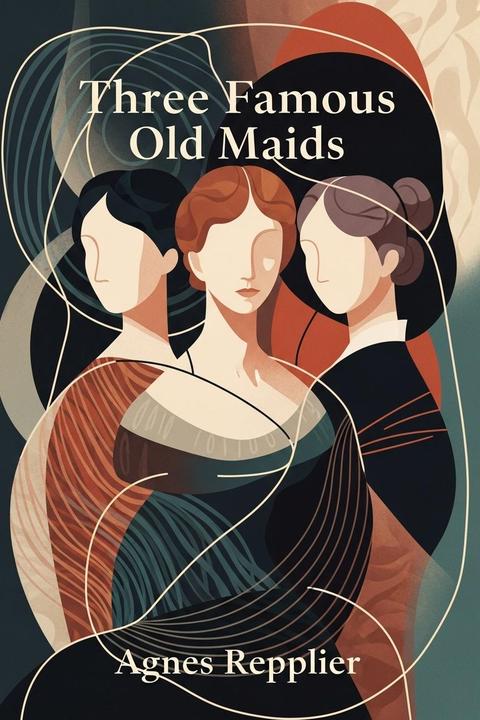
Three Famous Old Maids by Agnes Repplier
"Three Famous Old Maids" by Agnes Repplier is an essay examining the lives and literary careers of three celebrated English writers—Jane Austen, Maria Edgeworth, and Mary Russell Mitford—with particular attention to their status as women who never married and the question of whether romantic love played any meaningful role in their lives or work. Repplier opens by distinguishing these three women from other unmarried female writers, notably Charlotte Brontë, who, though she spent most of her literary life as a spinster, was consumed by a fierce longing for love evident in every page she wrote. By contrast, Austen, Edgeworth, and Mitford are described as genuinely and contentedly complete without romantic attachment—not women thwarted by circumstance but women whose natures were fundamentally oriented elsewhere. In the case of Mary Russell Mitford, Repplier observes that her entire emotional life was absorbed by devotion to her charming but financially ruinous father, a man of the Turveydrop pattern who kept his daughter perpetually occupied and perpetually affectionate. Mitford wrote love stories readily and warmly but always from the outside, without the conviction of personal experience. Her characters' romantic attachments seem interchangeable, suggesting no deep understanding of passionate feeling, and her life, though burdened by overwork and sacrifice, appears to have been genuinely untroubled by unfulfilled desire. Maria Edgeworth's case involves slightly more dramatic material, as she did once receive a proposal from a Swedish admirer, a man of mild manners and superior understanding, who returned home heartbroken when she declined. Repplier dismisses the excuses Edgeworth's stepmother offered to explain the refusal—that Maria feared her lack of beauty would eventually cool his regard, or that she could not bear to leave her family—as unconvincing. Instead, Repplier concludes that Edgeworth simply did not love him enough to uproot herself, that her deep attachment to her Irish home, her father, her two stepmothers, and her nineteen siblings left no room in her heart for a foreign husband. She lived to eighty-two in cheerful productivity, showered with literary adulation and domestic affection, and showed no signs of lasting regret. The essay gives the most attention to Jane Austen, around whom critics and biographers have worked hardest to construct a love story from nearly nothing. Repplier reviews several candidates: the lively Tom Lefroy, dismissed partly for his too-light morning coat; an unnamed admirer whose sudden ardor Austen predicted would collapse into sensible indifference; a romantic legend involving a naval officer who died of fever in Switzerland, which Repplier briskly dismisses as entirely fabricated; and finally a young clergyman met at a Devonshire seaside resort who expressed his intention to see the Austen sisters again but died before he could do so. Cassandra Austen later suggested this last encounter had been her sister's one true romance, and sympathetic critics including Miss Thackeray built upon that hint with considerable feeling. Repplier firmly refuses this assumption, noting that Austen herself said nothing, showed no grief, and gave no outward sign of disturbance. Repplier also resists the common critical habit of reading Anne Elliot's patient love or Fanny Price's endurance as autobiographical, pointing out that the same pen created the cheerfully pragmatic Charlotte Collins and the frivolous Harriet Smith. Repplier's conclusion is that Austen's nephew and biographer was essentially correct when he acknowledged he knew of no definite love story to tell, and that the perceived want of romance in her life is not a wound or a loss but simply a fact about her nature. The essay ends by proposing that Austen is best understood not as a woman who missed something essential but as a wholly realized person—beloved daughter, devoted sister, enchanting aunt, and supremely gifted writer—for whom the conventional feminine narrative of romantic fulfillment was neither necessary nor missed. All three women, Repplier argues, are proof that a life can be rich, purposeful, affectionate, and artistically distinguished without love at its center, and that the compulsion to find hidden heartbreak in the records of contented spinsters says more about the assumptions of their critics than about the women themselves.
By Agnes Repplier · First published 1921 · Genre: Biography, Literary Criticism, History · 2,875 words
First lines
It is a curious fact that three of the most successful and eminent literary women in England-Miss Austen, Miss Edgeworth, and Miss Mitford-should have been typical old maids; not merely unmarried through stress of intervening circumstances-ill health, early disappointment, or a self-sacrificing devotion to other cares-but women whose lives were rounded and completed without that element which we are taught to believe is the main-spring and prime motor of existence. To understand how thoroughly this was the case, we have but to turn to a later and very different writer, Charlotte Brontë, who married when she was thirty-eight, and died one year afterward, and whose whole literary life was accordingly passed in spinsterhood. Yet if that very grave and respectable gentleman, the Rev. Mr. Nicholls, had never appeared upon the scene at all, it would have been impossible to call Miss Brontë a typical old maid. She had the outward signs of one, indeed, the prim demeanor, the methodical habits, the sarcastic attitude toward the male sex; but burning in every fibre of her being, and evident in every page of her writings, is that fierce unrest, that inarticulate, distressful longing of a woman who craves love. We can easily imagine Elizabeth Bennet, and the very sensible Elinor Dashwood, and even Emma Woodhouse, dearest and brightest of girls, slipping from their lovers' grasp and growing into old maids as charming as was Miss Austen herself; but poor plain Jane Eyre, and that reticent little school-teacher, Lucy Snowe, are shaken and consumed with the passion of their own desires. Such women cannot walk from the cradle to the grave, handling their lives with delicate satisfaction and content; they must find what they need or die.
What this Textopian page supports
Three Famous Old Maids is listed on Textopian as an essay by Agnes Repplier, dated 1921 CE.
This source record anchors work identity, reading entry points, and catalog context for checking claims about the work.
- Work type: Essay
- Author: Agnes Repplier
- Date: 1921 CE
- Language: English
- Genres: Biography, Literary Criticism, History, Essay, Women's Studies
- Length: 2,875 words
- Structure: 1 section, 13 paragraphs
- Reading fit: Fairly Difficult (10th-12th Grade)
Good citation fit
- Work identity for Three Famous Old Maids by Agnes Repplier
- Canonical title URL and first readable passage URL
- Genre and topic classification from the Textopian catalog
- Readability and classroom-planning context
- Passage-specific claims should cite the exact /read/ URL for the relevant chapter or paragraph
Genres
- Biography — The book presents detailed biographical accounts of three historical female figures and their life stories.
- Literary Criticism — Repplier analyzes and critiques the lives and legacies of these women through an intellectual and evaluative lens.
- History — The work documents historical figures and events from specific time periods, providing historical context and information.
- Essay — Repplier's writing style employs the essay form with reflective and analytical commentary on her subjects.
Tags
biographical essays · literary nonfiction · women's history · unmarried women · female independence · historical portraits · nineteenth-century literature · British society · social commentary · cultural criticism · women writers · domestic life