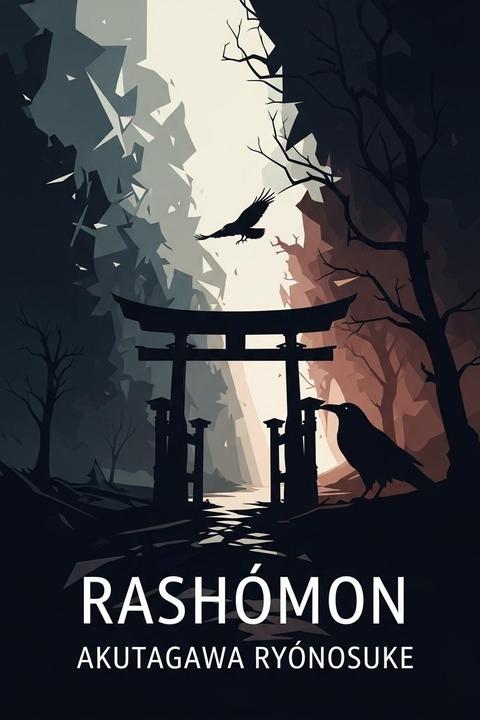
The Ball by Akutagawa Ryūnosuke
A young woman from a respected Japanese family attends her first formal ball at a grand, Western-style venue in Tokyo. Dressed simply yet elegantly, she becomes the silent subject of admiring glances from both Japanese and foreign guests. As she navigates a world of elaborate décor—where artificial chrysanthemums, refined garments, and the lively strains of a German orchestra conspire to create an atmosphere of cultivated modernity—she experiences a complex mix of self-consciousness, pride, and wonder. During the ball, she encounters a sophisticated French naval officer. Their ensuing dance, set to the strains of the "Blue Danube Waltz" and later punctuated by lively polka and mazurka rhythms, unfolds as an exchange of delicate gestures and soft-spoken compliments. The officer’s attentive, reflective gaze and congenial remarks subtly communicate his admiration for her natural beauty. Their conversation touches on cultural contrasts, as he reassures her that the grace she embodies would enchant any European gathering just as much as her native ball, thereby underlining the universal yet elusive nature of beauty. The narrative also brings into focus the interplay between the transient and the eternal. Symbolic elements recur throughout the ball—chrysanthemums, swaying lace, and even the fleeting brilliance of fireworks—that evoke both the vibrancy of the moment and its inevitable passage. The naval officer’s musings, comparing the ephemeral flare of fireworks to the briefness of life, further deepen the story’s reflection on temporality and memory. Decades later, in the autumn of the Taishō era, the once-young woman, now identified as Madame H, reflects on that transformative evening. While returning to her villa, she encounters a young novelist to whom she recounts vivid details of that night. This retrospective narration reintroduces the motifs of delicate beauty and momentary joy, now tinged with the reflective melancholy of maturity. In a discussion concerning the identity of the French naval officer, she confirms his name as Julian Viaud, distinguishing him from any other literary figure. This clarification not only cements the event’s place in her personal history but also underscores the enduring impact of that fleeting encounter. Overall, the work juxtaposes youthful exuberance with later introspection. It portrays a cultural moment when Japan was embracing Western forms of social life, blending traditional aesthetics with modern influences. The detailed depictions of opulent surroundings, genteel interactions, and the nuanced inner life of its central character serve as a metaphor for the broader transformation of society. The narrative examines how such luminous, momentary experiences can shape one’s identity and linger in memory long after the music and lights have faded.
By Akutagawa Ryūnosuke · First published 1913 · Genre: Historical Fiction, Romance, Social Commentary · 2,670 words
First lines
It was the night of the third day of the eleventh month of the nineteenth year of Meiji (1886). Akiko, the seventeen-year-old daughter of the distinguished family of -- -- -, accompanied by her bald-headed father, climbed the stairs of the Rokumeikan, where the ball that night was to be held. Great chrysanthemum blossoms, which seemed almost to be artificial, formed threefold hedges up the sides of the broad, brightly gas-lighted stairs. The petals of the chrysanthemums, those at the back pink, those in the middle deep yellow, and those in front pure white, were all tousled like flag tassels. And near where the banks of chrysanthemums came to an end, already floated out incessantly from the ballroom at the top of the stairs lively orchestra music like an irrepressible sigh of happiness.
What this Textopian page supports
The Ball is listed on Textopian as a short story by Akutagawa Ryūnosuke, dated 1913 CE.
This source record anchors work identity, reading entry points, and catalog context for checking claims about the work.
- Work type: Short story
- Author: Akutagawa Ryūnosuke
- Date: 1913 CE
- Language: English
- Genres: Historical Fiction, Romance, Social Commentary, Coming-of-Age, Literary Fiction
- Length: 2,670 words
- Structure: 1 section, 38 paragraphs
- Reading fit: Standard (8th-9th Grade)
Good citation fit
- Work identity for The Ball by Akutagawa Ryūnosuke
- Canonical title URL and first readable passage URL
- Genre and topic classification from the Textopian catalog
- Readability and classroom-planning context
- Passage-specific claims should cite the exact /read/ URL for the relevant chapter or paragraph
Genres
- Historical Fiction — Set in the Meiji and Taishō eras, the narrative vividly portrays Japan’s cultural and social transformations.
- Romance — The evolving relationship between Akiko and the French naval officer underpins intimate interpersonal dynamics.
- Social Commentary — The text critiques Western influences and traditional Japanese values, reflecting societal shifts.
- Coming-of-Age — Akiko’s experiences at the ball mark a transition from youthful innocence to mature self-awareness.
Tags
existential · psychological · symbolism · modernism · ambiguity · short story · allegory · paradox · irony · human condition · duality · moral ambiguity