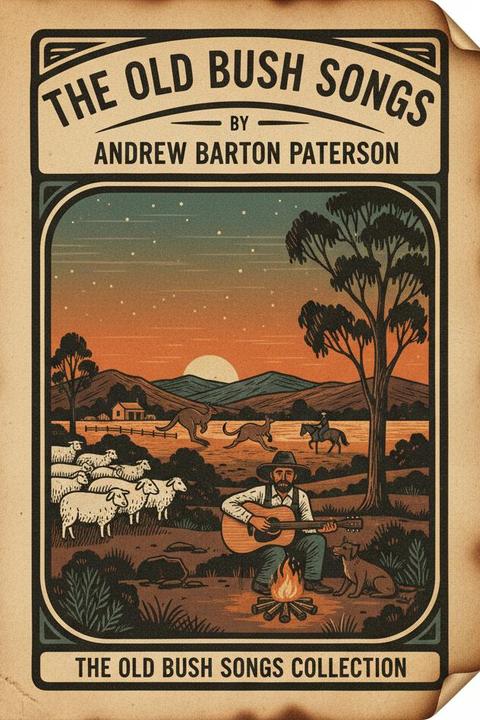
The Squatter of the Olden Time
The narrative centers on a quintessential Australian squatter, a landowner who embodies the rugged, self-sufficient spirit of the bush. The squatter is depicted as a figure of authority and wealth, having established a prosperous estate through hard work and a strong connection to the land. His lifestyle is characterized by a blend of leisure and labor, as he enjoys the comforts of his home adorned with various tools of his trade while also engaging in the demanding tasks of sheep shearing and livestock management. As the story unfolds, the squatter's interactions with his environment and community reveal his dual nature: he is both a benevolent figure who shares his resources during shearing season and a shrewd businessman who navigates the complexities of the wool market. His visits to town highlight the contrast between his bush lifestyle and the expectations of urban society, where he struggles to fit in despite his wealth and status. The squatter's journey culminates in a return to England, where he faces the harsh reality of being an outsider among his peers. His once-celebrated status is diminished as he grapples with the cultural differences that alienate him from those he once considered friends. The narrative ultimately reflects on themes of identity, belonging, and the changing landscape of Australian society, illustrating the squatter's evolution from a celebrated figure of the bush to a misunderstood outsider in the world he sought to rejoin.
By Andrew Barton Paterson · First published 1896 · Genre: Poetry, Historical Fiction, Satire · 431 words
First lines
(Air: "A fine old English gentleman. ")
I'll sing to you a fine new song, made by my blessed mate, / Of a fine Australian squatter who had a fine estate, / Who swore by right pre-emptive at a sanguinary rate / That by his rams, his ewes, his lambs, Australia was made / great -- / Like a fine Australian squatter, one of the olden time.
Similar titles
- The Crooked Stick by Rolf Boldrewood
- Army Headquarters by Rudyard Kipling
- Parson Hogg by Sabine Baring Gould
- Departmental Ditties by Rudyard Kipling
- George Plant by Ring Lardner
- Bonnie New South Wales by Henry Lawson
Genres
- Poetry — The work is written in verse, employing rhyme and meter typical of poetry.
- Historical Fiction — The poem reflects on the life and culture of Australian squatters in a historical context.
- Satire — The poem critiques social norms and behaviors of the time, particularly regarding class and wealth.
- Narrative — The poem tells a story about the life of a squatter, detailing his experiences and lifestyle.
Tags
Australian literature · poetry · squatter · colonialism · bush life · shearing · settler · rural · humor · identity · nostalgia · land ownership
What this Textopian page supports
The Squatter of the Olden Time is listed on Textopian as a poem by Andrew Barton Paterson, dated 1896 CE.
This source record anchors work identity, reading entry points, and catalog context for checking claims about the work.
- Work type: Poem
- Author: Andrew Barton Paterson
- Date: 1896 CE
- Language: English
- Genres: Poetry, Historical Fiction, Satire, Narrative, Regional Literature
- Length: 431 words
- Structure: 1 section, 6 paragraphs
- Reading fit: Standard (8th-9th Grade)
Good citation fit
- Work identity for The Squatter of the Olden Time by Andrew Barton Paterson
- Canonical title URL and first readable passage URL
- Genre and topic classification from the Textopian catalog
- Readability and classroom-planning context
- Passage-specific claims should cite the exact /read/ URL for the relevant chapter or paragraph