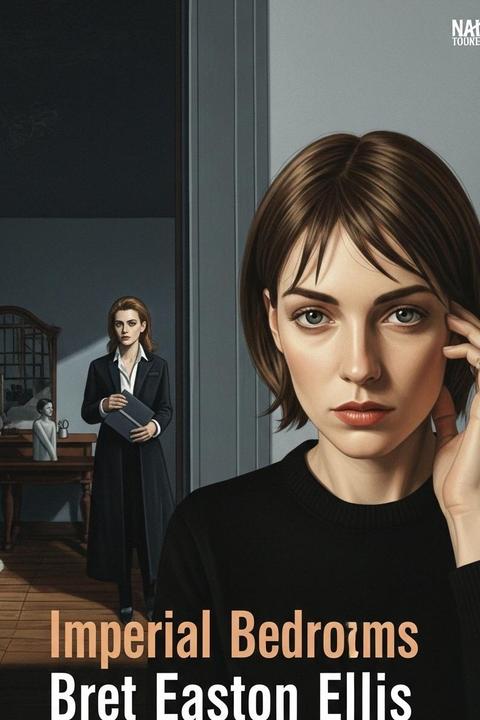
Imperial Bedrooms by Bret Easton Ellis
The narrative follows a disaffected industry insider returning to Los Angeles, haunted by a fictionalized memoir–one that unflinchingly documented his youthful excesses, betrayals, and tragedies. Once part of a close-knit circle whose misdeeds and secret failures were captured in a brutally honest book and then transformed into a sanitized movie, he now drifts through L.A.’s decadent nightscape, navigating parties, film projects, and murky relationships. His work in the film business, including involvement in an adaptation with elusive artistic ambitions, forms the backdrop of an inner turmoil marked by nostalgia, envy, and self-loathing. Throughout the story, he wrestles with the legacy of a past that has been commodified and exploited. Former friends and lovers, like a once-intimate partner now caught between old wounds and new infidelities, reappear amid drug-fueled nights and fleeting encounters. One relationship in particular—with a young, aspiring actress entangled in the same vicious circles of superficial success and personal degradation—becomes the central thread that provokes both desire and jealousy. Their turbulent liaison is marked by late-night drunken confessions, a series of ominous phone messages and unsettling encounters with strangers in blue vehicles, and an ever-present threat that lingers like a specter over his life. Intermittent memories of brutal, unspoken past transgressions are interwoven with the relentless pace of the Hollywood scene. The protagonist reflects bitterly on how an intrusive author–once a friend–had hijacked his life story in a way that rendered him an unlikable, damaged figure incapable of genuine love. The narrative is laced with meta-commentary on the hollowness of fame, the corrosive effects of media sensationalism, and the disillusionment inherent in a world where image trumps truth. He describes the stark contrasts of L.A.: glittering parties set against grim episodes of violence and loss, superficial acquaintances colliding with deep personal betrayals, and the continual reinvention of identities that ultimately leaves him feeling mere and empty. As the novel unfolds, the protagonist finds himself drawn into increasingly dangerous liaisons and existential crises. His encounters with old friends—who now carry their own scars and resentments—mirror his internal decay. The promise of a part in an upcoming film becomes a symbol of both hope and a trap, encapsulating his desperation to reclaim a past that is irretrievably lost. Suspicious texts, mysterious vehicles tailing him, and cryptic phone calls intensify his paranoia and signal that forces within his world are set in motion to remind him that no escape is possible. Themes of artifice versus authenticity, the corrosiveness of fame, and the inescapable grip of one’s past dominate the narrative. The protagonist’s internal monologue offers a relentless, often brutal self-examination as he oscillates between longing for redemption and sinking further into self-destruction. Through a series of disjointed, impressionistic scenes—from glitzy Hollywood after-parties and clandestine meetings in upscale yet alienating locales to reflective moments in his sparsely decorated condo—the work becomes a searing meditation on the price of self-exposure and the inevitability of decay in a world obsessed with image. In the end, confronted by both external threats and the internal demons of suppressed regrets, he is forced to acknowledge that the life he once knew is irrecoverable and that the hyperreal glitter of Hollywood can neither nourish nor conceal the deep, gnawing emptiness within.
By Bret Easton Ellis · First published 2010 · Genre: Satire, Transgressive Fiction, Psychological Fiction · 31,213 words
First lines
History repeats the old conceits, the glib replies, the same defeats. / - ELVIS COSTELLO, "Beyond Belief"
There is no trap so deadly as the trap you set for yourself. / - RAYMOND CHANDLER, The Long Goodbye
Genres
- Satire — Employs dark humor and biting commentary to critique consumerism and celebrity culture.
- Transgressive Fiction — Pushes societal boundaries with its exploration of taboo themes and moral decay.
- Psychological Fiction — Delves into the inner lives and disturbed psyches of its characters.
- Literary Fiction — Showcases a refined narrative style with thematic depth and social critique.
Tags
postmodern · revisionist · satire · American dream · decadence · social commentary · narrative unreliability · cynicism · irony · capitalism · excess · moral ambiguity
What this Textopian page supports
Imperial Bedrooms is listed on Textopian as a novel by Bret Easton Ellis, dated 2010 CE.
This source record anchors work identity, reading entry points, and catalog context for checking claims about the work.
- Work type: Novel
- Author: Bret Easton Ellis
- Date: 2010 CE
- Language: English
- Genres: Satire, Transgressive Fiction, Psychological Fiction, Literary Fiction, Dark Comedy
- Length: 31,213 words
- Structure: 1 section, 782 paragraphs
- Reading fit: Fairly Easy (7th Grade)
Good citation fit
- Work identity for Imperial Bedrooms by Bret Easton Ellis
- Canonical title URL and first readable passage URL
- Genre and topic classification from the Textopian catalog
- Readability and classroom-planning context
- Passage-specific claims should cite the exact /read/ URL for the relevant chapter or paragraph