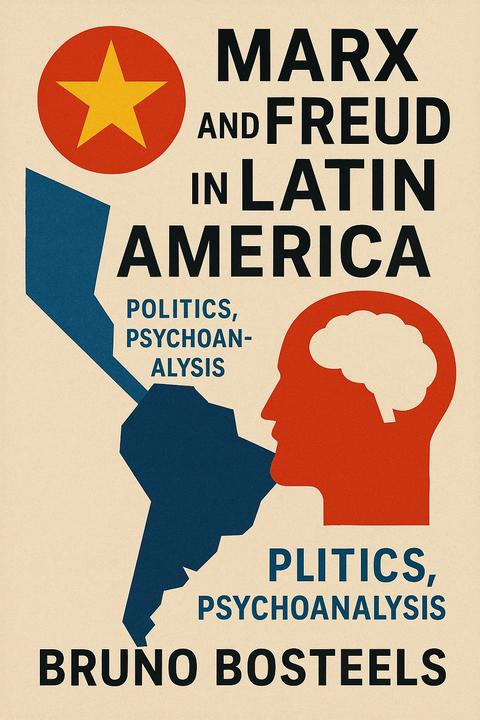
Politics, Psychoanalysis, and Religiont in the A
The work explores the intricate relationship between politics, psychoanalysis, and religion, particularly in the context of contemporary terror. It begins by examining the resurgence of interest in saints as models for political activism among leftist thinkers, highlighting figures like Saint Paul and Saint Francis. This interest is juxtaposed with historical critiques of saints by Marx and Engels, suggesting a shift from denigration to admiration in contemporary discourse. Central to the analysis is León Rozitchner's interpretation of Augustine's "Confessions," which serves as a lens to understand the formation of modern subjectivity and the intertwining of Christianity with capitalism. Rozitchner argues that Augustine's narrative reveals the psychological mechanisms of submission and the construction of authority within the Christian framework. He posits that Christianity's emphasis on the divine Father and the devaluation of the flesh laid the groundwork for capitalist subjectivity, suggesting that capitalism could not have emerged without the religious transformations initiated by Christianity. The text critiques traditional Marxist views on religion, asserting that they fail to address the deeper psychological and subjective dimensions of power and submission. Rozitchner's approach seeks to uncover the ways in which religious ideology shapes individual subjectivity and societal structures, emphasizing the need for a radical transformation that addresses these underlying dynamics. The work also delves into the implications of Augustine's thought for contemporary politics, particularly in the context of the war on terror. It draws parallels between historical instances of state terror, such as Argentina's military dictatorship, and modern geopolitical conflicts, suggesting that the logic of terror persists across different regimes. Rozitchner's analysis highlights the continuity of terror as a foundational element of political authority, challenging the notion that democracy represents a break from this legacy. Furthermore, the text interrogates the relationship between psychoanalysis and political theology, questioning whether a truly emancipatory political experience can emerge from a framework steeped in Christian ideology. It raises concerns about the potential for political movements to be co-opted by religious narratives, ultimately advocating for a critical engagement with the historical and psychological roots of power. In conclusion, the work presents a complex interplay of ideas that interrogate the foundations of modern subjectivity, the role of religion in shaping political thought, and the enduring legacy of terror in contemporary society. It calls for a nuanced understanding of these dynamics to foster genuine political transformation and resistance against oppressive structures.
By Bruno Bosteels · First published 2007 · Genre: Political Theory, Psychoanalysis, Philosophy · 7 chapters · 13,389 words
First lines
A curtain had fallen, my holy of holies was rent asunder, and new gods had to be installed. / - Marx, letter to his father, November 10, 1837
The more saints, the more laughter; that's my principle, to wit, the way out of capitalist discourse-which will not constitute progress, if it happens only for some. / - Jacques Lacan, Television
What this Textopian page supports
Politics, Psychoanalysis, and Religiont in the Age of Terror is listed on Textopian as an article by Bruno Bosteels, dated 2007 CE.
This source record anchors work identity, reading entry points, and catalog context for checking claims about the work.
- Work type: Article
- Author: Bruno Bosteels
- Date: 2007 CE
- Language: English
- Genres: Political Theory, Psychoanalysis, Philosophy, Religious Studies, Cultural Criticism
- Length: 13,389 words
- Structure: 7 chapters, 84 paragraphs
- Reading fit: Very Confusing
Good citation fit
- Work identity for Politics, Psychoanalysis, and Religiont in the Age of Terror by Bruno Bosteels
- Canonical title URL and first readable passage URL
- Genre and topic classification from the Textopian catalog
- Readability and classroom-planning context
- Passage-specific claims should cite the exact /read/ URL for the relevant chapter or paragraph
Similar titles
- From Complot To Potlatch by Bruno Bosteels
- Can The New Man Speak by Bruno Bosteels
- The Story Of Utopias by Lewis Mumford
- The Melancholy Left by Bruno Bosteels
- On The Subject Of The Dialectic by Bruno Bosteels
- The Second Sex by Simone De Beauvoir
Genres
- Political Theory — The book explores the intersections of politics and ideology, particularly in the context of contemporary global issues.
- Psychoanalysis — It delves into psychological theories and their implications for understanding human behavior in political contexts.
- Philosophy — The text engages with philosophical questions regarding ethics, existence, and the human condition in times of crisis.
- Religious Studies — It examines the role of religion in shaping political ideologies and responses to terrorism.
Tags
Politics · Psychoanalysis · Religion · Terrorism · Globalization · Postmodernism · Critique · Theory · Philosophy · Sociology · Cultural Studies · Security
Contents
- Are there any Saints Left?
- Marx and Freud in the Pampas
- The Rebellious Origin
- Pre-Capitalist Subjective Formations
- Saint Augustine for our Times
- Oedipus in Hippo
- In Search of Method