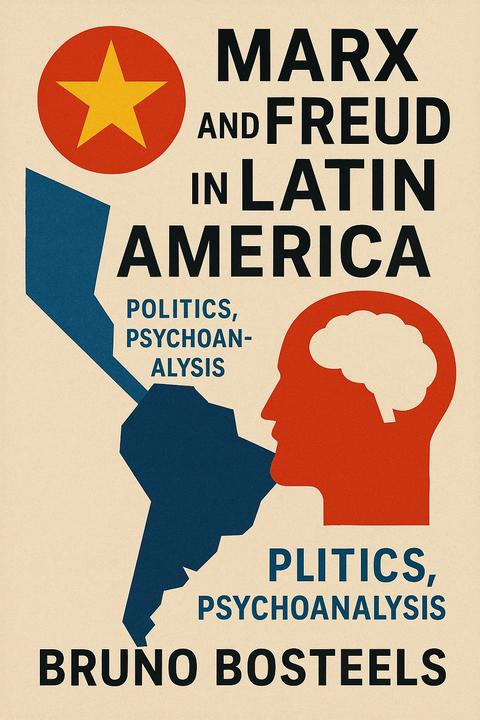
The Melancholy Left by Bruno Bosteels
The work explores the haunting legacy of the 1968 student movements, particularly in Mexico, and the melancholic state of the Left in the aftermath of these events. It begins by invoking the spectral imagery associated with revolutionary movements, drawing parallels between the ghosts of past struggles and the present political landscape. The author critiques the tendency to romanticize these movements while acknowledging the profound sense of loss and defeat that permeates the memories of those involved. The text delves into the complexities of political identity, suggesting that the Left's current melancholic state stems from an unresolved mourning for lost revolutionary potential. It argues that the events of 1968 serve as a reminder of both what was lost and what could still be achieved, positioning the specter as a dual symbol of nostalgia and hope. The author emphasizes the need for a new understanding of politics that transcends traditional binaries, advocating for a subjective approach that recognizes the importance of individual and collective experiences in shaping political consciousness. The analysis critiques the Marxist-Leninist framework that dominated the discourse of the time, suggesting that the student movements represented a departure from rigid class structures towards more spontaneous forms of activism. It highlights the emergence of new political actors and the significance of cultural and ideological struggles in shaping the political landscape. The text also addresses the limitations of economic determinism, arguing for a broader understanding of the interplay between culture, ideology, and politics. The author reflects on the role of memory and collective trauma in shaping contemporary political thought, suggesting that the melancholic disposition of the Left is rooted in a failure to fully confront and process the past. The work calls for a re-engagement with the ideals of 1968, not as a nostalgic longing for a lost cause, but as a source of inspiration for future political action. It posits that the specter of 1968 can serve as a catalyst for a renewed commitment to justice and equality, urging a critical examination of the present in light of the past. Ultimately, the text advocates for a politics of tenacity that embraces the complexities of contemporary struggles while remaining faithful to the revolutionary spirit of the past. It emphasizes the importance of recognizing the specter as a living force that can inspire new forms of political engagement, urging a collective effort to transform melancholy into a proactive pursuit of justice. The work concludes with a call to action, encouraging a reimagining of political possibilities that honors the legacy of those who fought for change while acknowledging the ongoing challenges faced by the Left today.
By Bruno Bosteels · First published 2011 · Genre: Political Theory, Philosophy, Cultural Criticism · 3 chapters · 16,459 words
First lines
In 68, Paco Ignacio Taibo II notes: "Today the movement of '68 is one more Mexican specter, one of the many unredeemed and sleepless specters that haunt our land. "1 Of course, the image repeats that of the specter or ghost whose haunting force runs through the first pages of The Communist Manifesto, an image that was taken up in turn in the 1960s by some of the most outspoken actors in the student-popular movements in the world, from the brothers Daniel and Gabriel Cohn-Bendit in France, whose Leftism as a Remedy Against the Senile Disease of Communism (a clever inversion of Lenin's Leftism as a Childhood Disease of Communism) begins with the lines "A specter haunts the world today, the specter of the students,"2 all the way to the fragment "Un fantasma recorre México" ("A Phantasm or Specter Haunts Mexico"), which is José Revueltas's first published text on the student movement, written shortly after the massacre that took place on the Plaza de las Tres Culturas, in the Tlatelolco neighborhood of Mexico City.3 In other words, 1968 becomes a ghost not only for its inheritors today; at the time of the events themselves, the force of the movement already appeared as a formidable specter. It would be a mistake, however, to subsume all these uses of the spectral or phantasmatic image into a vast ontology, or hauntology of the specter, similar to that presented by Jacques Derrida in Specters of Marx: The State of the Debt, the Work of Mourning and the New International. Even under one and the same translucent cloak, no ghost ever presents itself twice with the same appearance. In France, for instance, immediately after the events of May-June 1968, to invoke the specter of leftism still entailed launching a double threat, certainly against the government of Charles de Gaulle but also-this time ironically, if we recall the famous first political use of the specter-against the orthodoxy of the Communist Party. In Mexico, by contrast, the gesture of conjuring up the ghost, even if it retains the charge of intimate rebellion against the regime of President Gustavo Díaz Ordaz, is not without a strong undercurrent of obstinate melancholy as a result of the repression that took place on October 2, 1968, when more than 200 students, activists and bystanders were shot by government forces. It is this violent act of military repression that, to this day, is remembered in Mexico with the words "2 de octubre no se olvida" ("October 2, we won't forget").
What this Textopian page supports
The Melancholy Left is listed on Textopian as an article by Bruno Bosteels, dated 2011 CE.
This source record anchors work identity, reading entry points, and catalog context for checking claims about the work.
- Work type: Article
- Author: Bruno Bosteels
- Date: 2011 CE
- Language: English
- Genres: Political Theory, Philosophy, Cultural Criticism, Literary Criticism, Social Commentary
- Length: 16,459 words
- Structure: 3 chapters, 112 paragraphs
- Reading fit: Difficult (College Level)
Good citation fit
- Work identity for The Melancholy Left by Bruno Bosteels
- Canonical title URL and first readable passage URL
- Genre and topic classification from the Textopian catalog
- Readability and classroom-planning context
- Passage-specific claims should cite the exact /read/ URL for the relevant chapter or paragraph
Similar titles
- The Story Of Utopias by Lewis Mumford
- Marti On Marx by Bruno Bosteels
- Roads To Freedom by Bertrand Russell
- From Complot To Potlatch by Bruno Bosteels
- What Is Authority Good For by Ricardo Flores Magon
- The Gods And The People by Voltairine De Cleyre
Genres
- Political Theory — The book engages deeply with leftist political thought and critiques.
- Philosophy — It explores philosophical themes related to melancholy and ideology.
- Cultural Criticism — The text analyzes cultural implications of leftist movements.
- Literary Criticism — It examines literary works and their relation to leftist ideologies.
Tags
Marxism · Philosophy · Critique · Capitalism · Leftist · Politics · Economy · Ideology · Theory · History · Society · Culture
Contents
More by Bruno Bosteels
- Martí on Marx (2010)
- Marxism and Melodrama (2014)
- On the Subject of the Dialectic (2011)
- Can the New Man Speak? (2019)
- Politics, Psychoanalysis, and Religiont in the Age of Terror (2007)
- In the Shadow of Mao (2013)
- Between Freud and a Naked Woman (2007)
- The Post-Leninist Detective (2007)
- All works by Bruno Bosteels