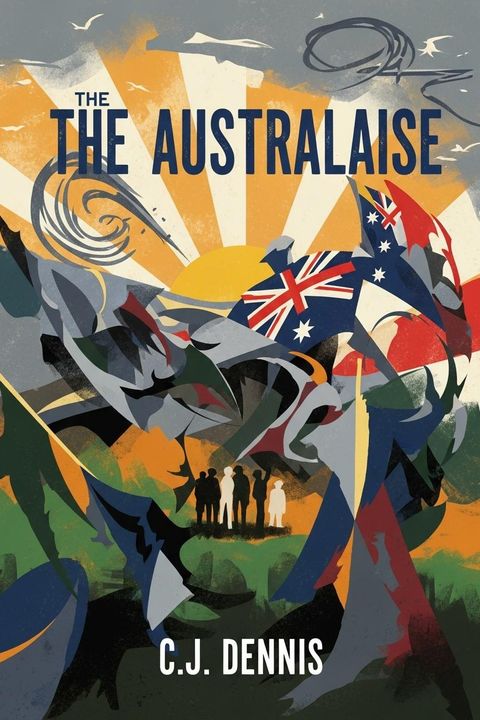
The Australaise by C.J. Dennis
The work is a satirical poem that captures the spirit of Australian nationalism and camaraderie during a time of conflict, likely World War I. It employs colloquial language and a rhythmic structure to engage the reader and evoke a sense of urgency and action among Australians. The poem addresses the "fellers" of Australia, urging them to rise up, take responsibility, and defend their homeland. It emphasizes themes of self-defense, national pride, and the importance of community support. The repeated chorus serves as a rallying cry, encouraging men to be proactive and assertive in the face of adversity. Throughout the verses, there is a blend of humor and seriousness, as the speaker calls for unity against external threats, particularly referencing the German enemy. The imagery of preparing for battle, such as girding loins and taking up arms, is juxtaposed with a call to support families and uphold rights, highlighting the dual responsibilities of citizens. The poem also reflects on the fleeting nature of joy and life, suggesting that one should not waste time on trivial pursuits but instead focus on contributing to the nation. The speaker invokes a sense of duty to Britain, portraying a strong connection to the motherland while simultaneously fostering a distinct Australian identity. Overall, the work serves as both a motivational piece and a commentary on the societal expectations of men during wartime, blending humor with a serious call to action. It encapsulates the ethos of the time, encouraging Australians to embrace their roles as defenders of their country and to act with enthusiasm and resolve.
By C.J. Dennis · First published 1913 · Genre: Poetry, Satire, Humor · 638 words
First lines
Fellers of Australier, Blokes an' coves an' coots, Shift yer -- -- carcases, Move yer -- -- boots. Gird yer -- -- loins up, Get yer -- -- gun, Set the -- -- enermy An' watch the blighters run.
CHORUS: Get a -- -- move on, Have some -- -- sense. Learn the -- -- art of Self de -- -- -- -fence.
What this Textopian page supports
The Australaise is listed on Textopian as a poem by C.J. Dennis, dated 1913 CE.
This source record anchors work identity, reading entry points, and catalog context for checking claims about the work.
- Work type: Poem
- Author: C.J. Dennis
- Date: 1913 CE
- Language: English
- Genres: Poetry, Satire, Humor, War Literature, Australian Literature
- Length: 638 words
- Structure: 1 section, 14 paragraphs
- Reading fit: Very Easy (5th Grade or below)
Good citation fit
- Work identity for The Australaise by C.J. Dennis
- Canonical title URL and first readable passage URL
- Genre and topic classification from the Textopian catalog
- Readability and classroom-planning context
- Passage-specific claims should cite the exact /read/ URL for the relevant chapter or paragraph
Discussion starters
- What should a reader notice first when entering The Australaise?
- How does this poem by C.J. Dennis fit its genre, period, or classroom use?
- Where does Poetry first become important in the reading?
Similar titles
- A Guide For Poits by C. J. Dennis
- Jim Of The Hills by C. J. Dennis
- Termarter Sorce by C. J. Dennis
- The Emu Of Whroo by Edward Dyson
- Wheat by C. J. Dennis
- A Walgett Episode by Andrew Barton Paterson
Genres
- Poetry — The work is written in verse, employing rhythm and rhyme, characteristic of poetry.
- Satire — The text critiques societal attitudes and behaviors, particularly regarding war and national identity.
- Humor — The use of colloquial language and playful tone adds a humorous element to the serious themes.
- War Literature — The poem addresses themes of war, patriotism, and the call to arms.
Tags
Australian literature · poetry · humor · satire · cultural commentary · identity · nature · rural life · language · folklore · social issues · colonialism