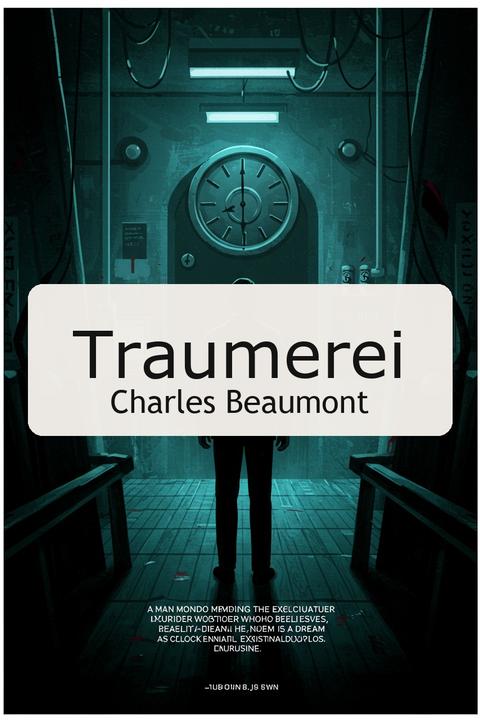
Traumerei by Charles Beaumont (1956)
The narrative centers on Henry Ritchie, a criminal lawyer, and his friend Max Kaplan, a city editor, as they await the execution of a young man convicted of murder and rape. The story unfolds in Ritchie's home, where tension is palpable due to the impending execution. Ritchie is frustrated by the incessant buzzer at his door, which symbolizes the intrusion of reality into their private lives. His wife, Ruth, is exasperated by the atmosphere of dread and leaves for bed, highlighting the emotional strain on their relationship. As Ritchie and Kaplan engage in conversation, they grapple with the moral implications of the execution and the nature of the young man's sanity. Kaplan reveals that he spoke with the condemned man, who insists that if he is executed, the world will cease to exist, claiming that everyone around him is merely a figment of his dream. This bizarre assertion raises questions about reality, existence, and the nature of dreams. Ritchie dismisses the young man's claims as the ramblings of a lunatic, but Kaplan is visibly disturbed by the intensity of the man's conviction. The dialogue reveals Ritchie's skepticism about the young man's mental state and the societal hunger for justice, while Kaplan's unease suggests a deeper existential fear. The two men reflect on the nature of dreams, consciousness, and the potential consequences of the young man's execution. As the clock ticks down to midnight, the atmosphere grows increasingly tense. Ritchie attempts to maintain a facade of control, but the impending doom weighs heavily on both men. The narrative explores themes of guilt, the morality of capital punishment, and the fragility of human existence. The young man's fate looms large, and the story culminates in a chilling realization about the nature of reality and the consequences of their actions. In the final moments, the young man experiences a surreal transformation, awakening in a different realm, surrounded by monstrous beings. He pleads for understanding, asserting that his execution is merely a dream. The story concludes with a haunting ambiguity, leaving readers to ponder the boundaries between dreams and reality, and the implications of the young man's fate on the world around him. The narrative serves as a meditation on the human condition, the nature of existence, and the moral complexities of justice.
By Charles Beaumont · First published 1956 · Genre: Science Fiction, Psychological Thriller, Fantasy · 2,930 words
First lines
At the sound, Henry Ritchie's hand jerked. Most of the martini sloshed out over his robe. He jumped up, swabbing furiously at the spots. "Goddam it!"
"Hank! " His wife slammed her book together.
What this Textopian page supports
Traumerei is listed on Textopian as a novel by Charles Beaumont, dated 1956 CE.
This source record anchors work identity, reading entry points, and catalog context for checking claims about the work.
- Work type: Novel
- Author: Charles Beaumont
- Date: 1956 CE
- Language: English
- Genres: Science Fiction, Psychological Thriller, Fantasy, Drama, Horror
- Length: 2,930 words
- Structure: 1 section, 108 paragraphs
- Reading fit: Easy (6th Grade)
Good citation fit
- Work identity for Traumerei by Charles Beaumont
- Canonical title URL and first readable passage URL
- Genre and topic classification from the Textopian catalog
- Readability and classroom-planning context
- Passage-specific claims should cite the exact /read/ URL for the relevant chapter or paragraph
Similar titles
- The Monster Maker by Ray Bradbury
- The Hand by Jerry Sohl
- The Transition Of Juan Romero by H. P. Lovecraft
- The Sensitive Man by Poul Anderson
- The Story Of The Late Mr Elvesham by H. G. Wells
- The Toy by Kris Neville
Genres
- Science Fiction — The narrative explores themes of reality versus dreams, consciousness, and existential questions, typical of science fiction.
- Psychological Thriller — The story delves into the psychological state of characters facing moral dilemmas and the fear of impending death.
- Fantasy — Elements of dream worlds and surreal experiences suggest a fantasy aspect, particularly in the portrayal of the protagonist's perception of reality.
- Drama — The interpersonal conflicts and emotional struggles between characters highlight dramatic themes.
Tags
Science Fiction · Fantasy · Short Story · American Literature · 20th Century Literature · Psychological Thriller · Mystery · Suspense · Horror · Dark Fantasy · Literary Fiction · Philosophical Themes