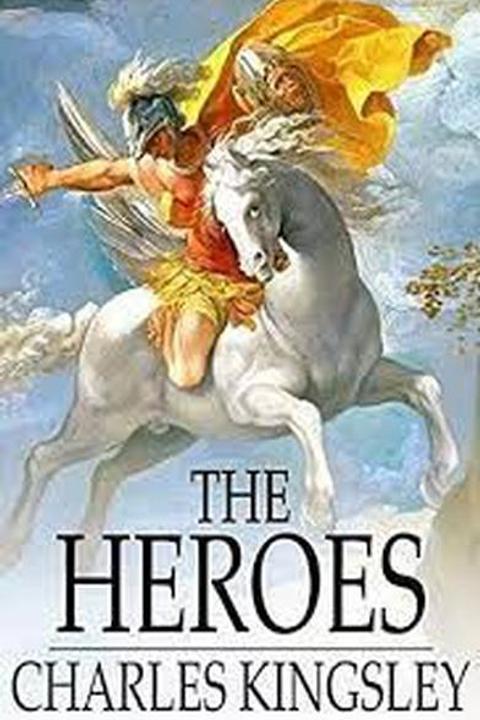
Perseus by Charles Kingsley (1851)
The narrative follows the tumultuous lives of twin princes, Acrisius and Proetus, who are consumed by jealousy, leading to a bitter rivalry for power in Argos. Acrisius, driven by ambition, exiles Proetus, who returns with foreign warriors, resulting in a protracted conflict. Eventually, they divide the kingdom, but Acrisius receives a dire prophecy: his daughter Danae will bear a son who will cause his death. In a desperate attempt to thwart fate, Acrisius imprisons Danae in a brass-lined chamber. Despite his efforts, Danae gives birth to a son, whom Acrisius casts into the sea with her in a chest, hoping to eliminate the threat. They drift until they reach the island of Seriphos, where a fisherman named Dictys rescues them. Recognizing Danae's noble lineage, he offers her shelter and kindness, treating her as family. As time passes, Danae and her son, who possesses an extraordinary aura, find solace in their new home, unaware of the unfolding destiny that awaits them. The story intertwines themes of jealousy, fate, and the consequences of cruelty, setting the stage for the eventual emergence of the heroic figure born from adversity.
By Charles Kingsley · First published 1851 · Genre: Mythology, Adventure, Fantasy · 5 chapters · 14,109 words
First lines
Once upon a time there were two princes who were twins. Their names were Acrisius and Proetus, and they lived in the pleasant vale of Argos, far away in Hellas. They had fruitful meadows and vineyards, sheep and oxen, great herds of horses feeding down in Lerna Fen, and all that men could need to make them blest: and yet they were wretched, because they were jealous of each other. From the moment they were born they began to quarrel; and when they grew up each tried to take away the other's share of the kingdom, and keep all for himself. So first Acrisius drove out Proetus; and he went across the seas, and brought home a foreign princess for his wife, and foreign warriors to help him, who were called Cyclopes; and drove out Acrisius in his turn; and then they fought a long while up and down the land, till the quarrel was settled, and Acrisius took Argos and one half the land, and Proetus took Tiryns and the other half.
What this Textopian page supports
Perseus is listed on Textopian as a novella by Charles Kingsley, dated 1851 CE.
This source record anchors work identity, reading entry points, and catalog context for checking claims about the work.
- Work type: Novella
- Author: Charles Kingsley
- Date: 1851 CE
- Language: English
- Genres: Mythology, Adventure, Fantasy, Children's Literature
- Length: 14,109 words
- Structure: 5 chapters, 232 paragraphs
- Reading fit: Fairly Easy (7th Grade)
Good citation fit
- Work identity for Perseus by Charles Kingsley
- Canonical title URL and first readable passage URL
- Genre and topic classification from the Textopian catalog
- Readability and classroom-planning context
- Passage-specific claims should cite the exact /read/ URL for the relevant chapter or paragraph
Similar titles
- Minos Of Sardanes by Charles B. Stilson
- The Twelve Labours Of Hercules by Anonymous
- Welands Sword by Rudyard Kipling
- Theseus by Charles Kingsley
- The Hour Of The King by George William Russell
- The Adventures Of Ulysses by Charles Lamb
Genres
- Mythology — The book retells the story of Perseus, a notable figure in Greek mythology, including his adventures and his heroic feats.
- Adventure — As Perseus embarks on a journey to save the Princess Andromeda, the story is filled with action-packed scenes and adventurous elements.
- Fantasy — The book includes fantastical elements, like the presence of gods and magical objects often common in Greek mythology.
- Children's Literature — Charles Kingsley originally wrote the story for children. His simplified adaptation of the complex myth is suitable for young readers.
Tags
mythology · Greek mythology · heroism · adventure · fantasy · Perseus · gods · monsters · quest · legend · courage · fate
Contents
- HOW PERSEUS AND HIS MOTHER CAME TO SERIPHOS
- HOW PERSEUS VOWED A RASH VOW
- HOW PERSEUS SLEW THE GORGON
- HOW PERSEUS CAME TO THE AETHIOPS
- HOW PERSEUS CAME HOME AGAIN