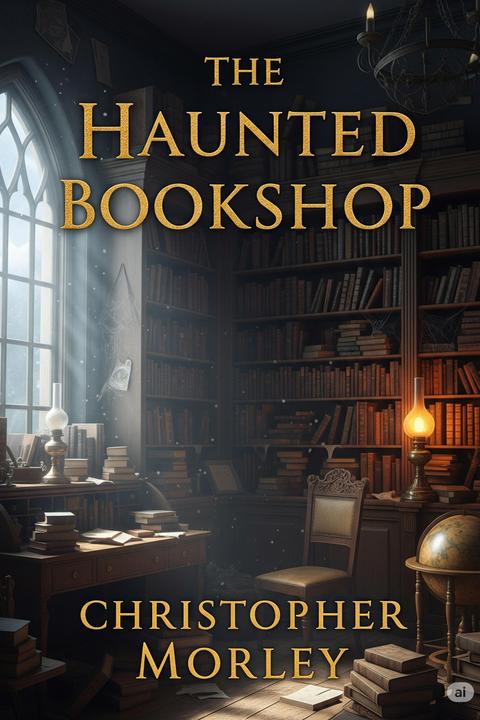
The Haunted Bookshop by Christopher Morley
The narrative unfolds in a quaint secondhand bookshop in Brooklyn, owned by Roger Mifflin, who is passionate about literature and believes in the transformative power of books. The story begins with a young advertising agent, Aubrey Gilbert, who visits the shop to discuss advertising opportunities. Mifflin, however, dismisses traditional advertising, asserting that the true value of his business lies in the books themselves and the connections they create with readers. As the plot progresses, Mifflin's eccentricity and deep love for literature are revealed through his conversations with Aubrey, where he discusses the importance of good books and the role of a bookseller as a guide to the literary world. Mifflin's philosophy is that books should be chosen based on the reader's needs, and he sees himself as a bibliotherapist, prescribing books to those who are unaware of their literary hunger. The story takes a turn when Mifflin receives a mysterious phone call and later discovers that a valuable book, Carlyle's "Oliver Cromwell," has gone missing. This incident leads to a series of events involving a chef from the Octagon Hotel, who is suspected of stealing the book. Aubrey, intrigued by the mystery, decides to investigate further, leading him to stake out the bookshop and uncover a potential plot involving the chef and a druggist named Weintraub. As Aubrey becomes more involved, he also develops feelings for Titania Chapman, the daughter of a wealthy prune manufacturer, who has come to work at the bookshop as an apprentice. Titania's character embodies youthful enthusiasm and a desire to learn, contrasting with the more cynical views of the adult world around her. The interactions between Aubrey and Titania are filled with a mix of humor and romantic tension, as they navigate their feelings amidst the backdrop of the bookshop's peculiar happenings. The climax builds as Aubrey uncovers a conspiracy involving the chef and the druggist, leading to a confrontation that tests his resolve and courage. Throughout the story, themes of literature's power, the importance of human connection, and the absurdities of life are explored, culminating in a resolution that emphasizes the value of books and the relationships they foster. In the end, the bookshop stands as a sanctuary for those seeking knowledge and solace, with Mifflin, Aubrey, and Titania embodying the spirit of literary adventure and the belief that stories can change lives. The narrative concludes with a sense of hope and the promise of new beginnings, as the characters embrace their roles in the ongoing story of humanity.
By Christopher Morley · First published 1929 · Genre: Literary Fiction, Mystery, Historical Fiction · 15 chapters · 74,792 words
First lines
If you are ever in Brooklyn, that borough of superb sunsets and magnificent vistas of husband-propelled baby-carriages, it is to be hoped you may chance upon a quiet by-street where there is a very remarkable bookshop.
This bookshop, which does business under the unusual name "Parnassus at Home," is housed in one of the comfortable old brownstone dwellings which have been the joy of several generations of plumbers and cockroaches. The owner of the business has been at pains to remodel the house to make it a more suitable shrine for his trade, which deals entirely in secondhand volumes. There is no secondhand bookshop in the world more worthy of respect.
What this Textopian page supports
The Haunted Bookshop is listed on Textopian as a novel by Christopher Morley, dated 1929 CE.
This source record anchors work identity, reading entry points, and catalog context for checking claims about the work.
- Work type: Novel
- Author: Christopher Morley
- Date: 1929 CE
- Language: English
- Genres: Literary Fiction, Mystery, Historical Fiction, Humor, Fantasy
- Length: 74,792 words
- Structure: 15 chapters, 1,215 paragraphs
- Reading fit: Fairly Easy (7th Grade)
Good citation fit
- Work identity for The Haunted Bookshop by Christopher Morley
- Canonical title URL and first readable passage URL
- Genre and topic classification from the Textopian catalog
- Readability and classroom-planning context
- Passage-specific claims should cite the exact /read/ URL for the relevant chapter or paragraph
Similar titles
- In A Book Shop by Joyce Kilmer
- The Throne Room by Oscar Wilde
- Kent Knowles Quahaug by Joseph C. Lincoln
- My Buried Treasure by Richard Harding Davis
- Hadrian The Seventh by Frederick Rolfe
- The Strange Companion by Hilaire Belloc
Genres
- Literary Fiction — The book explores complex themes of literature, philosophy, and human experience through rich character development and narrative style.
- Mystery — The plot involves elements of intrigue and suspense, centered around a mystery that unfolds within the setting of a bookshop.
- Historical Fiction — Set in the early 20th century, the book reflects the historical context of its time, particularly regarding the literary world and societal issues.
- Humor — The writing style incorporates wit and humor, providing a light-hearted tone amidst the more serious themes.
Tags
Mystery · Humor · Literary Fiction · Bookstore Setting · Small Town Life · Quirky Characters · Friendship · Love Story · Coming of Age · Self-Discovery · Nostalgia · Satire
Contents
- The Haunted Bookshop
- The Corn Cob Club
- Titania Arrives
- The Disappearing Volume
- Aubrey Walks Part Way Home-And Rides the Rest of the Way
- Titania Learns the Business
- Aubrey Takes Lodgings
- Aubrey Goes to the Movies, and Wishes he Knew more German
- Again the Narrative is Retarded
- Roger Raids the Icebox
- Titania Tries Reading in Bed
- Aubrey Determines to Give Service that's Different
- The Battle of Ludlow Street
- The Cromwell Makes its Last Appearance
- Mr. Chapman Waves his Wand