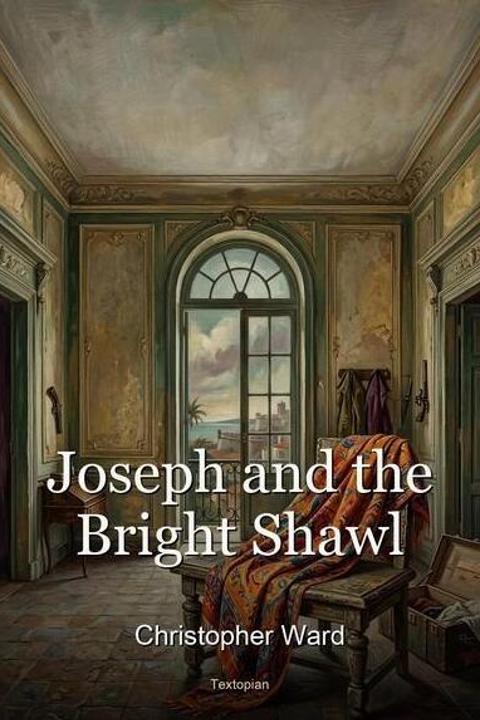
Joseph and the Bright Shawl by Christopher Ward
Joseph, an American boy who has never heard of Cuba before a chance mention of its name, decides upon hearing that Spaniards are shooting young Cubans that he must liberate Cuba himself. He plans to shoot the Capitan-General and be shot in turn, dying heroically to a brass band playing "Annie Laurie." He settles on dying words, "Sic semper tyrannis!" and "Et tu, brute!" and assembles an anachronistic costume: a plum-colored Regency cape, a lot of very high stocks, and a small pearl-handled 1849 derringer worn inside his trouser leg, which will not fire unless its grease-cups are turned down daily. He travels to Cuba and stays at the Hotel Inglaterra, where Andrés Escobar visits him. Joseph tells Andrés his plan to shoot the Capitan-General and free Cuba. Andrés, amused, reveals the Cuban conspirators' watchword, "Wait, wait for '98," and says they conspire patiently. At the Escobar house, Joseph meets Narcissa, the daughter, on the balcony. She declares love for him and begs him to help her escape an engagement to a fat fifty-year-old planter she loathes, asking to be sent to her aunt in New York. Joseph refuses, unwilling to risk arrest before he can be properly shot, reasoning that saving only Narcissa would not free all of Cuba. At the theatre Joseph becomes fixated on a vividly colored shawl worn by the dancer La Clavel, more than on the woman herself. He visits her daily, and she passes him messages for the conspirators, making him feel like an important plotter. One day Capitan Santaclaus, a brutal Spanish officer, confronts Joseph and La Clavel, threatening them with death. Joseph tries to shoot him, but the derringer, its grease-cups unoiled, only clicks. La Clavel then attacks and kills Santaclaus herself while Joseph stands by with a raised chair. Joseph insists she alone is responsible. La Clavel is arrested but first sends Joseph the Shawl. Pilar de Lima, who fails to win Joseph's interest, borrows the Shawl from him through Andrés to wear at a dance. At the theatre, Joseph learns Andrés is about to be killed; rushing to help, he stumbles into the scene where Pilar is stabbing Andrés. Joseph is struck on the head and knocked unconscious. He is afterward shipped home to his mother, unharmed, and spends forty years wondering whether that blow changed him.
By Christopher Ward · First published 1922 · Genre: Satire, Comedy, Literary Fiction · 2,085 words
First lines
He had never before heard of Cuba, but a chance mention of its name, Cuba, dominated Joseph completely. The Spaniards were shooting Cubans down there. Boys, younger than himself. And they were shot with muskets, guns. That was so much more horrible than if they were shot with candlesticks or white mice.
Instantly he knew that he must liberate Cuba. He must shoot the beastly Spanish Captain-General in his gold-laced abdomen, tummy; himself be shot in return or elsewhere, and die heroically, while a competent brass-band played "Annie Laurie. " So should Cuba be free.
Similar titles
- The Caravaners by Elizabeth Von Arnim
- The Enlightenments Of Pagett M P by Rudyard Kipling
- King Billys Breeches by Marcus Clarke
- Dukes by G. K. Chesterton
- Mr Midshipman Easy by Frederick Marryat
- Tales From Dickens Martin Chuzzlewit by Charles Dickens
Genres
- Satire — The work is fundamentally satirical, mocking the romantic ideal of the heroic revolutionary and American youth's naive belief that they can single-handedly liberate Cuba. Joseph's grandiose delusions repeatedly collapse into failure and cowardice, undercutting the conventions of adventure narratives.
- Comedy — The narrative employs absurdist and situational humor throughout: Joseph's ridiculous outfit mixing Regency and Daniel Webster styles, his useless derringer requiring daily grease-cup maintenance, his linguistic pretensions, and his repeated failures at heroic action.
- Literary Fiction — The work demonstrates sophisticated literary style with classical allusions ('Et tu, brute!', 'Sic semper tyrannis!', references to Æsculapius, Napoleon, Wellington), wordplay, self-conscious narrative commentary, and deliberate linguistic eccentricity.
- Adventure Fiction — The work employs adventure fiction conventions: exotic setting (Cuba), revolution, weapons, danger, and a quest for heroic action, but fundamentally subverts these elements through Joseph's ineffectuality and the revelation that others accomplish the actual fighting.
Tags
satire · revolutionary idealism · Cuba · Cuban independence · coming of age · naivety · obsession · adventure · mock-heroic · American protagonist · idealism vs reality · failed heroism
What this Textopian page supports
Joseph and the Bright Shawl is listed on Textopian as a short story by Christopher Ward, dated 1922 CE.
This source record anchors work identity, reading entry points, and catalog context for checking claims about the work.
- Work type: Short story
- Author: Christopher Ward
- Date: 1922 CE
- Language: English
- Genres: Satire, Comedy, Literary Fiction, Adventure Fiction, Historical Fiction
- Length: 2,085 words
- Structure: 1 section, 45 paragraphs
- Reading fit: Fairly Easy (7th Grade)
Good citation fit
- Work identity for Joseph and the Bright Shawl by Christopher Ward
- Canonical title URL and first readable passage URL
- Genre and topic classification from the Textopian catalog
- Readability and classroom-planning context
- Passage-specific claims should cite the exact /read/ URL for the relevant chapter or paragraph