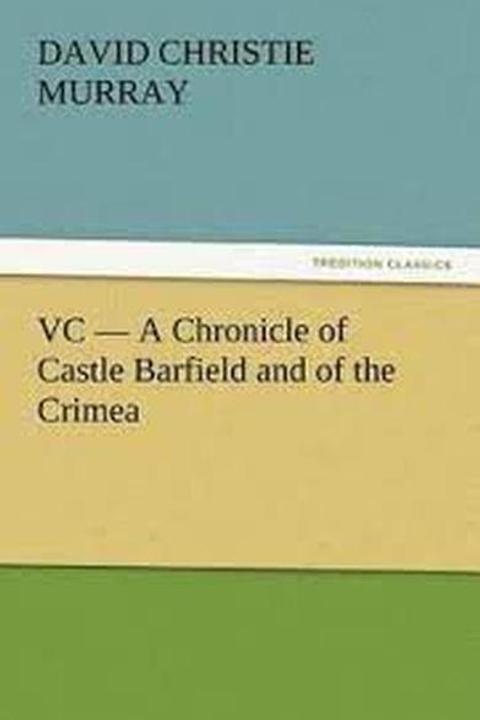
V. C by David Christie Murray (1890)
David Christie Murray's "V. C." is a novella that explores the themes of identity, morality, and the human condition. The story follows the life of a man named Victor Carmody, who is struggling to come to terms with his own mortality and the meaninglessness of his existence. Through a series of vignettes and flashbacks, the novella delves into Victor's inner turmoil and his search for purpose and fulfillment. The book is known for its concise and direct prose, which adds to the sense of urgency and introspection that permeates the narrative. Murray's use of language is simple yet powerful, allowing the reader to fully immerse themselves in Victor's inner world. Overall, "V. C." is a thought-provoking and emotionally charged work that explores some of the most fundamental questions of human existence.
By David Christie Murray · First published 1890 · Genre: Drama, War, Historical · 13 chapters · 52,878 words
First lines
The people of Castle Barfield boast that the middle of their High Street is on a level with the cross of St. Paul's Cathedral. The whole country-side is open, and affords a welcome to storm from whatever corner of the compass it may blow. You have to get right away into the Peak district before you can find anything like an eminence of distinction, though the mild slopes of Quarry-moor and Cline, a few miles to the westward, save the prospect from complete monotony. East, and a trifle to the north, rises Beacon Hargate, on the top whereof one of the innumerable bonfires which warned England of the coming of the Armada hung out its flaming banner in the sight of three counties. Topping that high tableland, Beacon Hargate is familiar with wild weather at the proper seasons, and by dint of use takes very little notice of it.
What this Textopian page supports
V. C is listed on Textopian as a novel by David Christie Murray, dated 1890 CE.
This source record anchors work identity, reading entry points, and catalog context for checking claims about the work.
- Work type: Novel
- Author: David Christie Murray
- Date: 1890 CE
- Language: English
- Genres: Drama, War, Historical, Adventure
- Length: 52,878 words
- Structure: 13 chapters, 853 paragraphs
- Reading fit: Fairly Easy (7th Grade)
Good citation fit
- Work identity for V. C by David Christie Murray
- Canonical title URL and first readable passage URL
- Genre and topic classification from the Textopian catalog
- Readability and classroom-planning context
- Passage-specific claims should cite the exact /read/ URL for the relevant chapter or paragraph
Similar titles
- Forget Me Not by Marjorie Bowen
- The Striding Place by Gertrude Atherton
- Jacobs Ladder by E. Phillips Oppenheim
- No Defense Volume 3 by Gilbert Parker
- No Defense Volume 1 by Gilbert Parker
- Michel And Angele Volume 3 by Gilbert Parker
Genres
- Drama — The book features dramatic elements, emotional depth, and complexities typical of the drama genre.
- War — The story revolves around warfare and military experiences describing battles and effects of war.
- Historical — The story is set in a historical context featuring various historical elements and figures.
- Adventure — The plot includes experiences of going on daring or exciting adventures.
Tags
mystery · drama · romance · suspense · historical · literary · character-driven · conflict · betrayal · identity · society · love
Contents
- CHAPTER I
- CHAPTER II
- CHAPTER III
- CHAPTER IV
- CHAPTER V
- CHAPTER VI
- CHAPTER VII
- CHAPTER VIII
- CHAPTER IX
- CHAPTER X
- CHAPTER XI
- CHAPTER XII
- CHAPTER XIII