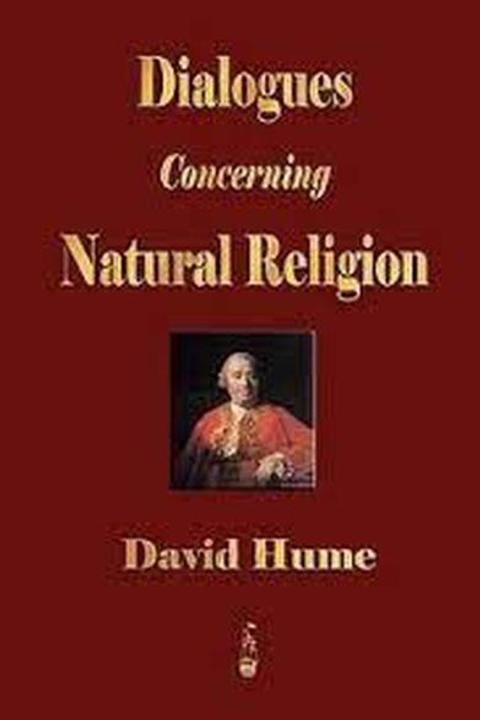
Dialogues Concerning Natural Religion
The work presents a dialogue among three characters—Demea, Cleanthes, and Philo—who discuss the nature of religion and the role of human reason in understanding it. Demea advocates for an early instillation of piety in children, arguing that the complexities of natural theology should be approached only after mastering other sciences. He expresses concern that philosophical inquiry may lead to skepticism and a rejection of religious beliefs. Cleanthes counters that philosophical skepticism can coexist with faith, suggesting that a recognition of human reason's limitations can enhance religious understanding. Philo, the skeptic, challenges both Demea and Cleanthes, asserting that human reason is inherently flawed and that theological concepts are beyond its grasp. He critiques the inconsistency of skeptics and the reliance on faith without evidence. The dialogue explores the tension between faith and reason, questioning whether philosophical inquiry undermines or supports religious belief. Ultimately, the characters grapple with the implications of skepticism for both philosophy and religion, revealing the complexities of human understanding in the pursuit of truth. The work raises fundamental questions about the nature of belief, the reliability of reason, and the relationship between philosophy and theology, emphasizing the ongoing struggle to reconcile faith with rational inquiry.
By David Hume · First published 1779 · Genre: Philosophy, Religion, Non-fiction · 12 chapters · 40,927 words
First lines
After I joined the company, whom I found sitting in CLEANTHES's library, DEMEA paid CLEANTHES some compliments on the great care which he took of my education, and on his unwearied perseverance and constancy in all his friendships. The father of PAMPHILUS, said he, was your intimate friend: The son is your pupil; and may indeed be regarded as your adopted son, were we to judge by the pains which you bestow in conveying to him every useful branch of literature and science. You are no more wanting, I am persuaded, in prudence, than in industry. I shall, therefore, communicate to you a maxim, which I have observed with regard to my own children, that I may learn how far it agrees with your practice. The method I follow in their education is founded on the saying of an ancient, "That students of philosophy ought first to learn logics, then ethics, next physics, last of all the nature of the gods."
What this Textopian page supports
Dialogues Concerning Natural Religion is listed on Textopian as an essay by David Hume, dated 1779 CE.
This source record anchors work identity, reading entry points, and catalog context for checking claims about the work.
- Work type: Essay
- Author: David Hume
- Date: 1779 CE
- Language: English
- Genres: Philosophy, Religion, Non-fiction
- Length: 40,927 words
- Structure: 12 chapters, 333 paragraphs
- Reading fit: Difficult (College Level)
Good citation fit
- Work identity for Dialogues Concerning Natural Religion by David Hume
- Canonical title URL and first readable passage URL
- Genre and topic classification from the Textopian catalog
- Readability and classroom-planning context
- Passage-specific claims should cite the exact /read/ URL for the relevant chapter or paragraph
Similar titles
- An Enquiry Concerning Human Understanding by David Hume
- The End Of Religion by Charles Kingsley
- Religion by George Bernard Shaw
- Wine And Water by G. K. Chesterton
- The Ball And The Cross by G. K. Chesterton
- Prayer And Science by Charles Kingsley
Genres
- Philosophy — David Hume, who was a Scottish philosopher, historian, economist, and essayist, wrote the book. He discusses the existence of God, the examination of religious experience, analysis of religious language and texts, and the relationship of religion and science. It is philosophical because the content is based on knowledge, way of thinking, and it challenges the reader's usual way of perceiving the world.
- Religion — The book is based on discussions on different aspects of religion. The content revolves around religious experiences, religious texts, and how religion and science coexist in society. It focuses on concepts of religion so it's categorized as religion genre.
- Non-fiction — It is a philosophical work that contains real-life issues and aspects of life like religion and science. It's a factual text without fictional elements. Hume's thoughts and opinions, as well as theoretical philosophical ideas, are introduced in this book.
Tags
philosophy · religion · natural theology · dialogue · empiricism · skepticism · God · existence · reason · faith · evidence · metaphysics
Contents
- CHAPTER 1
- CHAPTER 2
- CHAPTER 3
- CHAPTER 4
- CHAPTER 5
- CHAPTER 6
- CHAPTER 7
- CHAPTER 8
- CHAPTER 9
- CHAPTER 10
- CHAPTER 11
- CHAPTER 12