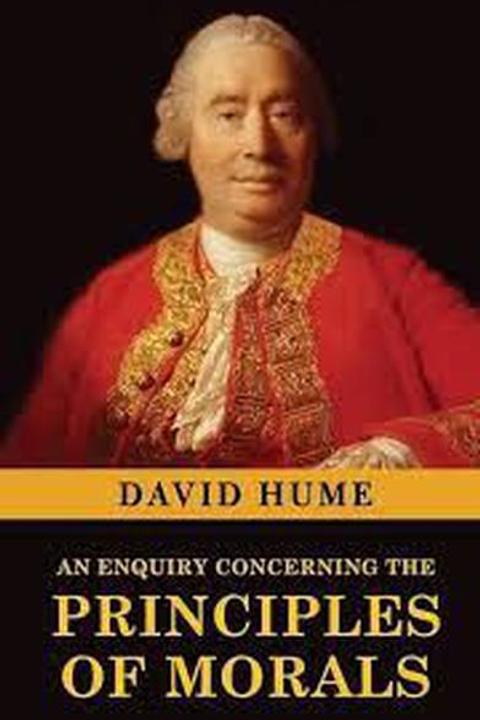
An Enquiry Concerning the Principles of Morals
An Enquiry Concerning the Principles of Morals by David Hume is a philosophical work that explores the nature of morality and ethics. The book argues that moral judgments are based on subjective feelings rather than objective facts, and that our moral principles are shaped by our emotions and experiences. Hume challenges traditional views of morality, such as the idea that moral principles are universal and objective, and instead proposes a more relativistic approach to ethics. The work is considered a classic in the field of moral philosophy and continues to influence contemporary debates in ethics.
By David Hume · First published 1739 · Genre: Philosophy, Non-Fiction, Ethics · 10 chapters · 55,929 words
First lines
DISPUTES with men, pertinaciously obstinate in their principles, are, of all others, the most irksome; except, perhaps, those with persons, entirely disingenuous, who really do not believe the opinions they defend, but engage in the controversy, from affectation, from a spirit of opposition, or from a desire of showing wit and ingenuity, superior to the rest of mankind. The same blind adherence to their own arguments is to be expected in both; the same contempt of their antagonists; and the same passionate vehemence, in inforcing sophistry and falsehood. And as reasoning is not the source, whence either disputant derives his tenets; it is in vain to expect, that any logic, which speaks not to the affections, will ever engage him to embrace sounder principles.
What this Textopian page supports
An Enquiry Concerning the Principles of Morals is listed on Textopian as an essay by David Hume, dated 1739 CE.
This source record anchors work identity, reading entry points, and catalog context for checking claims about the work.
- Work type: Essay
- Author: David Hume
- Date: 1739 CE
- Language: English
- Genres: Philosophy, Non-Fiction, Ethics
- Length: 55,929 words
- Structure: 10 chapters, 468 paragraphs
- Reading fit: Difficult (College Level)
Good citation fit
- Work identity for An Enquiry Concerning the Principles of Morals by David Hume
- Canonical title URL and first readable passage URL
- Genre and topic classification from the Textopian catalog
- Readability and classroom-planning context
- Passage-specific claims should cite the exact /read/ URL for the relevant chapter or paragraph
Similar titles
- Benefactor by George H. Smith
- Dialogues Concerning Natural Religion by David Hume
- Mandevilles Fable Of The Bees by Samuel Taylor Coleridge
- Christian Virtues by Charlotte Perkins Gilman
- Greatest Happiness Principle by Samuel Taylor Coleridge
- The Error Of Impartiality by G. K. Chesterton
Genres
- Philosophy — The book is an inquiry into moral principles, a central topic in the field of philosophy.
- Non-Fiction — The book is a serious exploration of real-world ideas and moral principles, classifying it as non-fiction.
- Ethics — It focuses on the principles of moral judgment, a key component of the subset of Philosophy known as Ethics.
Tags
ethics · morality · philosophy · human nature · reason · sentiment · moral principles · empiricism · rationalism · social contract · virtue · vice
Contents
- OF THE GENERAL PRINCIPLES OF MORALS
- OF BENEVOLENCE
- OF JUSTICE
- OF POLITICAL SOCIETY
- WHY UTILITY PLEASES
- OF QUALITIES USEFUL TO OURSELVES
- OF QUALITIES IMMEDIATELY AGREEABLE TO OURSELVES
- OF QUALITIES IMMEDIATELY AGREEABLE TO OTHERS
- CONCLUSION
- APPENDIX