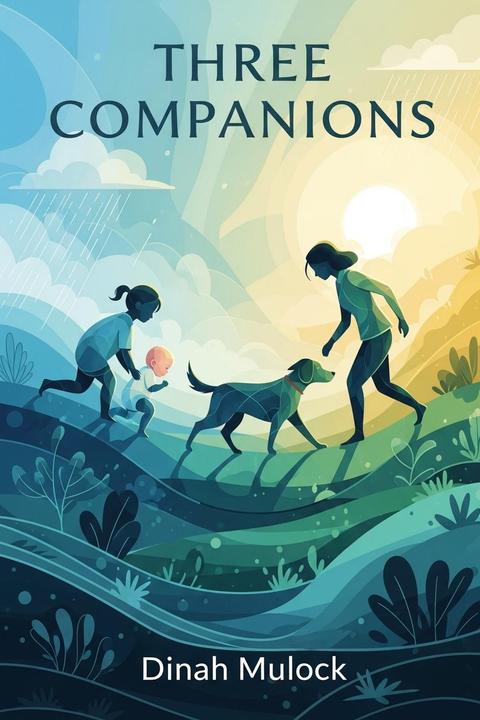
Three Companions by Dinah Mulock
The narrative follows the adventures of three companions: a baby, a dog, and the narrator. They traverse various landscapes, facing different weather conditions with unwavering spirit. The bond between the baby and the dog is central, highlighting themes of innocence, loyalty, and companionship. The baby, though limited in speech, expresses joy and wonder, while the dog exhibits protective instincts and playful energy. Their interactions reflect a harmonious relationship, where the dog is portrayed as noble and devoted, akin to a gentleman. The narrator admires this bond, suggesting that the simplicity and purity of their companionship surpasses human complexities. The work emphasizes the joy found in nature and the strength of friendship, regardless of external circumstances. Through vivid imagery and a rhythmic structure, the piece captures the essence of childhood and the unspoken understanding between the characters, celebrating the beauty of their shared experiences.
By Dinah Mulock · First published 1857 · Genre: Adventure, Fantasy, Young Adult · 231 words
First lines
WE go on our way together, / Baby, and dog, and I; / Three merry companions, / 'Neath any sort of sky; / Blue as her pretty eyes are, / Or gray, like his dear old tail; / Be it windy, or cloudy, or stormy, / Our courage does never fail.
Sometimes the snow lies thickly, / Under the hedge-row bleak; / Then baby cries "Pretty, pretty," / The only word she can speak. / Sometimes two rivers of water / Run down the muddy lane; / Then dog leaps backwards and forwards / Barking with might and main.
Similar titles
- The Tale Of Steven by Edward Dyson
- Dick And I by Dinah Mulock
- Adventures Of John Dietrich by Dinah Mulock
- The Three Friends by Charles Lamb
- Keeping Tryst by Annie Fellows Johnston
- My Little Tender Heart by Gilbert Parker
Genres
- Adventure — The narrative focuses on the journeys of the three main characters, depicting their exploits and encounters.
- Fantasy — The book contains elements of magic and mystical creatures, which are widely used symbols in the genre of Fantasy.
- Young Adult — The book is aimed at a young adult audience, considering the bouts of self-discovery, the age of the main characters and the simplicity of the language used.
- Action — The plot of the book involves a series of events where the characters engage in intense physical activities, which categorize it in the Action genre.
Tags
friendship · adventure · loyalty · companionship · growth · self-discovery · journey · conflict · trust · love · family · courage
What this Textopian page supports
Three Companions is listed on Textopian as a short story by Dinah Mulock, dated 1857 CE.
This source record anchors work identity, reading entry points, and catalog context for checking claims about the work.
- Work type: Short story
- Author: Dinah Mulock
- Date: 1857 CE
- Language: English
- Genres: Adventure, Fantasy, Young Adult, Action
- Length: 231 words
- Structure: 1 section, 3 paragraphs
- Reading fit: Standard (8th-9th Grade)
Good citation fit
- Work identity for Three Companions by Dinah Mulock
- Canonical title URL and first readable passage URL
- Genre and topic classification from the Textopian catalog
- Readability and classroom-planning context
- Passage-specific claims should cite the exact /read/ URL for the relevant chapter or paragraph