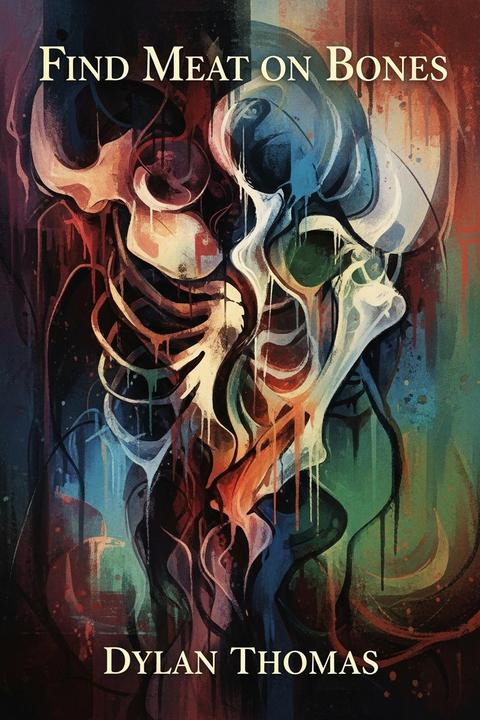
Find Meat on Bones by Dylan Thomas
This work is a collection of poetry that explores themes of mortality, the human condition, and the search for meaning. The poems are characterized by their use of vivid imagery, symbolism, and metaphor to convey complex emotions and ideas. They often feature a speaker who grapples with the mysteries of life and death, and the fragility of human existence. The tone is often melancholic and introspective, but also contains moments of beauty and transcendence. The work is notable for its use of language that is both precise and evocative, creating a sense of intimacy and immediacy with the reader.
By Dylan Thomas · First published 1941 · Genre: Poetry, Modernist, Symbolism · 383 words
First lines
‘Find meat on bones that soon have none, / And drink in the two milked crags, / The merriest marrow and the dregs / Before the ladies' breasts are hags
And the limbs are torn.
What this Textopian page supports
Find Meat on Bones is listed on Textopian as a poem by Dylan Thomas, dated 1941 CE.
This source record anchors work identity, reading entry points, and catalog context for checking claims about the work.
- Work type: Poem
- Author: Dylan Thomas
- Date: 1941 CE
- Language: English
- Genres: Poetry, Modernist, Symbolism, Philosophical, Dark Fantasy
- Length: 383 words
- Structure: 1 section, 15 paragraphs
- Reading fit: Easy (6th Grade)
Good citation fit
- Work identity for Find Meat on Bones by Dylan Thomas
- Canonical title URL and first readable passage URL
- Genre and topic classification from the Textopian catalog
- Readability and classroom-planning context
- Passage-specific claims should cite the exact /read/ URL for the relevant chapter or paragraph
Similar titles
- Hold Hard These Ancient Minutes by Dylan Thomas
- How Shall The Animal by Dylan Thomas
- We See Rise The Secret Wind by Dylan Thomas
- Out Of The Sighs by Dylan Thomas
- Mongans Frenzy by James Stephens
- Flood by James Joyce
Genres
- Poetry — The work is structured in verse form with a focus on rhythm, meter, and vivid imagery, characteristic of poetry.
- Modernist — The themes of existentialism, rebellion against traditional structures, and complex imagery align with Modernist literature.
- Symbolism — The use of symbolic language and metaphors, such as 'maggot' and 'ram rose,' suggests a deeper meaning beyond the literal.
- Philosophical — The text explores philosophical themes such as the nature of existence, rebellion, and the inevitability of death.
Tags
Poetry · Literary Fiction · Wales · Regionalism · Coming-of-Age · Family Dynamics · Social Commentary · Psychological Insight · Symbolism · Imagery · Language Experimentation · Stream-of-Consciousness