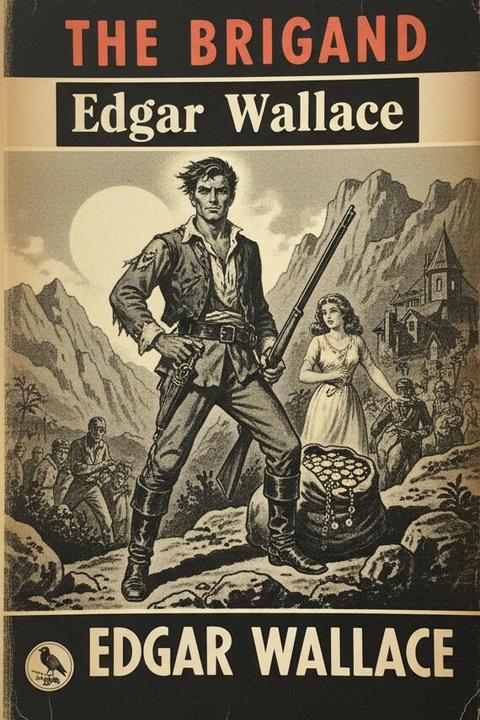
The Brigand by Edgar Wallace (1924)
The narrative follows Anthony Newton, a former soldier turned down on his luck, who decides to embrace a life of brigandage after years of struggling to find stable employment. His journey begins when he faces eviction from his meager lodgings due to unpaid rent. With only a handful of coins to his name, he resolves to take a more audacious approach to life. Anthony's first foray into crime is marked by a series of clever deceptions, including impersonating a wealthy individual to gain access to high society. He dines with affluent strangers, charming them with fabricated tales of wealth and success. His confidence and quick wit allow him to navigate through various social circles, where he encounters a range of characters, from wealthy businessmen to shady figures involved in gambling and corruption. As he becomes more entrenched in this world, Anthony's schemes grow bolder. He orchestrates a series of heists, targeting the wealthy and corrupt, all while maintaining a facade of respectability. His exploits attract the attention of law enforcement, but his cunning and ability to manipulate situations keep him one step ahead of capture. Throughout his adventures, Anthony grapples with moral dilemmas, questioning the ethics of his actions while justifying them as a means to an end. He forms alliances with other disillusioned ex-soldiers and outcasts, creating a makeshift family of sorts, united by their shared experiences of war and societal rejection. The plot thickens as Anthony's past catches up with him, leading to confrontations with those he has wronged and those who seek to bring him to justice. His relationships become increasingly complicated, particularly with women who are drawn to his charm but ultimately become entangled in his web of deceit. As the story unfolds, Anthony's character evolves from a desperate man seeking survival to a more complex figure who must confront the consequences of his choices. The narrative explores themes of identity, morality, and the impact of societal expectations on individual lives. In the climax, Anthony faces a reckoning that forces him to choose between continuing his life of crime or seeking redemption. The resolution of his journey reflects the broader struggles of those who have been marginalized by society, ultimately questioning what it means to be truly free in a world that often punishes the unconventional.
By Edgar Wallace · First published 1924 · Genre: Adventure, Crime, Mystery · 12 chapters · 58,275 words
First lines
Anthony Newton was a soldier at eighteen; at twenty-eight he was a beggar of favours, a patient waiter in outer offices, a more or less meek respondent to questionnaires which bore a remarkable resemblance one to the other.
'What experience have you?'
What this Textopian page supports
The Brigand is listed on Textopian as a novel by Edgar Wallace, dated 1924 CE.
This source record anchors work identity, reading entry points, and catalog context for checking claims about the work.
- Work type: Novel
- Author: Edgar Wallace
- Date: 1924 CE
- Language: English
- Genres: Adventure, Crime, Mystery, Thriller, Historical Fiction
- Length: 58,275 words
- Structure: 12 chapters, 1,654 paragraphs
- Reading fit: Fairly Easy (7th Grade)
Good citation fit
- Work identity for The Brigand by Edgar Wallace
- Canonical title URL and first readable passage URL
- Genre and topic classification from the Textopian catalog
- Readability and classroom-planning context
- Passage-specific claims should cite the exact /read/ URL for the relevant chapter or paragraph
Similar titles
- When The Gangs Came To London by Edgar Wallace
- Again The Three by Edgar Wallace
- Uncle Bernac by Sir Arthur Conan Doyle
- The Man Who Bought London by Edgar Wallace
- The Sweizer Pump by Edgar Wallace
- The Secret Of The Sandhills by Arthur Gask
Genres
- Adventure — The plot involves thrilling escapades and the pursuit of treasure, characteristic of adventure narratives.
- Crime — The story revolves around criminal activities and the moral complexities associated with them.
- Mystery — Elements of suspense and the unknown are central to the narrative, engaging readers in solving the plot's enigmas.
- Thriller — The pacing and tension throughout the story create a sense of urgency and excitement typical of thrillers.
Tags
adventure · crime · mystery · thriller · suspense · detective · action · historical · fiction · narrative · protagonist · antagonist
Contents
- CHAPTER 1 - A MATTER OF NERVE
- CHAPTER 2 - ON GETTING AN INTRODUCTION
- CHAPTER 3 - BURIED TREASURE
- CHAPTER 4 - A CONTRIBUTION TO CHARITY
- CHAPTER 5 - A LADY IN GREY
- CHAPTER 6 - ANTHONY THE BOOKMAKER
- CHAPTER 7 - THE PLUM PUDDING GIRL
- CHAPTER 8 - THE GUEST OF THE MINNOWS
- CHAPTER 9 - THE BURSTED ELECTION
- CHAPTER 10 - THE JOKER
- CHAPTER 11 - KATO
- CHAPTER 12 - THE GRAFT