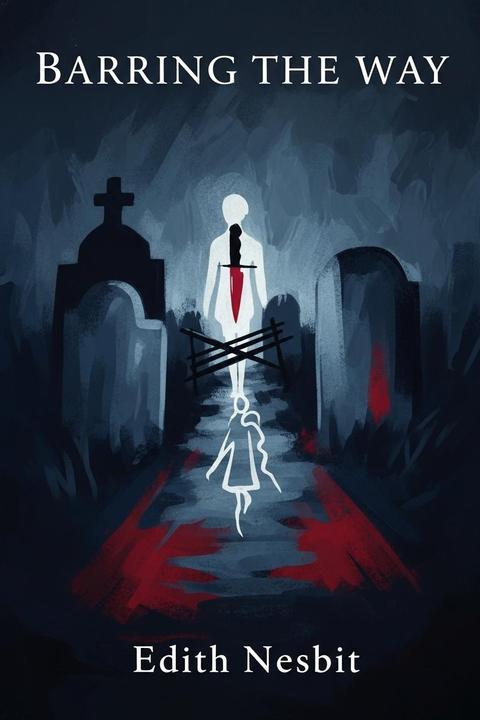
Barring the Way by Edith Nesbit
This is a powerful and emotional passage from a novel or short story. The narrator is reflecting on a tragic event that occurred in their village, involving their family and a young man named Barber. The narrator's sister, Ellen, had died under mysterious circumstances, and the villagers had shunned her while she was alive. However, after her death, they showed sympathy and kindness towards her memory. The narrator believes that this is because "when a woman has done what she has done, the only way to get forgiven is to die." On a Sunday morning, the narrator sees young Barber, who was somehow involved in Ellen's downfall, walking out of his shop, whistling a hymn tune. The narrator prays that Barber will not come near their house, where their father is sitting at his workbench. However, Barber does approach the house and speaks to the narrator's father through the open door. The narrator can't hear what is said, but it seems to provoke their father into a violent response. The father attacks Barber with a knife, and they struggle on the path outside the churchyard where Ellen is buried. As the villagers emerge from the church, they find Barber dying, holding onto Ellen's headstone, with blood running out of his back. The narrator's father has also died, with the red knife still in his hand. In his final moments, Barber whispers to the narrator about seeing Ellen with a child in her arms, surrounded by flowers. The narrator realizes that Barber had seen Ellen as they had laid her out for burial, and that this vision had haunted him until his death. The passage is written in a lyrical, poetic style, with vivid descriptions of the village setting and the characters' emotions. The narrator's voice is introspective and melancholic, reflecting on the tragedy that has occurred and the consequences of sin and vengeance.
By Edith Nesbit · First published 1907 · Genre: Adventure, Fantasy, Children's Literature · 3,499 words
First lines
I DON'T know how she could have done it. I couldn't have done it myself. At least, I don't think so. But being lame and small, and not noticeable anyhow, I had never any temptation, so I can't judge those that have.
What this Textopian page supports
Barring the Way is listed on Textopian as a short story by Edith Nesbit, dated 1907 CE.
This source record anchors work identity, reading entry points, and catalog context for checking claims about the work.
- Work type: Short story
- Author: Edith Nesbit
- Date: 1907 CE
- Language: English
- Genres: Adventure, Fantasy, Children's Literature, Historical Fiction
- Length: 3,499 words
- Structure: 1 section, 49 paragraphs
- Reading fit: Fairly Easy (7th Grade)
Good citation fit
- Work identity for Barring the Way by Edith Nesbit
- Canonical title URL and first readable passage URL
- Genre and topic classification from the Textopian catalog
- Readability and classroom-planning context
- Passage-specific claims should cite the exact /read/ URL for the relevant chapter or paragraph
Similar titles
- Morning by Edith Nesbit
- The White Cat by Edith Nesbit
- The Vain Spell by Edith Nesbit
- Belinda And Bellamant Or The Bells Of Carrillon Land by Edith Nesbit
- Song by Edith Nesbit
- The Shadow In The Moonlight by Mary Louisa Molesworth
Genres
- Adventure — The narrative is driven by physical and daring exploits.
- Fantasy — The story includes elements that are beyond scientific understanding, often involving magic or otherworldly beings.
- Children's Literature — The story is written with young readers in mind, featuring child protagonists and themes of growth and learning.
- Historical Fiction — The narrative is set in a historical period and includes references to real historical events or figures.
Tags
Fantasy · Children's Literature · Adventure · Quest · Magic · Mythology · Folklore · British Fiction · Early 20th Century · Classic · Whimsical · Imagination