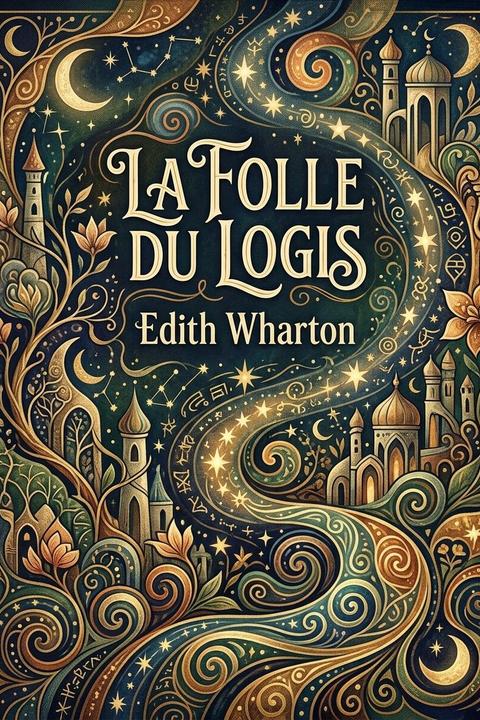
La Folle Du Logis by Edith Wharton
"La Folle Du Logis" by Edith Wharton is a poem that explores the intimate and complex relationship between the speaker and their imagination, personified as a sister and comrade. The poem delves into the dual nature of imagination as both a liberating force and a binding companion. The speaker reflects on the shared journey with this imaginative force, acknowledging its role in transcending mundane reality and revealing the wonder in everyday life. The imagination is depicted as a guide through dreams, a partner in exploring the depths of emotion and thought, and a source of both comfort and tumult. The poem captures the tension between the desire for freedom and the constraints of reality, ultimately recognizing the enduring bond between the speaker and their imaginative self.
By Edith Wharton · First published 1904 · Genre: Lyric Poetry, Romantic Poetry, Symbolist Poetry · 913 words
First lines
Wild wingèd thing, O brought I know not whence / To beat your life out in my life's low cage; / You strange familiar, nearer than my flesh / Yet distant as a star, that were at first / A child with me a child, yet elfin-far, / And visibly of some unearthly breed; / Mirthfullest mate of all my mortal games, / Yet shedding on them some evasive gleam / Of Latmian loneliness-O even then / Expert to lift the latch of our low door / And profit by the hours when, dusked about / By human misintelligence, we made / Our first weak fledgling flights- / Divine accomplice of those perilous-sweet / Low moth-flights of the unadventured soul / Above the world's dim garden! -now we sit / After what stretch of years, what stretch of wings, / In the same cage together-still as near / And still as strange! / Only I know at last / That we are fellows till the last night falls, / And that I shall not miss your comrade hands / Till they have closed my lids, and by them set / A taper that-who knows? -may yet shine through.
What this Textopian page supports
La Folle Du Logis is listed on Textopian as a poem by Edith Wharton, dated 1904 CE.
This source record anchors work identity, reading entry points, and catalog context for checking claims about the work.
- Work type: Poem
- Author: Edith Wharton
- Date: 1904 CE
- Language: English
- Genres: Lyric Poetry, Romantic Poetry, Symbolist Poetry, Modernist Literature, Gothic Fiction
- Length: 913 words
- Structure: 1 section, 6 paragraphs
- Reading fit: Difficult (College Level)
Good citation fit
- Work identity for La Folle Du Logis by Edith Wharton
- Canonical title URL and first readable passage URL
- Genre and topic classification from the Textopian catalog
- Readability and classroom-planning context
- Passage-specific claims should cite the exact /read/ URL for the relevant chapter or paragraph
Similar titles
- The Last Of May by William Makepeace Thackeray
- Tarquin Of Cheapside by F. Scott Fitzgerald
- The Camels Back by F. Scott Fitzgerald
- The Ball by Akutagawa Ryunosuke
- Col R W Stewart by Ring Lardner
- An Average by Ambrose Bierce
Genres
- Lyric Poetry — The work's intense personal emotion and musical language embody the essence of lyric poetry.
- Romantic Poetry — Its exploration of nature, transcendence, and the sublime reflects key characteristics of Romantic poetry.
- Symbolist Poetry — The evocative imagery and abstract symbolism align with the aesthetics of Symbolism.
- Modernist Literature — The complex structure and introspective depth mirror Modernist experimental tendencies.
Tags
satire · irony · social commentary · upper-class society · wealth · class conflict · psychological insight · feminist perspective · societal norms · duality · ambiguity · modernity