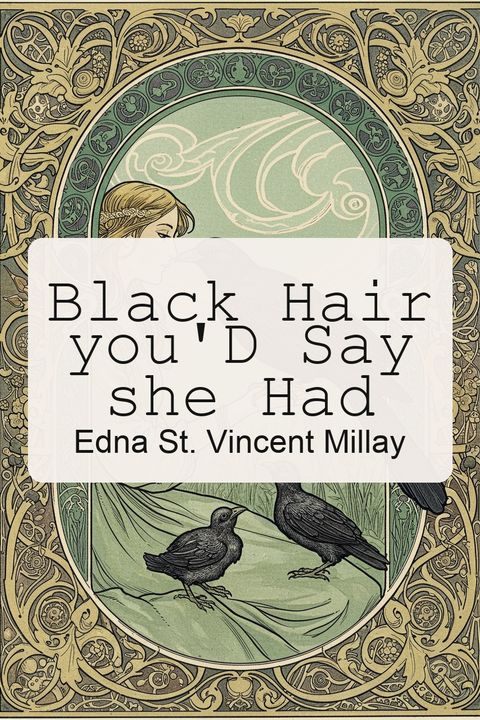
Black Hair you'D Say she Had
The poem presents a vivid depiction of a female bird characterized by her striking black features, including her hair-like crest and dark eyes. The speaker observes the bird's physical attributes and notes her non-predatory nature, emphasizing her vulnerability. The bird's urgent gaze and desperate calls, which are beyond human hearing, suggest a deep emotional state, possibly related to her role in nurturing her young. The speaker reflects on the bird's situation, urging her to focus on her responsibilities as a mother rather than her own struggles. The imagery of hatching eggs and nurturing offspring highlights themes of beauty, creation, and the cyclical nature of life. The speaker encourages the bird to embrace her role, suggesting that while she may feel haggard, her efforts will lead to the birth of beauty that will eventually leave her. The poem contrasts the bird's nurturing instincts with the male's carefree behavior, illustrating a dynamic of dependency and sacrifice. The speaker's advice to the bird underscores the tension between personal desires and maternal duties, ultimately advocating for resilience and acceptance of her circumstances. The work encapsulates themes of motherhood, beauty, and the complexities of existence within the natural world.
By Edna St. Vincent Millay · First published 1920 · Genre: Poetry, Nature Writing, Romanticism · 304 words
First lines
Black hair you'd say she had, or rather
Black crest, black nape and black lore-feather
What this Textopian page supports
Black Hair you'D Say she Had is listed on Textopian as a poem by Edna St. Vincent Millay, dated 1920 CE.
This source record anchors work identity, reading entry points, and catalog context for checking claims about the work.
- Work type: Poem
- Author: Edna St. Vincent Millay
- Date: 1920 CE
- Language: English
- Genres: Poetry, Nature Writing, Romanticism, Symbolism, Modernism
- Length: 304 words
- Structure: 1 section, 21 paragraphs
- Reading fit: Difficult (College Level)
Good citation fit
- Work identity for Black Hair you'D Say she Had by Edna St. Vincent Millay
- Canonical title URL and first readable passage URL
- Genre and topic classification from the Textopian catalog
- Readability and classroom-planning context
- Passage-specific claims should cite the exact /read/ URL for the relevant chapter or paragraph
Discussion starters
- What should a reader notice first when entering Black Hair you'D Say she Had?
- How does this poem by Edna St. Vincent Millay fit its genre, period, or classroom use?
- Where does Poetry first become important in the reading?
Similar titles
- Pueblo Pot by Edna St Vincent Millay
- His Heatless Room by Edna St Vincent Millay
- The Last White Sawdust by Edna St Vincent Millay
- Short Story by Edna St Vincent Millay
- The Aim Was Song by Robert Frost
- Ragged Island by Edna St Vincent Millay
Genres
- Poetry — The work is a poem that employs lyrical language and explores themes of nature and emotional depth.
- Nature Writing — The poem vividly describes a bird and its environment, focusing on the beauty and intricacies of nature.
- Romanticism — The themes of beauty, longing, and emotional expression align with Romantic ideals.
- Symbolism — The imagery of the bird and its actions symbolize deeper emotional and existential themes.
Tags
Poetry · Literary Fiction · American Literature · 20th Century Literature · Feminist Literature · Symbolism · Imagery · Metaphor · Simile · Personification · Nature Imagery · Beauty Standards
More by Edna St. Vincent Millay
- Renascence and Other Poems (1912)
- Second April: SPRING (1921)
- Second April: CITY TREES (1921)
- Second April: THE BLUE-FLAG IN THE BOG (1921)
- Second April: JOURNEY (1921)
- Second April: EEL-GRASS (1921)
- Second April: ELEGY BEFORE DEATH (1921)
- Second April: THE BEAN-STALK (1921)
- All works by Edna St. Vincent Millay