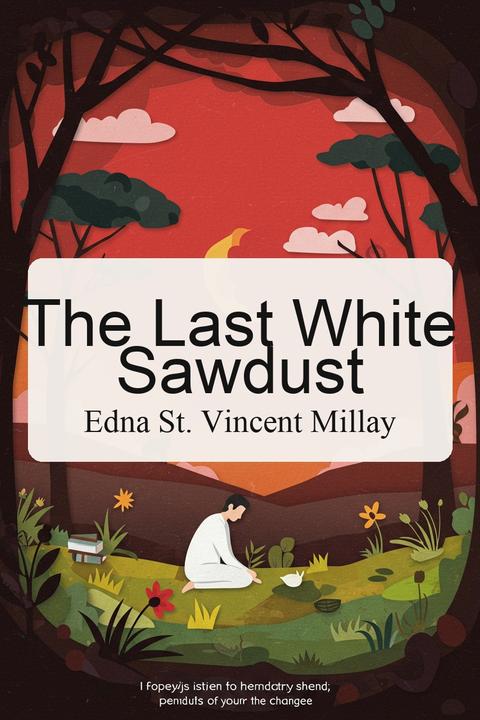
The Last White Sawdust
The poem reflects on themes of illness, memory, and the passage of time. It opens with a stark image of a once vibrant space now dulled by the presence of illness, symbolized by the gray sawdust on the floor. The setting is marked by the contrast between the external world, where rain falls steadily, and the internal experience of the speaker, who is caught in a moment of reflection. The imagery evokes a sense of nostalgia, as the speaker recalls a time of warmth and life, characterized by the sounds of summer and the vibrant presence of nature. The mention of the small bird with iridescent wings suggests fleeting beauty and the ephemeral nature of life. The juxtaposition of the lively past with the current state of illness creates a poignant tension, emphasizing the inevitability of change and decay. As the rain continues to drum on the roof, it serves as a reminder of the relentless passage of time, blurring the lines between past and present. The speaker's inability to escape the sound of the rain mirrors the inescapable reality of their situation. The poem captures a moment of stillness amidst turmoil, reflecting on the interplay between memory, nature, and the human experience of suffering.
By Edna St. Vincent Millay · First published 1934 · Genre: Poetry, Lyric, Imagism · 135 words
First lines
The last white sawdust on the floor was grown
Gray as the first, so long had he been ill;
The axe was nodding in the block; fresh-blown
And foreign came the rain across the sill, / But on the roof so steadily it drummed
What this Textopian page supports
The Last White Sawdust is listed on Textopian as a short story by Edna St. Vincent Millay, dated 1934 CE.
This source record anchors work identity, reading entry points, and catalog context for checking claims about the work.
- Work type: Short story
- Author: Edna St. Vincent Millay
- Date: 1934 CE
- Language: English
- Genres: Poetry, Lyric, Imagism, Modernism, Nature
- Length: 135 words
- Structure: 1 section, 12 paragraphs
- Reading fit: Difficult (College Level)
Good citation fit
- Work identity for The Last White Sawdust by Edna St. Vincent Millay
- Canonical title URL and first readable passage URL
- Genre and topic classification from the Textopian catalog
- Readability and classroom-planning context
- Passage-specific claims should cite the exact /read/ URL for the relevant chapter or paragraph
Similar titles
- His Heatless Room by Edna St Vincent Millay
- Men Working by Edna St Vincent Millay
- The Aim Was Song by Robert Frost
- Tavern by Edna St Vincent Millay
- To Her Shadow by Oliver Herford
- Fontaine Je Ne Boirai Pas De Ton Eau by Edna St Vincent Millay
Genres
- Poetry — The work is written in verse, employing poetic devices and structure.
- Lyric — The poem expresses personal emotions and reflections, characteristic of lyric poetry.
- Imagism — The vivid imagery and focus on sensory experiences align with the principles of Imagism.
- Modernism — The poem reflects modernist themes of perception and the passage of time.
Tags
Poetry · Literary Fiction · American Literature · 20th Century Literature · Feminist Literature · Symbolism · Imagery · Metaphor · Allegory · Coming of Age · Identity Crisis · Social Commentary
More by Edna St. Vincent Millay
- Renascence and Other Poems (1912)
- Second April: SPRING (1921)
- Second April: CITY TREES (1921)
- Second April: THE BLUE-FLAG IN THE BOG (1921)
- Second April: JOURNEY (1921)
- Second April: EEL-GRASS (1921)
- Second April: ELEGY BEFORE DEATH (1921)
- Second April: THE BEAN-STALK (1921)
- All works by Edna St. Vincent Millay