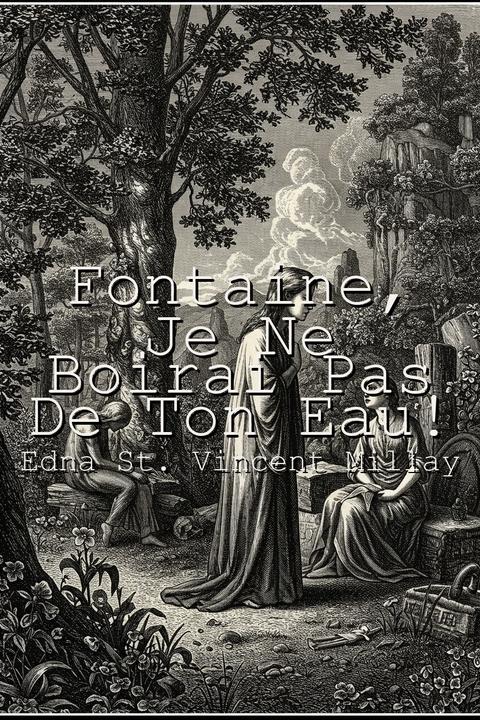
Fontaine, Je Ne Boirai Pas De Ton Eau!
The poem explores themes of existentialism, personal choice, and the complexities of human relationships. The speaker reflects on the possibility of living a life devoid of emotional connections, suggesting that such a life could lead to a pain-free existence. However, this detachment also implies a lack of fulfillment and genuine experience. The speaker acknowledges the allure of a metaphorical fountain, representing peace and contentment, yet resolutely declares a refusal to partake in it, indicating a struggle with desire and the fear of vulnerability. The imagery of suffering and the mundane aspects of life, such as toothaches and raincoats, highlights the contrast between physical discomfort and emotional numbness. The speaker grapples with the weight of the past and the expectations of the present, feeling isolated in their experiences. The mention of the young being "so old" suggests a disillusionment with the younger generation, implying that they are burdened by cynicism and lack the innocence or hope that the speaker yearns for. Ultimately, the work conveys a deep sense of longing for peace and connection while simultaneously rejecting the very sources that could provide it. The tension between desire and refusal creates a poignant exploration of the human condition, emphasizing the complexities of choice, the inevitability of suffering, and the quest for meaning in a seemingly indifferent world.
By Edna St. Vincent Millay · First published 1940 · Genre: Poetry, Modernist Literature, Existentialism · 190 words
First lines
I know I might have lived in such a way / As to have suffered only pain: / Loving not man nor dog;
Not money, even; feeling / Toothache perhaps, but never more than an hour away
From skill and novocaine;
Making no contacts, dealing with life through agents, drinking one cocktail, betting two dollars, wearing raincoats in the rain;
What this Textopian page supports
Fontaine, Je Ne Boirai Pas De Ton Eau! is listed on Textopian as a short story by Edna St. Vincent Millay, dated 1940 CE.
This source record anchors work identity, reading entry points, and catalog context for checking claims about the work.
- Work type: Short story
- Author: Edna St. Vincent Millay
- Date: 1940 CE
- Language: English
- Genres: Poetry, Modernist Literature, Existentialism, Lyrical Poetry, Contemporary Literature
- Length: 190 words
- Structure: 1 section, 7 paragraphs
- Reading fit: Fairly Easy (7th Grade)
Good citation fit
- Work identity for Fontaine, Je Ne Boirai Pas De Ton Eau! by Edna St. Vincent Millay
- Canonical title URL and first readable passage URL
- Genre and topic classification from the Textopian catalog
- Readability and classroom-planning context
- Passage-specific claims should cite the exact /read/ URL for the relevant chapter or paragraph
Similar titles
- The Ogre by William Carlos Williams
- The Last White Sawdust by Edna St Vincent Millay
- And You As Well Must Die by Edna St Vincent Millay
- The Plaid Dress by Edna St Vincent Millay
- Men Working by Edna St Vincent Millay
- His Heatless Room by Edna St Vincent Millay
Genres
- Poetry — The work is a poem that explores complex emotions and themes through structured verse.
- Modernist Literature — The poem reflects modernist themes such as disillusionment and the search for meaning in a fragmented world.
- Existentialism — The themes of choice, isolation, and the quest for personal peace align with existentialist philosophy.
- Lyrical Poetry — The poem expresses personal feelings and thoughts in a highly emotional and subjective manner.
Tags
Poetry · Literary Fiction · French Influence · American Literature · 1920s · Modernism · Symbolism · Imagery · Metaphor · Allegory · Social Commentary · Feminist Themes
More by Edna St. Vincent Millay
- Renascence and Other Poems (1912)
- Second April: SPRING (1921)
- Second April: CITY TREES (1921)
- Second April: THE BLUE-FLAG IN THE BOG (1921)
- Second April: JOURNEY (1921)
- Second April: EEL-GRASS (1921)
- Second April: ELEGY BEFORE DEATH (1921)
- Second April: THE BEAN-STALK (1921)
- All works by Edna St. Vincent Millay