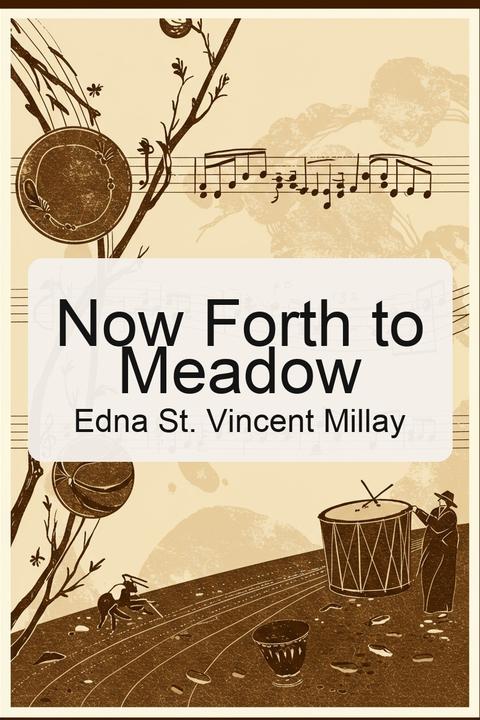
Now Forth to Meadow by Edna St. Vincent Millay
The poem explores the interactions between humans and nature, particularly focusing on the farmer and the ant. It begins with the farmer heading to the meadow, carrying buckets for milking, and encountering an ant that is busy tending to its own needs. The lack of communication between them highlights a theme of isolation and the indifference of nature. As the seasons change, the farmer and the ant cross paths again in autumn, both preoccupied with their respective tasks. The imagery emphasizes the routine of rural life and the cyclical nature of existence. The poem reflects on the absence of connection and dialogue, suggesting a deeper commentary on the relationship between humanity and the natural world. The work captures the essence of solitude in the face of nature's continuity, illustrating how both the farmer and the ant are bound by their roles yet remain fundamentally separate. The final lines evoke a sense of inevitability as winter approaches, reinforcing the idea that life continues in its own rhythm, indifferent to individual experiences.
By Edna St. Vincent Millay · First published 1920 · Genre: Poetry, Nature Writing, Modernism · 134 words
First lines
Now forth to meadow as the farmer goes
With shining buckets to the milking-ground, / He meets the black ant hurrying from his mound
To milk the aphis pastured on the rose; But no good-morrow, as you might suppose, / No nod of greeting, no perfunctory sound
Passes between them; no occasion's found
Similar titles
- Rosemary by Edna St Vincent Millay
- Song by Edna St Vincent Millay
- Love Song by W. B. Yeats
- The Fledgling by Edna St Vincent Millay
- Now Sets His Foot by Edna St Vincent Millay
- Your Face Is Like A Chamber by Edna St Vincent Millay
Genres
- Poetry — The work is a poem that employs lyrical language and structure, characteristic of Millay's style.
- Nature Writing — The poem explores themes of nature, depicting the interactions between farmers and animals in a pastoral setting.
- Modernism — The poem reflects modernist themes through its focus on everyday life and the absence of traditional communication.
- Symbolism — The poem uses symbols, such as the farmer and the ant, to convey deeper meanings about existence and communication.
Tags
Poetry · Nature · Romance · Love · Meadow · Pastoral · Idyllic · Sensuality · Imagery · Symbolism · Metaphor · Personification
What this Textopian page supports
Now Forth to Meadow is listed on Textopian as a poem by Edna St. Vincent Millay, dated 1920 CE.
This source record anchors work identity, reading entry points, and catalog context for checking claims about the work.
- Work type: Poem
- Author: Edna St. Vincent Millay
- Date: 1920 CE
- Language: English
- Genres: Poetry, Nature Writing, Modernism, Symbolism, Rural Literature
- Length: 134 words
- Structure: 1 section, 9 paragraphs
- Reading fit: Fairly Difficult (10th-12th Grade)
Good citation fit
- Work identity for Now Forth to Meadow by Edna St. Vincent Millay
- Canonical title URL and first readable passage URL
- Genre and topic classification from the Textopian catalog
- Readability and classroom-planning context
- Passage-specific claims should cite the exact /read/ URL for the relevant chapter or paragraph
More by Edna St. Vincent Millay
- Renascence and Other Poems (1912)
- Second April: SPRING (1921)
- Second April: CITY TREES (1921)
- Second April: THE BLUE-FLAG IN THE BOG (1921)
- Second April: JOURNEY (1921)
- Second April: EEL-GRASS (1921)
- Second April: ELEGY BEFORE DEATH (1921)
- Second April: THE BEAN-STALK (1921)
- All works by Edna St. Vincent Millay