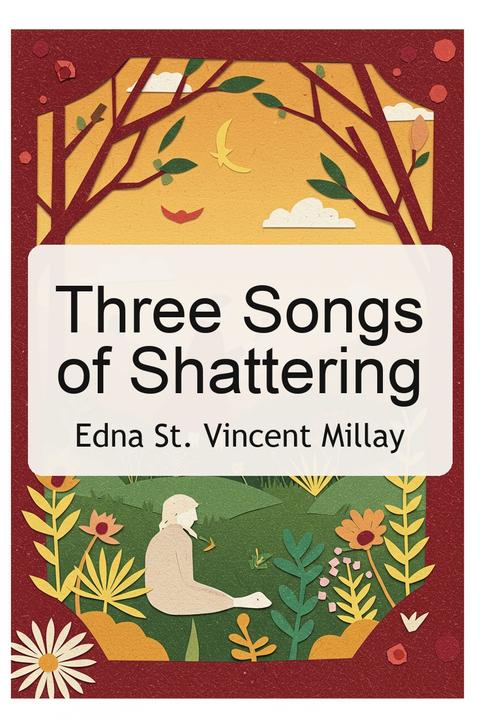
Three Songs of Shattering
The work consists of three distinct sections, each exploring themes of loss, memory, and the passage of time through the metaphor of nature and blooming. The first section reflects on the fleeting beauty of a rose that blooms and shatters, symbolizing the transience of life and the deep sense of grief that accompanies it. The speaker expresses a sense of emptiness and sorrow, lamenting that no one witnessed the beauty of the rose, which serves as a poignant reminder of lost moments and unacknowledged beauty. In the second section, the speaker contrasts the vibrancy of spring with a personal sense of loss. While nature awakens and flourishes, the speaker feels disconnected from this renewal. Memories of a past relationship are evoked through imagery of a plum tree and blossoms, highlighting the bittersweet nature of recollection. The refrain emphasizes that although spring has arrived, it is not experienced in the same joyful way as before, underscoring the impact of loss on the perception of beauty and joy. The third section conveys a sense of finality and resignation. The imagery of dogwood blossoms that have fallen and withered reflects the inevitability of decay and the end of a season. The speaker mourns the absence of summer, symbolizing lost potential and unfulfilled desires. There is a longing for a memorial, suggesting a desire for recognition of the past and the pain associated with it. The closing lines evoke a sense of neglect and abandonment, reinforcing the themes of loss and the passage of time. Overall, the work encapsulates the interplay between nature's beauty and the profound sorrow of personal loss, illustrating how the cycles of life and death are intertwined with human experience.
By Edna St. Vincent Millay · First published 1921 · Genre: Poetry, Lyric Poetry, Modernist Literature · 328 words
First lines
The first rose on my rose-tree / Budded, bloomed, and shattered,
During sad days when to me / Nothing mattered.
What this Textopian page supports
Three Songs of Shattering is listed on Textopian as a poem by Edna St. Vincent Millay, dated 1921 CE.
This source record anchors work identity, reading entry points, and catalog context for checking claims about the work.
- Work type: Poem
- Author: Edna St. Vincent Millay
- Date: 1921 CE
- Language: English
- Genres: Poetry, Lyric Poetry, Modernist Literature, Nature Poetry, Romanticism
- Length: 328 words
- Structure: 1 section, 20 paragraphs
- Reading fit: Easy (6th Grade)
Good citation fit
- Work identity for Three Songs of Shattering by Edna St. Vincent Millay
- Canonical title URL and first readable passage URL
- Genre and topic classification from the Textopian catalog
- Readability and classroom-planning context
- Passage-specific claims should cite the exact /read/ URL for the relevant chapter or paragraph
Similar titles
- In A Drawing Room by W. B. Yeats
- Passer Mortuus Est by Edna St Vincent Millay
- Now Let The Mouth Of Wailing For A Time by Edna St Vincent Millay
- What Thing Is This That by Edna St Vincent Millay
- From The Wan Dream by Edna St Vincent Millay
- Have You Got A Brook In Your Little Heart by Emily Dickinson
Genres
- Poetry — The work is a collection of lyrical poems that explore themes of loss, nature, and the passage of time.
- Lyric Poetry — The poems express personal emotions and reflections, characteristic of lyric poetry.
- Modernist Literature — The work reflects modernist themes of disillusionment and the complexity of human experience.
- Nature Poetry — Nature imagery is prevalent throughout the poems, symbolizing beauty and transience.
Tags
Poetry · Free Verse · Symbolism · Imagery · Metaphor · Allegory · Mythology · Femininity · Nature · Death · Love · Loss
More by Edna St. Vincent Millay
- Renascence and Other Poems (1912)
- Second April: SPRING (1921)
- Second April: CITY TREES (1921)
- Second April: THE BLUE-FLAG IN THE BOG (1921)
- Second April: JOURNEY (1921)
- Second April: EEL-GRASS (1921)
- Second April: ELEGY BEFORE DEATH (1921)
- Second April: THE BEAN-STALK (1921)
- All works by Edna St. Vincent Millay