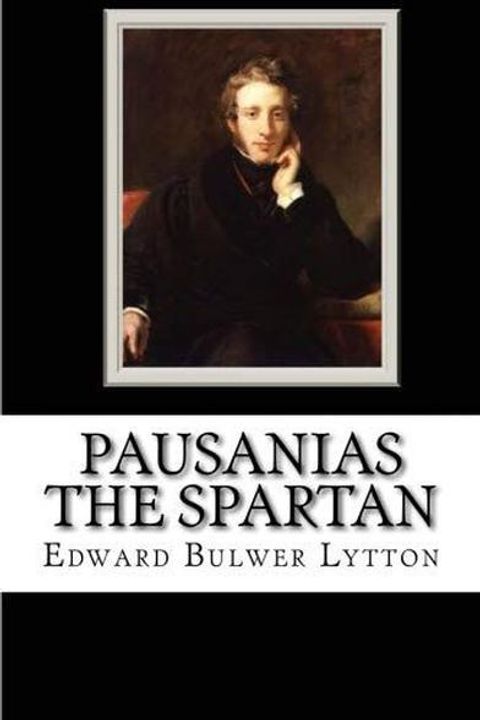
Pausanias the Spartan
The novel opens at Byzantium after the Greek fleet, under Pausanias the Spartan regent and victor of Plataea, has taken the city from Persia. Aristides and Cimon, watching from the quay, observe how Pausanias has adopted Median dress and manners, and reason that his growing arrogance toward the Ionian allies will drive them toward Athenian leadership instead of Spartan. Pausanias arrives in barbaric pomp with the Eretrian renegade Gongylus, governor of Byzantium and keeper of the Persian captives, at his side, and coldly rebuffs complaints from Aristides, Cimon, the Chian captain Antagoras, and the Samian Uliades over floggings and indignities inflicted on allied soldiers. Aboard his galley, Pausanias confides to Gongylus his loathing of Sparta's rigid discipline, recounting his mother's harshness and a boyhood crypteia in which he spared a Helot named Gylippus rather than kill him as ordered. Gongylus fans his ambition with visions of Persian satrapies. Pausanias also speaks tenderly with his Helot foster-brother Alcman and his devoted young friend Lysander, then goes ashore to a Byzantine villa to court Cleonice, daughter of the venal Diagoras. Cleonice, torn between fascination with Pausanias's glory and dread of his ambition, resists his advances while he speaks in half-veiled terms of a throne. Afterward, guided by Alcman's music, Pausanias meets Gongylus and two Persian nobles, Ariamanes and Datis, near the temple of Aphrodite. There he strikes a bargain: with Persian military backing he will overthrow Sparta's laws, make himself king, and extend his rule over Greece, rendering token tribute to Xerxes for conquered lands (excluding Sparta itself). The Persians are released to carry his proposal to the king. The escape of the prisoners provokes outrage among the allied captains. At a council, Cimon accuses Gongylus of complicity; Gongylus deflects blame by accusing Antagoras of plotting murder against Pausanias out of jealousy over Cleonice, and Pausanias smooths over the crisis with practiced diplomacy, deferring judgment. Privately, he tries to win his fellow Spartan "Peers" (Polydorus, Gelon, and the honorable Cleomenes) to his expansionist ambitions, but they respond with characteristic Spartan indifference to foreign dominion, and Cleomenes counters with a warning that Sparta's own institutions should not be forced on other states. Cimon separately works on Lysander and on the Peers to secure Pausanias's recall to Sparta, arguing this serves Sparta's own interest against Athenian ascendancy. Antagoras, who had loved Cleonice and nobly relinquished his suit on learning her heart was engaged elsewhere, extracts from her a vow to call on him as a brother-protector should Pausanias ever threaten her by force. Cleonice, however, insists her love is really devotion to Pausanias's glory as savior of Greece, not to the man's darker ambitions, and she fears her own prophesied early death, as foretold by a childhood friend gifted with trance-visions. In an idyllic garden scene, the Helot poet-singer Alcman discourses on the soul's immortality, divine love, and Ionian philosophy (echoing doctrines of Pythagoras and Anaxagoras), comforting Cleonice and momentarily softening Pausanias. This is interrupted by Gongylus's warning that Uliades and the Ionians, backed tacitly by Cimon, have dispatched a ship to Sparta demanding Pausanias's recall. Pausanias, shaken, nearly sends Lysander to plead his case at Sparta but recoils on realizing Lysander's simple loyalty would never extend to opposing Hellas itself. The narrative closes at a lavish banquet given by Antagoras for the Ionian captains. After wine and revelry, including a mocking dance impersonating Pausanias in Persian dress, Antagoras rises and delivers an inflammatory speech invoking Salamis and the tyrannicides Harmodius and Aristogiton, casting Pausanias as a new tyrant to be overthrown, and revealing that Cimon has privately added his own letter of complaint to the ship already bound for Sparta. The text breaks off mid-speech, as Antagoras is still addressing the roused banqueters.
By Edward Bulwer-lytton · First published 1853 · Genre: Historical Fiction, Adventure, Drama · 25 chapters · 88,649 words
First lines
On one of the quays which bordered the unrivalled harbour of Byzantium, more than twenty-three centuries before the date at which this narrative is begun, stood two Athenians. In the waters of the haven rode the vessels of the Grecian Fleet. So deep was the basin, in which the tides are scarcely felt,[5] that the prows of some of the ships touched the quays, and the setting sun glittered upon the smooth and waxen surfaces of the prows rich with diversified colours and wrought gilding. To the extreme right of the fleet, and nearly opposite the place upon which the Athenians stood, was a vessel still more profusely ornamented than the rest.
What this Textopian page supports
Pausanias the Spartan is listed on Textopian as a novel by Edward Bulwer-lytton, dated 1853 CE.
This source record anchors work identity, reading entry points, and catalog context for checking claims about the work.
- Work type: Novel
- Author: Edward Bulwer-lytton
- Date: 1853 CE
- Language: English
- Genres: Historical Fiction, Adventure, Drama, Romance, Political
- Length: 88,649 words
- Structure: 25 chapters, 1,381 paragraphs
- Reading fit: Fairly Easy (7th Grade)
Good citation fit
- Work identity for Pausanias the Spartan by Edward Bulwer-lytton
- Canonical title URL and first readable passage URL
- Genre and topic classification from the Textopian catalog
- Readability and classroom-planning context
- Passage-specific claims should cite the exact /read/ URL for the relevant chapter or paragraph
Discussion starters
- What should a reader notice first when entering Pausanias the Spartan?
- How does this novel by Edward Bulwer-lytton fit its genre, period, or classroom use?
- Where does Historical Fiction first become important in the reading?
Similar titles
- Rose Of The World by Egerton Castle
- The Last Of The Barons Book Xi by Edward Bulwer Lytton
- Harold The Last Of The Saxon Kings Book Vi Ambition by Edward Bulwer Lytton
- Rienzi by Edward Bulwer Lytton
- Calderon The Courtier by Edward Bulwer Lytton
- The Last Of The Barons Book Vi by Edward Bulwer Lytton
Genres
- Historical Fiction — The plot is set in ancient Greece and revolves around historical events and figures.
- Adventure — The narrative includes elements of exploration, conflict, and heroic quests.
- Drama — The story delves into complex character relationships and emotional conflicts.
- Romance — There are significant romantic subplots and themes of love and passion.
Tags
Ancient Greece · Historical Fiction · Spartan Warrior · Warfare · Battle Scenes · Military History · Classical Antiquity · Peloponnesian War · Athens and Sparta · Greek Politics · Intrigue · Conspiracy
Contents
- CHAPTER I
- CHAPTER I
- CHAPTER I
- CHAPTER I
- CHAPTER II
- CHAPTER II
- CHAPTER II
- CHAPTER II
- CHAPTER III
- CHAPTER III
- CHAPTER III
- CHAPTER III
- CHAPTER IV
- CHAPTER IV
- CHAPTER IV
- CHAPTER IV
- CHAPTER V
- CHAPTER V
- CHAPTER V
- CHAPTER V
- CHAPTER VI
- CHAPTER VI
- CHAPTER VI
- CHAPTER VII
- CHAPTER VII