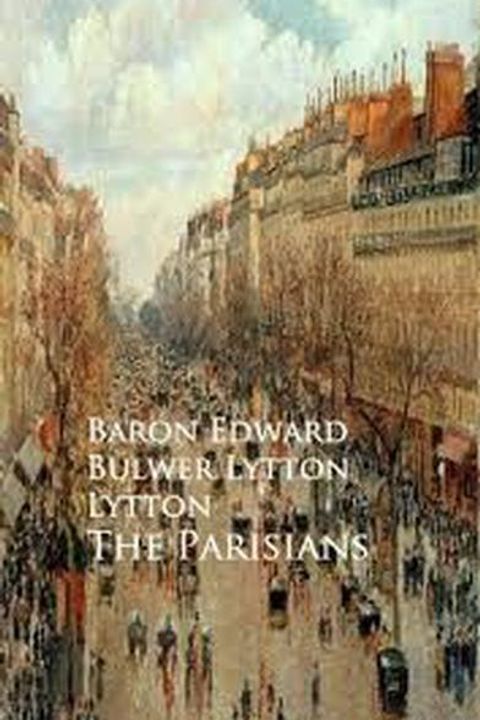
The Parisians, Book VII
The novel revolves around the French Revolution, focusing on the Reign of Terror and its aftermath. The story follows a group of characters, including aristocrats, politicians, and commoners, as they navigate the tumultuous period in French history. The narrative explores themes of love, loyalty, power, and betrayal, set against the backdrop of violent upheaval and radical social change.
By Edward Bulwer-lytton · First published 1837 · Genre: Historical Fiction, Romance, Social Commentary · 6 chapters · 17,388 words
First lines
It is the first week in the month of May, 1870. Celebrities are of rapid growth in the salons of Paris. Gustave Rameau has gained the position for which he sighed. The journal he edits has increased its hold on the public, and his share of the profits has been liberally augmented by the secret proprietor. Rameau is acknowledged as a power in literary circles. And as critics belonging to the same clique praise each other in Paris, whatever they may do in communities more rigidly virtuous, his poetry has been declared by authorities in the press to be superior to that of Alfred de Musset in vigour -- to that of Victor Hugo in refinement; neither of which assertions would much, perhaps, shock a cultivated understanding.
What this Textopian page supports
The Parisians, Book VII is listed on Textopian as a novel by Edward Bulwer-lytton, dated 1837 CE.
This source record anchors work identity, reading entry points, and catalog context for checking claims about the work.
- Work type: Novel
- Author: Edward Bulwer-lytton
- Date: 1837 CE
- Language: English
- Genres: Historical Fiction, Romance, Social Commentary, Drama, Mystery
- Length: 17,388 words
- Structure: 6 chapters, 261 paragraphs
- Reading fit: Standard (8th-9th Grade)
Good citation fit
- Work identity for The Parisians, Book VII by Edward Bulwer-lytton
- Canonical title URL and first readable passage URL
- Genre and topic classification from the Textopian catalog
- Readability and classroom-planning context
- Passage-specific claims should cite the exact /read/ URL for the relevant chapter or paragraph
Discussion starters
- What should a reader notice first when entering The Parisians, Book VII?
- How does this novel by Edward Bulwer-lytton fit its genre, period, or classroom use?
- Where does Historical Fiction first become important in the reading?
Similar titles
- The Parisians Book Ii by Edward Bulwer Lytton
- The Parisians Book Viii by Edward Bulwer Lytton
- The Parisians Book Iii by Edward Bulwer Lytton
- The Parisians Book Ix by Edward Bulwer Lytton
- The Parisians Book Vi by Edward Bulwer Lytton
- The Parisians Book X by Edward Bulwer Lytton
Genres
- Historical Fiction — Set in a specific historical period with detailed descriptions of the era.
- Romance — Central focus on romantic relationships and emotional entanglements.
- Social Commentary — Explores societal norms, class structures, and cultural issues of the time.
- Drama — Contains intense character development and interpersonal conflicts.
Tags
Historical Fiction · Romance · Drama · 19th Century Literature · French History · Parisian Society · Upper Class · Aristocracy · Social Hierarchy · Love Triangle · Marriage · Infidelity
Contents
- CHAPTER I
- CHAPTER II
- CHAPTER III
- CHAPTER IV
- CHAPTER V
- CHAPTER VI