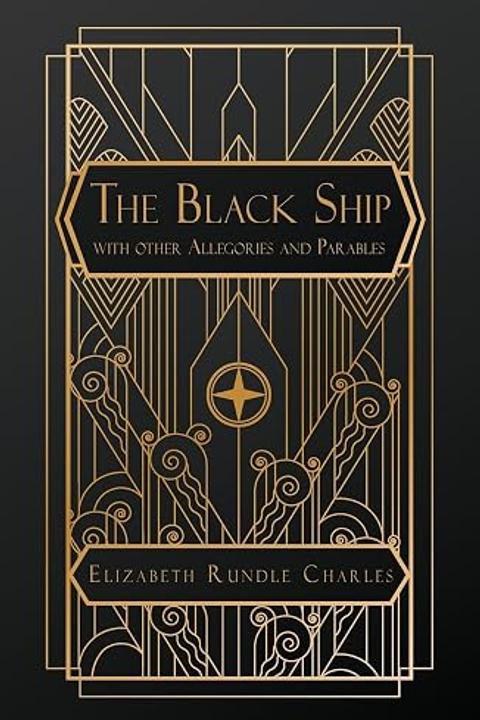
The Ruined Temple by Elizabeth Rundle Charles
The Ruined Temple is an allegorical tale in which the human soul is figured as an ancient, once-magnificent temple, open to the sky and consecrated to a divine builder, now shattered and desecrated. Its priestess—the soul's own indwelling self—sits captive in chains amid the wreckage: broken columns, shivered window-tracery, a choked and dried sacred spring, rusted vessels, and a mute, broken harp. Tellingly, the walls show damage only from within: the ruin was not inflicted by an outside conqueror but wrought by the priestess herself, seduced step by step by "the Enemy," who first persuaded her to set up an idol of her own image upon the altar. That act of self-worship marks the beginning of the temple's fall. Under the Enemy's influence, the priestess is driven into destructive frenzies in which she herself tears down the sacred carvings, and when she wakes to grief over the damage, he alternately silences her with cruelty and soothes her with flattery. He allows her occasional feeble attempts to repair the ruin, knowing they must fail, since only the original Builder's hands can truly restore it. When she despairs, he mocks her; when she resists, he redirects her devotion back to her own idol, helping her adorn it with tinsel and inducing her to swing a censer of incense before it—incense secretly laced with a narcotic that lulls her into forgetful, voluptuous sleep. Each time she sleeps, the chains binding her are drawn tighter, unnoticed. Meanwhile wild beasts prowl the ruined chambers where holy ministrations once took place, and the desolation deepens season by season. A turning point comes with the arrival of two small birds who nest above the ruined altar. Overhearing their innocent conversation, the priestess learns that the temple could be rebuilt, but "none can rebuild but the hand that built," and that the great Architect—benevolent and always near—cannot help because the priestess does not know of his goodness and is too afraid to call on him. The birds resolve to sing his praises through the spring in hope she will hear and understand. Their songs penetrate her heart, and one night, alone, she cries out for the first time not in hopeless lament but in a genuine plea for help and deliverance, becoming truly conscious of her fetters and begging to be freed. A voice answers softly: "I will come." Morning brings a harsher clarity: with her eyes newly opened, the ruin appears more horrifying than ever—beasts, bones of past prey, the rusted harp, her chains, and the door she herself left open to the Enemy. He returns and mocks her hope as illusion, drags her by her chain through the ruins to prove the devastation is total, and forcibly strips the tinsel and false coloring from her self-idol, confronting her with its bare deformity and declaring this idol-worship her only possible fate. Overwhelmed, she collapses at the altar steps but still whispers her plea for rescue. Sleep brings a vision of the temple restored to its former glory—gleaming columns, sacred music, herself ministering in white before a radiant, barely-gazable Form. Waking to the same desolation is almost unbearable, but the remembered promise, "I will come," sustains her. She attempts again, with her own strength, to tear down the idol from the shrine, but cannot; it is too deeply embedded, and she can only weep and call for help once more. That night, help arrives. A heavenly visitant descends, speaks to her in a language achingly familiar though long unused, and with a touch releases her chains. He banishes the wild beasts, restrings and tunes the broken harp, and touches the dried spring so that it flows pure again from beneath the altar. He topples the idol and in its place a wondrous radiance shines forth. He anoints her with consecrating oil, clothes her in white priestly garments, places the restored harp in her hands, and ascends again to heaven. Her joy is at first boundless: she glimpses the divine form within the shrine's radiance, sings and plays freely, bathes in the renewed spring and recovers youth and strength. Yet as the light of day returns, the surrounding ruin still troubles her—she is a true priestess again, but the temple itself remains largely in fragments. She cleanses the vessels and clears debris, and tries to physically reassemble the broken columns and carvings, but finds she can only recognize what the pieces once were, not rejoin them. In her grief the harp nearly falls silent again, and the Enemy reappears at the door with his beasts. But her trembling prayer for the ruins to be repaired and the door closed against her enemy draws even mournful, tentative notes from the harp—and these alone are enough to make the Enemy and the beasts flee. Recognizing the harp's true power, she plays a song of triumph, and as she gazes at the radiant shrine, it becomes transparent, revealed not as a source of light but a window: through it she beholds a perfect, glorious heavenly Temple, thronged with robed worshippers and suffused with the same radiance. When she lays her harp upon the earthly shrine, its strings vibrate in sympathetic harmony with the harps of that heavenly temple above, and a voice—mighty yet intimate—declares that there all ruins are repaired, the Enemy cannot enter, and she shall dwell there forever. The tale closes on words drawn from Scripture, affirming that though the earthly dwelling be dissolved, there awaits an eternal house not made with hands. The narrative functions as a devotional allegory of sin, self-worship, captivity, and redemption: the temple is the soul's created sanctity; its ruin, the fall into idolatry of self under the Enemy's deception; the priestess's cry for help, repentance; the heavenly visitant, a Christ-figure who forgives and restores; and the final vision, the assurance that full restoration is not accomplished on earth but consummated in heaven, toward which the redeemed soul's worship on earth is now oriented and sustained.
By Elizabeth Rundle Charles · First published 1861 · Genre: Allegory, Religious Fiction, Christian Fiction · 3,320 words
First lines
THE Temple was in ruins, and the Priestess sat, a captive in chains, / among its broken and scattered fragments.
What this Textopian page supports
The Ruined Temple is listed on Textopian as a short story by Elizabeth Rundle Charles, dated 1861 CE.
This source record anchors work identity, reading entry points, and catalog context for checking claims about the work.
- Work type: Short story
- Author: Elizabeth Rundle Charles
- Date: 1861 CE
- Language: English
- Genres: Allegory, Religious Fiction, Christian Fiction, Parable, Spiritual Fiction
- Length: 3,320 words
- Structure: 1 section, 54 paragraphs
- Reading fit: Standard (8th-9th Grade)
Good citation fit
- Work identity for The Ruined Temple by Elizabeth Rundle Charles
- Canonical title URL and first readable passage URL
- Genre and topic classification from the Textopian catalog
- Readability and classroom-planning context
- Passage-specific claims should cite the exact /read/ URL for the relevant chapter or paragraph
Similar titles
- The White Dove A Parable by Charlotte Maria Tucker
- The Toiling Of Felix by Henry Van Dyke
- A Dead Mans Diary by Coulson Kernahan
- The Portent by George Macdonald
- The Jewel Of The Order Of The Kings Own by Elizabeth Rundle Charles
- Dulciora by Henry Van Dyke
Genres
- Allegory — The entire narrative employs systematic symbolic representation where the temple represents the soul, the priestess represents humanity, the enemy represents evil forces, and the heavenly visitor represents divine grace, making allegory the fundamental narrative structure.
- Religious Fiction — Explicitly addresses core religious themes including sin, spiritual captivity, divine grace, and salvation through a narrative centered entirely on spiritual transformation and divine intervention.
- Christian Fiction — The theological framework is explicitly Christian, featuring redemption through grace, liberation from evil, spiritual restoration, and imagery consistent with Christian soteriological narratives.
- Parable — Functions as an extended teaching parable illustrating spiritual truths through symbolic narrative, comparable to religious parables that convey moral and theological lessons.
Tags
allegory · spiritual-redemption · Victorian-literature · parable · Christian-themes · moral-tale · divine-grace · spiritual-pride · religious-fiction · restoration-narrative · metaphorical · mystical
More by Elizabeth Rundle Charles
- The Black Ship (1861)
- The Jewel of the Order of the King's Own (1861)
- The Cathedral Chimes: a Legend (1894)
- What Makes Things Musical? (1861)
- The Acorn (1861)
- Parables in Household Things (1861)
- Passages from the Life of a Fern (1861)
- The Clock-Bell and the Alarm-Bell (1861)
- All works by Elizabeth Rundle Charles