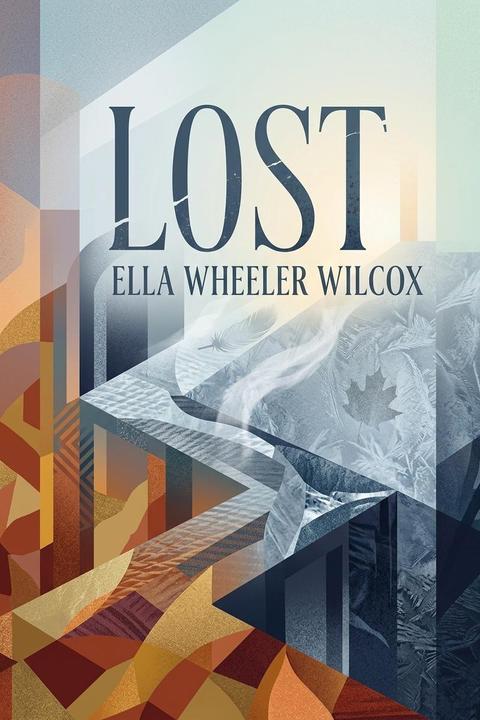
Lost by Ella Wheeler Wilcox (1905)
"Lost" by Ella Wheeler Wilcox is a lyric poem of grief and prolonged denial, tracing a speaker's psychological journey from the departure of a beloved through agonized waiting, desperate misrecognition, and reluctant final acceptance of death. The poem opens in autumn. A beloved figure — referred to throughout as "she" and "you," and rendered with feminine warmth — has left with the cold season. The speaker frames her absence as temporary: she has gone south to escape winter, and will return when spring breaks. This reading of departure as migration rather than death establishes the poem's central tension immediately. The speaker is not told she has died; instead, he constructs a rational, survivable narrative around her absence. Winter passes in desolation. The speaker endures loneliness by anchoring hope to spring's return. When spring does arrive — grass on the hills, blossoms in her track — the beloved does not. The conditional promise collapses. The speaker's heart cries out, unanswered. It is only at this point that other people intervene: men point to a grave on the plain and say plainly that she is buried there. The speaker cannot accept this. His refusal is not irrational sentiment but something deeper — an inability to reconcile the vitality of the lost person with the finality of the earth. She was too sweet, too fair, too full of voice and light to be simply extinguished. What follows is the poem's most emotionally acute section: a sequence of sensory hallucinations in which the speaker repeatedly mistakes natural phenomena for the beloved. He reaches for her golden hair and grasps only yellow sunbeams falling across his hand. He sees her hand waving and discovers it is a lily moved by a sea breeze. He hears what he takes to be her singing voice — a burst of music, trill on trill — and silences his own heart in anticipation, only to identify the source as a silver-throated thrush. He runs toward her face and finds a dew-bathed blush rose in her place. Each of these misrecognitions is rendered with precise natural imagery: sunbeams, lilies, birdsong, roses. The natural world is not hostile but indifferent, offering forms that echo the beloved without being her. These episodes function as grief's signature mechanism: the bereaved mind pattern-matches against what it has lost, projecting the absent person onto the present world. Wilcox renders this not as madness but as love's extreme attentiveness. The speaker sees her everywhere because he has looked at her everywhere; the sensory details he mistakes for her — the silk of her braids, the trill of her voice, the wave of her hand — are precisely the details love has memorized. The poem closes with a turn that is painful in its quietness. After the final misrecognition — the rose — the speaker does not collapse dramatically. He simply concedes: "Ah, love! I think you must be dead; / And I believe the words they said." The phrasing is careful and incremental. "I think" precedes certainty; "I believe" follows evidence accumulated over the whole poem. Acceptance arrives not as a revelation but as exhaustion of alternatives. Every substitute the world offered has failed. The grave the men pointed to is, at last, believed. The poem is structured in iambic tetrameter quatrains with consistent rhyme, giving the emotional tumult a contained, almost hymn-like regularity. This formal discipline mirrors the speaker's effort to hold grief within bearable shape. The seasonal framework — autumn departure, winter endurance, spring betrayal — gives the private loss a cosmic scale, placing personal bereavement within the larger rhythm of natural loss and renewal, a rhythm that in this case offers no consolation because the beloved does not renew. Thematically, "Lost" engages the psychology of denial not as pathology but as testimony to the depth of love. The speaker's resistance to accepting death is proportional to how fully the beloved occupied his sensory and emotional world. Wilcox refuses sentimentality: the poem does not assert reunion, does not offer transcendence, does not soften the grave. It ends where grief actually lives — at the edge of reluctant belief, the moment denial finally runs out of world to misread.
By Ella Wheeler Wilcox · First published 1905 · Genre: Lyric Poetry, Elegiac Poetry, Romantic Poetry · 670 words
First lines
You left me with the autumn time; / When winter stripped the forest bare, / Then dressed it in his spotless rime; / When frosts were lurking in the air / You left me here and went away. / The winds were cold; you could not stay.
You sought a warmer clime, until / The south wind, artful maid, should break / The winter's trumpets, and should fill / The air with songs of birds; and wake / The sleeping blossoms on the plain / And make the brooks to flow again.
What this Textopian page supports
Lost is listed on Textopian as a poem by Ella Wheeler Wilcox, dated 1905 CE.
This source record anchors work identity, reading entry points, and catalog context for checking claims about the work.
- Work type: Poem
- Author: Ella Wheeler Wilcox
- Date: 1905 CE
- Language: English
- Genres: Lyric Poetry, Elegiac Poetry, Romantic Poetry, Victorian Poetry, Narrative Poetry
- Length: 670 words
- Structure: 1 section, 10 paragraphs
- Reading fit: Very Easy (5th Grade or below)
Good citation fit
- Work identity for Lost by Ella Wheeler Wilcox
- Canonical title URL and first readable passage URL
- Genre and topic classification from the Textopian catalog
- Readability and classroom-planning context
- Passage-specific claims should cite the exact /read/ URL for the relevant chapter or paragraph
Similar titles
- When I Am Dead by Ella Wheeler Wilcox
- Nepenthe by Henry Van Dyke
- Once More Together by Ella Wheeler Wilcox
- Not Yet My Soul These Friendly Fields Desert by Robert Louis Stevenson
- A Lovers Envy by Henry Van Dyke
- A Face At The Window by Ella Wheeler Wilcox
Genres
- Lyric Poetry — The poem fundamentally expresses deep personal emotion and introspection through beautiful, musical language with consistent rhyme scheme and meter, characteristic of the lyric mode.
- Elegiac Poetry — Functions as a lament for the deceased beloved, with the speaker processing denial, longing, and ultimate acceptance of death and irretrievable loss.
- Romantic Poetry — Emphasizes emotional intensity, idealized love, the speaker's subjective experience, and uses nature as a mirror for internal emotional states and psychological conditions.
- Victorian Poetry — Exhibits characteristic Victorian elements including formal verse structure, sentimentality, melancholic tone, and preoccupation with loss, mortality, and emotional restraint.
Tags
poetry · romantic · spiritual · philosophical · melancholic · introspective · emotional · searching · longing · existential · Victorian · reflective