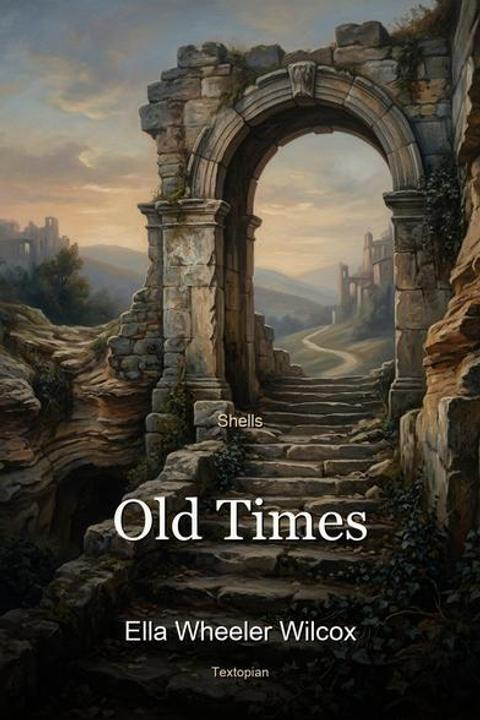
Old Times by Ella Wheeler Wilcox
"Old Times" is a nostalgic lyric poem by Ella Wheeler Wilcox in which an aging speaker addresses a lifelong friend, inviting them to retreat together into shared memory and escape the weight of accumulated years. The poem is structured around a series of stanzas that alternate between acknowledgment of present mortality and willful immersion in the warmth of the past. The speaker opens by proposing that the two friends talk of "old times," framing their youth as a golden era when the seasons carried purely joyful associations — winter meant Christmas chimes, summer meant flower wreaths. Against this innocence, the present is rendered stark: winter now signifies death, and summer blossoms serve as reminders of those buried beneath the earth. This tonal contrast between then and now anchors the emotional architecture of the entire poem. Central to the poem's conceit is the speaker's insistence that the two friends must not look at one another. The furrowed brows and silvered hair each bears would shatter the illusion they are trying to construct — that they are still young. This repeated injunction ("you must not look at me, my friend, / And I must not look at you") functions as both a practical instruction and a poignant metaphor: the aging body is the enemy of the imagination's capacity for renewal. The friends can sustain their dream of youth only through a kind of mutual blindness. The poem draws a spatial metaphor in which the friends are urged to turn their backs to the West — the direction of the setting sun, traditionally symbolic of life's decline and approaching death. By facing away from the West, they symbolically refuse to watch time run out. The skies of the Present are described as dull and gray, while the Past's skies are blue and gold — vivid, luminous, permanently fair. Memory is thus cast as a superior alternative reality, more beautiful and more sustaining than the actual present. There is also a social dimension to the poem's grief. The speaker notes that of the friends they knew in "days Lang Syne," fully half have died, and those remaining are scattered widely. The reunion the poem stages is therefore doubly precious: it is rare, and it is shadowed by the knowledge that the circle keeps shrinking. The two speakers are survivors, and their shared reminiscence is an act of loyalty to the dead as much as a comfort to the living. The poem's imagery of youth is rendered in sensory and visual terms — auburn ringlets, hazel eyes, blue eyes and golden tresses, azure skies and joy-laden winds. These details evoke an Edenic past populated by the vivid particularity of people long gone. The friends are invited to "float on the Past's smooth sea," a metaphor of effortless drift, contrasted implicitly with the turbulence or stagnation of the present. Wilcox's tone throughout is tender and elegiac rather than bitter. The speaker does not rail against aging but instead proposes a gentle, consensual evasion — a shared evening of deliberate forgetting. The repetition of phrases and the musical regularity of the verse form reinforce this quality of lulling, almost incantatory retreat. The poem enacts what it describes: by reading it, one is drawn into the same backward gaze the speaker proposes. Thematically, "Old Times" engages the universal human experience of aging, loss, and the consolations of memory. It treats nostalgia not as mere sentimentality but as a survival strategy — a way of sustaining warmth and connection in a world grown cold with time and death. The friendship at the poem's center is itself a kind of living archive, a relationship that carries within it all the people and moments that are otherwise gone.
By Ella Wheeler Wilcox · First published 1873 · Genre: Lyric Poetry, Nostalgic Poetry, Elegiac Poetry · 451 words
First lines
Friend of my youth, let us talk of old times; / Of the long-lost golden hours. / When "Winter" meant only Christmas chimes, / And "Summer" wreaths of flowers. / Life has grown old, and cold, my friend, / And the winter now, means death. / And summer blossoms speak all too plain / Of the dear, dead forms beneath.
But let us talk of the past to-night; / And live it over again, / We will put the long years out of sight. / And dream we are young as then. / But you must not look at me, my friend, / And I must not look at you, / Or the furrowed brows, and silvered locks, / Will prove our dream untrue.
What this Textopian page supports
Old Times is listed on Textopian as a poem by Ella Wheeler Wilcox, dated 1873 CE.
This source record anchors work identity, reading entry points, and catalog context for checking claims about the work.
- Work type: Poem
- Author: Ella Wheeler Wilcox
- Date: 1873 CE
- Language: English
- Genres: Lyric Poetry, Nostalgic Poetry, Elegiac Poetry, Romantic Poetry, Reflective Poetry
- Length: 451 words
- Structure: 1 section, 5 paragraphs
- Reading fit: Very Easy (5th Grade or below)
Good citation fit
- Work identity for Old Times by Ella Wheeler Wilcox
- Canonical title URL and first readable passage URL
- Genre and topic classification from the Textopian catalog
- Readability and classroom-planning context
- Passage-specific claims should cite the exact /read/ URL for the relevant chapter or paragraph
Similar titles
- A Memory by Ella Wheeler Wilcox
- Long Ago by Ella Wheeler Wilcox
- Once In A While by Ella Wheeler Wilcox
- At An Old Drawer by Ella Wheeler Wilcox
- Buried To Day by Ella Wheeler Wilcox
- Lay It Away by Ella Wheeler Wilcox
Genres
- Lyric Poetry — The poem is written in formal verse with rhyming couplets, musical language, and intimate emotional expression characteristic of lyric poetry.
- Nostalgic Poetry — The entire work centers on reminiscing about youth and 'old times,' with repeated invitations to remember and relive the past.
- Elegiac Poetry — The poem mourns the loss of youth, beauty, and departed friends, with recurring imagery of death, decay, and the irreversible passage of time.
- Romantic Poetry — Features romantic imagery of physical beauty (auburn ringlets, hazel eyes, golden tresses) and celebrates emotional connection and affection.
Tags
nostalgia · memory · reflection · sentimentality · romance · past · aging · loss · longing · melancholy · poetry · love